

Differences over trade agreement... Korea-U.S. trade chiefs met in New York
Summary
- Negotiations are facing difficulties over the detailed structure of key items, including $350 billion in U.S.-bound investment and tariff reductions, in the implementation of the Korea-U.S. trade agreement.
- It stated that a high tariff of 25% is currently applied to key export items such as automobiles, raising significant concerns among investors.
- The U.S. is pressuring over the delay in formal signing of the agreement and said Korea must choose between tariff reductions or accepting the agreement.
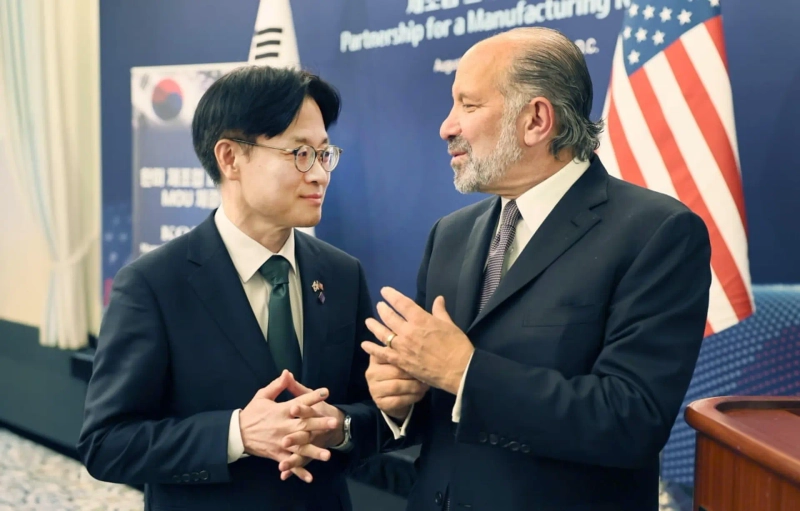
Kim Jeong-gwan, Minister of Trade, Industry and Energy, who is visiting the United States, reportedly met with U.S. Secretary of Commerce Howard Lutnick on the 12th (local time) to continue follow-up talks on Korea-U.S. tariff negotiations.
According to diplomatic circles, Minister Kim met with Secretary Lutnick at a location in New York that day to conduct follow-up discussions on the Korea-U.S. trade agreement reached on July 30. The two sides had agreed to lower the reciprocal tariffs the U.S. had announced against Korea from 25% to 15%, and for Korea to implement a total of $350 billion in investment in the United States (about 486 trillion won), among other items.
They later confirmed the agreement in broad terms at the Korea-U.S. summit in August, but since it remains at the level of a verbal agreement rather than in document form, a high tariff of 25% is still applied to automobiles, a major export item. Japan, which competes with us, reached an agreement with the U.S. at the level of a memorandum of understanding (MOU) and will receive a 15% automobile tariff starting from the 16th.
The two sides are reported to be facing difficulties negotiating the detailed structure of the promised $350 billion in U.S.-bound investment. Kim Yong-beom, director of the Presidential Office's policy office, said at a Korea Broadcasting Journalists Club debate on the 9th (Korea time), "There are differences in foreign exchange reserves with Japan and we are not a major reserve currency country, so there are many issues about how to structure the (investment)," adding, "Fundamentally, we are considering together the shock it would have on the foreign exchange market and are asking the U.S. to provide answers on parts it can help with, and we are deadlocked on that issue."
Secretary Lutnick pressured acceptance of the U.S. position on CNBC on the 11th. He said, "We (the U.S. and Korea) have agreed verbally, but let’s see whether the paperwork will be completed," and added, "Japan has completed the signing. Shaking hands with the president and actually signing a document with a pen are different. Korea has to either accept the agreement or pay the tariffs. The distinction is clear."
Hong Min-seong, Hankyung.com reporter mshong@hankyung.com

Korea Economic Daily
hankyung@bloomingbit.ioThe Korea Economic Daily Global is a digital media where latest news on Korean companies, industries, and financial markets.