

"Could it really rise again?" I thought, but before I knew it… Pillar-of-fire KOSPI 3400 possible? [Weekly Outlook]
Summary
- It reported that the KOSPI is hitting record highs on the back of expectations for a U.S. rate cut at the September FOMC and market stimulus.
- It stated that the government's market-friendly policy stance and possible institutional changes are acting positively on the KOSPI's rise.
- However, experts warned to be cautious about chasing purchases due to valuation pressures and a lack of real economic rebound.
Fed, expectation of rate cuts at the September FOMC
Expectations for stock market stimulus also grow
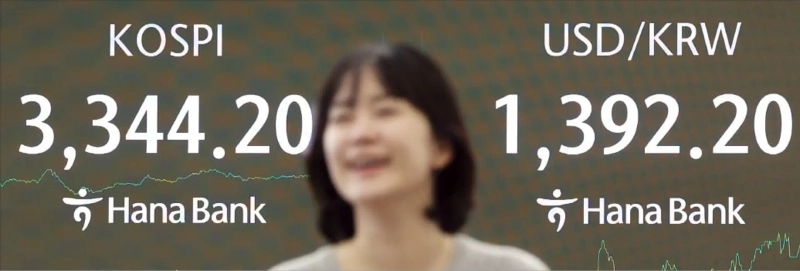
The KOSPI index is repeatedly setting new all-time highs. Experts believe the uptrend will continue on the back of expectations for U.S. interest rate cuts and market stimulus measures. However, some warn that profit-taking selling could pour out, so investors should be cautious about chasing gains.
According to the financial investment industry on the 14th, NH Investment & Securities expects the KOSPI to move between 3200 and 3450 this week (15–19). Because the domestic and international environment surrounding the stock market is favorable, the KOSPI has been repeatedly hitting new highs.
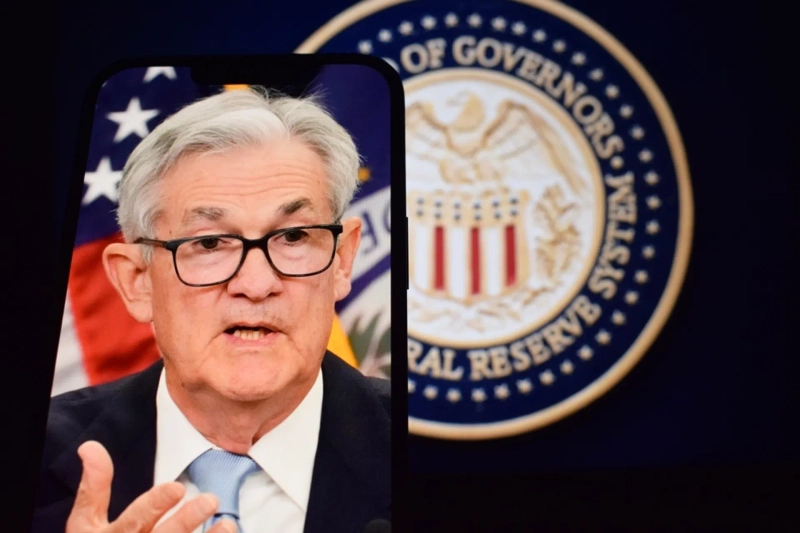
The biggest issue this week is the U.S. September Federal Open Market Committee (FOMC) meeting. The market expects the U.S. central bank (Fed) to begin cutting rates starting in September. There had been concerns that the Trump administration's tariff policies would stoke inflation, but U.S. consumer prices in August did not rise sharply.
The U.S. consumer price index (CPI) for August rose 2.9% year-on-year. This matched market estimates. Core CPI, which excludes volatile energy and food, rose 3.1% year-on-year. That is the same level as in July.
Lee Sang-joon, a researcher at NH Investment & Securities, said, "At the September FOMC, the Fed will enter a rate-cutting phase by lowering the policy rate by 25bp (1bp = 0.01 percentage point)," adding, "Liquidity expansion from resumed rate cuts and a weak dollar are positive factors for stock prices."
Moreover, expectations for a 'big cut' (a single 0.5 percentage point cut in the policy rate) are also rising. Hwang Jun-ho, a researcher at Sangsangin Securities, said, "Risk-asset preference has recovered as expectations for a September big cut are being priced in. This is a factor supporting the stock market's rise," and added, "Investments related to artificial intelligence (AI) are also expected to continue. Related sectors such as semiconductors and power equipment will maintain their uptrend."
The easing of disappointment over market stimulus measures is also seen as a positive. At the 100-day inauguration press conference, President Lee Jae-myung said, "The stock market moves on sentiment. Activating the stock market is central to the new administration's industrial and economic policy, and if it would be harmed by this, I don't think we need to be stubborn (about the KRW 1 billion major shareholder threshold)." Given that the KOSPI has surpassed its all-time high, this appears to be a judgment that there is no need to deliberately dampen investor sentiment.
Lee Sang-joon commented, "The president hinted at withdrawing the policy to strengthen the major shareholder threshold. He reaffirmed the government's market-friendly, efficiency-oriented stance," and predicted, "If at the regular September National Assembly the top dividend income tax rate is lowered to below 30% and the repurchase cancellation deferral period is less than one year, the market will react positively."
However, some caution that government policy stances can change at any time, and if the real economy does not recover, the uptrend may not last long.
Hwang pointed out, "The recent rise is based on expectations for government policy and inflows of external funds." He added, "Policy expectations are subject to uncertainty being highlighted in the National Assembly at any time. Still, Korean real economic data and corporate earnings show no signs of rebound or have not recovered compared to peak levels. Therefore, even with large-scale fiscal policy and construction market support from the government, if real economy indicators do not back them up, a correction could reappear."
Valuation burdens (price levels relative to earnings) have also increased due to the short-term surge. Investors who judge the market to be overheated may sell to realize gains. According to Daishin Securities, the KOSPI forward price-to-book ratio (PBR) is 1.04 times, and the PBR based on realized results is 1.12 times, exceeding the post-2001 average.
Lee Kyung-min, a researcher at Daishin Securities, said, "We have entered a phase beyond valuation normalization. Refrain from chasing purchases, and in case of a correction, adopt short-term trading strategies," adding, "Given solid earnings trends in the second half and short-term price merits, buy semiconductor, shipbuilding, and food & beverage stocks when their prices are corrected."
Jin Young-gi, Hankyung.com reporter young71@hankyung.com

Korea Economic Daily
hankyung@bloomingbit.ioThe Korea Economic Daily Global is a digital media where latest news on Korean companies, industries, and financial markets.