

[Q&A] Powell "Tariff inflation effects will accumulate through this year and next" [Fed Watch]
Summary
- Fed Chair Jerome Powell said the inflationary impact of tariff policy is expected to accumulate over this year and next.
- He identified reduced immigration and lower labor force participation as the main causes of the U.S. labor market slowdown, and said this raised the need for a rate cut.
- The Fed implemented a 0.25 percentage point rate cut due to the realization of labor market risks, and Powell said there are diverse views on the future rate path.
Powell "The cause of labor market slowdown is reduced immigration"
Background for rate cut "Shift from inflation focus to employment"
"There was little support for a 0.5 percentage point cut…reflecting employment slowdown
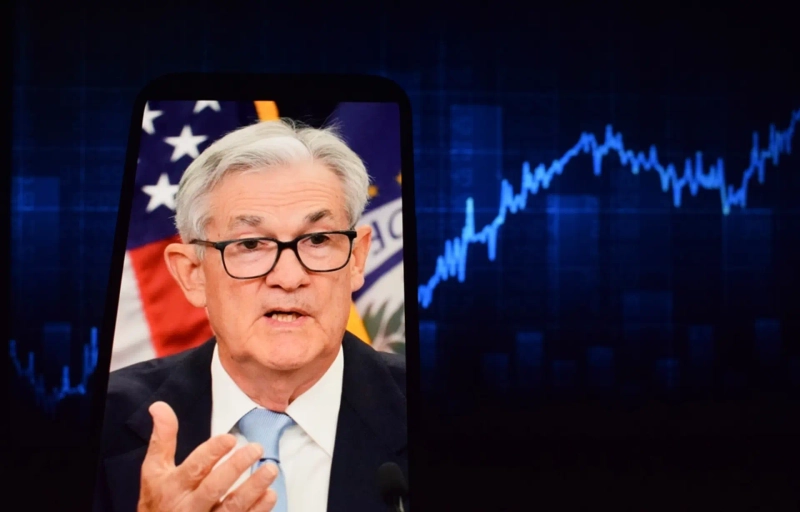
The U.S. central bank (Fed) cut its policy rate by 0.25 percentage point on the 17th (local time). At the press conference held that day, Fed Chair Jerome Powell said he expects the effects of the Donald Trump administration's tariff policy to accumulate through the remainder of this year and into next year. He cited reduced immigration and a decline in labor force participation as the main reasons for the employment slowdown. Below is the Q&A.
▶ Steve Myron, an ally of President Trump, recently joined the FOMC as a member. How can the Fed maintain public perception of political independence?
"It is welcome that a new member has joined, and the committee is united in fulfilling its dual mandate as always. We are strongly committed to maintaining independence, and I have nothing further to add."
▶ Could tariffs be having a larger impact on the labor market or other parts of the economy?
"That is possible. In fact, goods prices have risen and are pushing up inflation, and most of this year's inflation increase has come from goods prices. The impact is not large yet, but I expect it to gradually accumulate over the remainder of this year and into next year. There may also be effects on unemployment, but the main cause of the employment slowdown is a reduction in immigration and a decrease in labor force participation that has shrunk labor supply. Labor demand has also declined significantly, so we are seeing an unusual equilibrium in which both supply and demand are falling."
▶ Given current economic conditions and the balance of risks, is there no longer a need to maintain restrictive policy?
"I can't say that exactly, but this year we were able to maintain restrictive policy because the labor market was resilient. However, looking at employment data from April to August, the situation has changed. If previously risks leaned toward inflation, now the risks between the two goals are moving toward a more balanced position. Therefore, we judged it appropriate to move toward a more neutral policy stance, and today's rate cut reflects that."
▶ Was a rate cut larger than 0.25 percentage point discussed at this meeting?
"There was little support for a 0.5 percentage point cut. Over the past five years we have made large increases and cuts, but that was when policy was significantly off and needed rapid adjustment. That is not the case now. We adjusted policy to reflect new data showing employment slowdown."
▶ Is this cut meant as insurance against the possibility of a recession, or do you view the economy as already slowing?
"It can be seen as risk management. According to the Summary of Economic Projections (SEP), the growth forecast was slightly revised up, and there are no major changes to inflation or unemployment projections. What changed was labor market risk. Previously we thought monthly payrolls of 150,000 signaled resilience, but revisions and new figures now show clear cooling in the labor market. That needed to be reflected in policy."
▶ Is there concern that this cut will delay a return to the 2% inflation target?
"We remain committed to achieving the 2% inflation target. That said, with employment weakening and growth slowing since April, the risk of persistent high inflation has diminished. The risk is now relatively greater on the employment side."
▶ If the employment slowdown is mainly due to reduced immigration, isn't that a problem that a rate cut cannot solve? Inflation is still 1 percentage point above the target.
"What I said was that the employment slowdown is due to reduced immigration, not tariffs. Of course, labor demand has also weakened, and as a result unemployment has risen. Both prices and employment are being affected."
▶ The Fed has projected "returning to 2% in two years" each year but has not achieved it in practice. Is the 2% target itself unrealistic?
"The SEP produces projections assuming an appropriate policy path at a given point in time. We cannot know exactly the situation three years from now, but the target remains 2% and we design policy consistent with that target."
▶ Recent inflation reports show key household items like food prices still rising. How would you respond if prices rise further?
"This year's price increase is rising because of tariffs, but we expect it to be a temporary level shift. Our mission is to prevent that from becoming persistent inflation. The labor market is cooling now, reducing the risk of sustained runaway inflation. Therefore, considering employment risks, moving to a neutral stance is appropriate."
▶ Young people and minorities have recently been finding it harder to get jobs.
"With fewer hires and low layoff rates, both hiring and firing are low. If layoffs increase, new hiring would fall and unemployment could spike. Young people, college graduates, and minorities are especially struggling. This is why we need to give more weight to employment-side risks."
▶ You did not use the term 'recalibration' this time. Will policy be adjusted at each meeting based on the data going forward?
"Yes. We do not follow a pre-set path; we decide at each meeting based on new data, projections, and the balance of risks. The SEP dot plot aggregates 19 individual projections and is not a committee decision. This time half the participants forecasted further cuts, but the others did not."
▶ Amid President Trump's pressure on the Fed, how can you demonstrate that the Fed makes decisions based on economic data rather than politics?
"The Fed's culture is thoroughly data-driven. We do not consider political factors at all. That is evident in our speeches, remarks, and decisions. We serve the American people from a long-term perspective."
▶ Employment data were revised down by 910,000. How do you make important rate decisions based on data with low reliability?
"This revision was close to expectations. The Bureau of Labor Statistics is having difficulties due to response rate issues and models to reflect business openings and closings, but the data are still sufficient to make policy decisions."
▶ Black unemployment is over 7%, and young people are finding jobs hard to get. How effective is a 0.25% cut?
"I don't think a single action can change the economy. However, the entire path of rates affects market expectations, so the policy signal matters. We acted because we could not ignore signals of labor market weakening."
▶ Treasury Secretary Scott Bessent criticized an expansion of the Fed's role and demanded a third party audit of the Fed. Do you agree?
"I will not comment on the Treasury Secretary's remarks. The Fed recently completed its policy framework review and is also undertaking a 10% workforce reduction for organizational efficiency. We accept constructive criticism and strive to become a better institution."
▶ Do you think artificial intelligence (AI) is affecting the labor market?
"I think it is having some effect. Some firms may be using AI more instead of hiring new employees. But the employment slowdown is due to a combination of factors including the economic slowdown itself, and AI is only one factor."
▶ What evidence is there that tariffs are affecting inflation?
"Last year goods prices were negative, but this year they rose 1.2%. That explains roughly 0.3–0.4 percentage point of core PCE (2.9%). However, it has not been fully passed through to consumer prices yet, and firms are absorbing some of the costs."
▶ Is there a possibility you will leave the Fed in May next year?
"I have nothing new to say."
▶ The newly joined member (Steven Myron) is also affiliated with the White House. Did his remarks affect the dot plot?
"Of the 19 participants, only 12 have voting rights, and no one can influence the decision alone. Everything is possible only when convinced by data and economic analysis."
▶ Recent polls show President Trump is trusted more than the Fed to run the economy. Your view?
"We will carry out the responsibilities given to us by Congress without wavering. That is the message we want to show the public."
▶ What was the background for agreeing to the rate cut at today's meeting without major disagreement?
"Because labor market risks became apparent. Until July we thought payrolls of 150,000 per month indicated resilience, but new data show downside risks have materialized. Therefore everyone agreed on the need to cut rates. However, there are diverse views on the subsequent path, which is reflected in the dot plot."
New York = Correspondent Shin-young Park nyusos@hankyung.com

Korea Economic Daily
hankyung@bloomingbit.ioThe Korea Economic Daily Global is a digital media where latest news on Korean companies, industries, and financial markets.