

Waller and Bowman did not side with Myron's 'big cut'... "Support for Fed independence" [Fed Watch]
Summary
- At this FOMC, Steve Myron was the only member to vote against a 0.25% percentage-point rate cut.
- TD Securities interpreted that Waller and Bowman not supporting the big cut (0.5% percentage-point cut) was "an expression of support for the Fed's independence."
- It said that debates over the need for and size of rate cuts are expected to become more intense going forward.
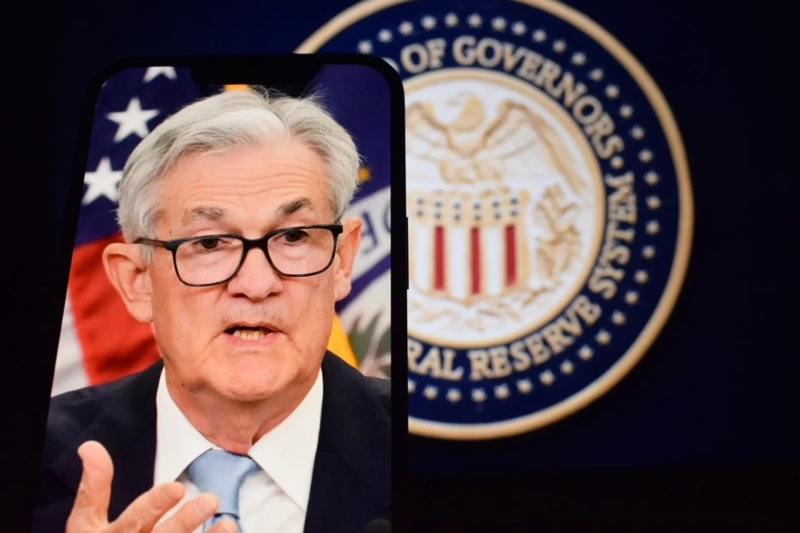
The most closely watched development in the U.S. central bank (Fed)'s September policy decision was the actions of Steve Myron, the White House Council of Economic Advisers (CEA) chair who took office as a Fed governor on the 15th.
Myron, who was narrowly confirmed by the Senate on the 15th with 48 votes in favor and 47 against just before this Federal Open Market Committee (FOMC) met, was the only one to vote against the 0.25% percentage-point rate cut (baby cut). Of the 19 members who attended the FOMC, 12 have voting rights, and of those 11 supported the baby cut instead of the 'big cut (0.5% percentage-point cut).'
Christopher Waller and Michelle Bowman, who had argued for rate cuts in July, also voted in favor of the 0.25% percentage-point cut. President Donald Trump classifies them as 'pro-Trump' figures who share his views, but this showed that they differ from Myron, who appears to be trying to carry out the president's wishes.
TD Securities interpreted in its FOMC analysis report that Waller and Bowman not supporting a big cut was "an expression of support for the Fed's independence." Fed Chair Jerome Powell said at the press conference, "There was no broad support for a 0.5% percentage-point cut," adding, "Today we acted with a high degree of unity."
The median year-end rate projection reflected in the dot plot is around 3.5–3.75%, but one member presumed to be Myron put 2.75–3.0%. This is a fairly aggressive view suggesting total rate cuts of 1.25% percentage points by year-end.
Myron's term runs until January next year. He was appointed to fill the remainder of Adriana Kugler's term after she resigned on August 8. To allow him to participate in this FOMC, Republicans shortened the Fed board confirmation process, which normally takes months, to six weeks. He is also keeping the White House CEA chair position on leave.
This is the first time a member of the U.S. executive branch has become a Fed governor since the 1935 Banking Act amendment that defined the Fed's independent operation. When this issue came up as the first question at the press conference, Powell replied, "As always, we welcomed the new member," and said, "The committee is united in achieving our dual mandate and is strongly committed to maintaining independence, and I have nothing further to say on that."
FOMC participants may speak publicly two days after the meeting. Myron will also be able to appear in media or contribute pieces to express his views starting on the 19th. Until now, the pressure on the Fed had come from executive branch figures such as President Trump or Treasury Secretary Scott Bessent, but going forward the situation will shift to 'conflict within the Fed.' As the Fed independence controversy can be avoided, debates over the need for and size of rate cuts are expected to become even more intense.
Washington=Lee Sang-eun, correspondent selee@hankyung.com

Korea Economic Daily
hankyung@bloomingbit.ioThe Korea Economic Daily Global is a digital media where latest news on Korean companies, industries, and financial markets.