

PiCK
Exchange rate and bonds, UK fiscal concerns… exchange rate threatens 1400 won
Summary
- Last week the won-dollar exchange rate rose to 1397 won due to UK fiscal health concerns, raising the possibility of surpassing 1400 won.
- It said that foreign investors' net buying of large-cap stocks in the domestic market and steady capital inflows are acting as factors supporting won strength.
- In the domestic bond market, the 3-year government bond yield rose slightly, but it noted that there is also talk of a possible decline in rates due to expectations of the policy rate being kept unchanged.
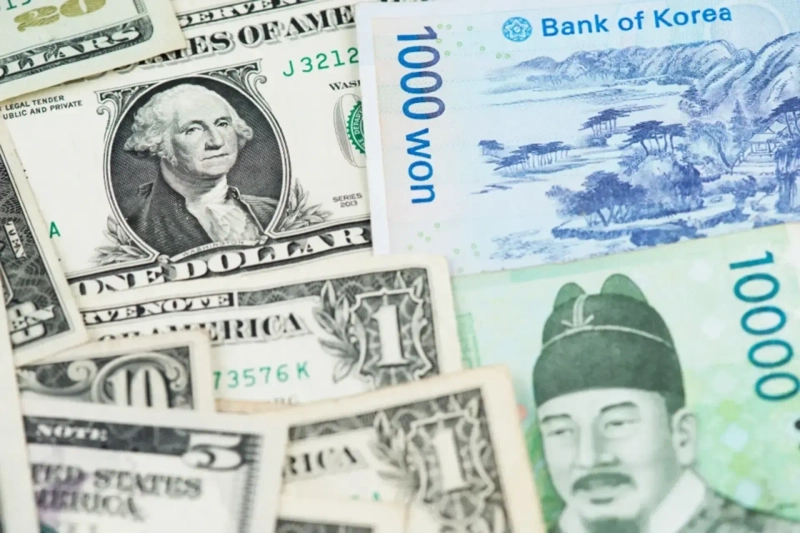
Last week the won-dollar exchange rate closed at 1397 won, up 9 won 20 jeon in night trading on the 20th. The factor that pushed the exchange rate, which had been falling earlier last week, back up was attributed to a stronger dollar amid concerns about the UK's fiscal soundness. From April to August of this year, the first five months of the new fiscal year, the UK's fiscal deficit was 83.8 billion pounds (about 158 trillion won), far exceeding the Office for Budget Responsibility's projection (a 72.4 billion pound deficit). As a result, the Dollar Index, which shows the dollar's value against six major currencies including the euro and the yen, once rose to the 97.8 level intraday and is currently trading around the 97.6 level. Long-term government bond yields in the UK and France also jumped sharply.
Experts are leaving open the possibility that the won-dollar exchange rate will break through 1400 won this week. However, many forecasts expect a box range in the upper-1300 won level due to inflows of foreign investment. Foreign investors were net buyers of 1.8236 trillion won in the domestic stock market last week. They accumulated mainly large-cap stocks such as Samsung Electronics and SK Hynix. Lee Jin-kyung, a researcher at Shinhan Investment Corp., said, "Steady foreign capital flowing into the domestic stock market is acting as a factor supporting won strength," adding, "If the export results for the 1~20 days of this month that come out this week are better than expected, the decline in the exchange rate could be larger."
Last week the domestic bond market showed an uptrend. On the 19th in the Seoul bond market, the 3-year government bond yield was at an annual rate of 2.441%, up 0.01% percentage points from the previous week (an annual rate of 2.431%). Some expect government bond yields to fall this week. This is because the Bank of Korea's possibility of an additional policy rate cut within the year is becoming less likely. Lim Jae-gyun, a KB Securities researcher, analyzed, "Expectations for real estate price increases centered on Seoul remain high," and added, "The Bank of Korea may keep the policy rate unchanged until November."
Reporter Kim Ik-hwan lovepen@hankyung.com

Korea Economic Daily
hankyung@bloomingbit.ioThe Korea Economic Daily Global is a digital media where latest news on Korean companies, industries, and financial markets.