

Summary
- Steven Myron, a U.S. Federal Reserve (Fed) board member, argued that the Fed's current policy rate is too high and that an aggressive cut is necessary.
- Myron emphasized that rates should be about 2% percentage points lower than current levels, and warned that excessive tightening could pose a risk to employment.
- Meanwhile, within the FOMC there is a prevailing preference for gradual cuts, so Myron's call for cuts is reportedly regarded as a minority view.
Myron: "Excessive tightening threatens employment"
"Immigration, tariff and deregulation easing are disinflationary factors" claims
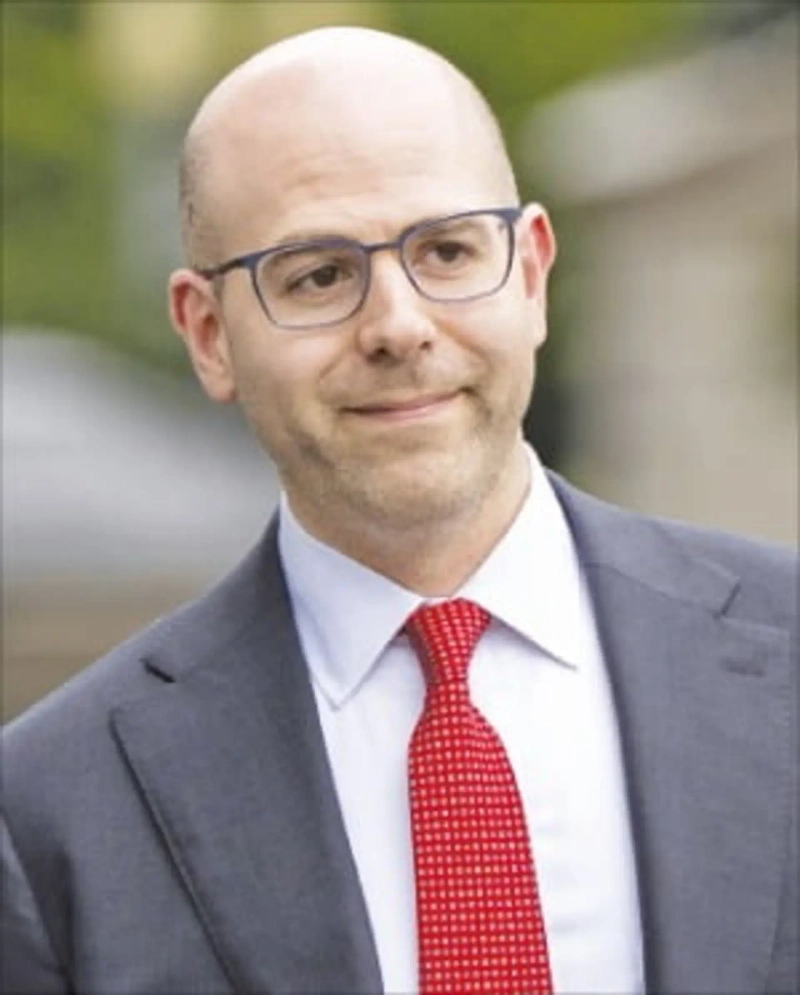
Steven Myron, a close associate of U.S. President Donald Trump and a newly appointed U.S. Federal Reserve (Fed) board member, argued that the Fed's current policy rate is too high and needs to be cut aggressively.
Myron said in a speech at the New York Economic Club on the 22nd (local time), "Changes in tax and immigration policy, easing of rents, deregulation, and increased tax revenues from tariffs are creating a new economic environment that could lower the Fed's policy rate by about 2% percentage points from its current level."
He said, "The Fed has been entrusted with the significant duty of price stability for the benefit of all U.S. households and businesses," and "It will do its best to bring inflation back to 2% stably." However, he warned, "Putting policy at such a highly restrictive level poses a substantial risk to the Fed's employment mandate."
Myron argued that changes in White House policy are lowering the neutral rate—the level that neither restrains nor stimulates growth. Citing interest-rate models and theories such as the "Taylor rule," he emphasized that current monetary policy is much more restrictive than perceived by fellow policymakers. He judged that the federal funds rate should be in the low-2% range. However, after last week's cut the current target range is 4.0~4.25%.
He said, "Policy has entered a severely restrictive zone," and "Keeping short-term rates about 2% percentage points too high risks causing unnecessary layoffs and an increase in the unemployment rate."
However, Myron's view is in the minority within the Federal Open Market Committee (FOMC). The committee currently prefers cautious, gradual cuts over the coming years.
At last week's meeting, the FOMC voted 11 to 1 in favor of a 0.25% percentage-point cut, and Myron was the only one who argued for a 0.5% percentage-point cut. He presented a dot-plot projection that reflected an additional 1.25% percentage points of cuts this year.
On the same day, Alberto Musalem, the voting St. Louis Fed president, said there is little room for further cuts, and Raphael Bostic, the non-voting Atlanta Fed president, also told the Wall Street Journal (WSJ) in an interview that he would not support additional cuts this year.
Myron was nominated by President Trump after the sudden resignation of former governor Adriana Kugler in early August. Like Trump, he is known as a Fed critic, but the tone of the meeting was reported to be cooperative and serious.
He argued that inflation is on a downward path due to factors not yet reflected in indicators, such as a slowdown in housing rents, and that rate cuts are needed. At the same time, he expressed an optimistic outlook for economic growth. This stance somewhat conflicts with conventional thinking.
In the Q&A he also said, "I view policy as being about 2% percentage points excessively restrictive," and "While growth is likely to improve somewhat going forward, if policy does not move closer to neutral it could unnecessarily skew the path and create a potential output gap (the difference between real GDP and potential GDP)."
Myron also cited the administration's immigration restriction, deregulation, tax cuts, and increased tariff-related tax revenues as disinflationary factors. He said, "Labor market statistics and anecdotal evidence from the field show that border policies are having a major impact on the economy," and "the U.S. regulatory system has become a real impediment to growth."
Fed members and many economists worry that President Trump's tariffs could stimulate inflation in the medium to long term. But Myron countered, "Relatively small changes in the prices of some goods have prompted excessively large concerns."
Myron will serve as a Fed board member until his term ends on January 31, 2026, and then return to serve as chair of the White House Council of Economic Advisers (CEA). He cited many CEA research findings in this speech. New York=Park Shin-young correspondent nyusos@hankyung.com

Korea Economic Daily
hankyung@bloomingbit.ioThe Korea Economic Daily Global is a digital media where latest news on Korean companies, industries, and financial markets.