

PiCK
Global Web3 industry gathers at the National Assembly… "Stablecoins, the core of South Korea's financial leap"
Summary
- "Stablecoins" were emphasized by the industry as the core of South Korea's financial leap, and the importance of regulatory design and securing interoperability was mentioned.
- International experts stated that tokenization, blockchain, and stablecoins among digital assets are essential for connecting traditional finance and DeFi and creating a global investment environment.
- Experts said stablecoin regulation and design will determine South Korea's financial future, and that various options, partnerships, and clear governance are important for investment.
National Assembly 'Digital Asset Leadership Forum' held
Kim Byung-gi: "Digital assets, regulatory framework urgently needed"
Industry: "Stablecoins, the core of South Korea's financial leap"
"Regulatory design and ensuring interoperability are important"
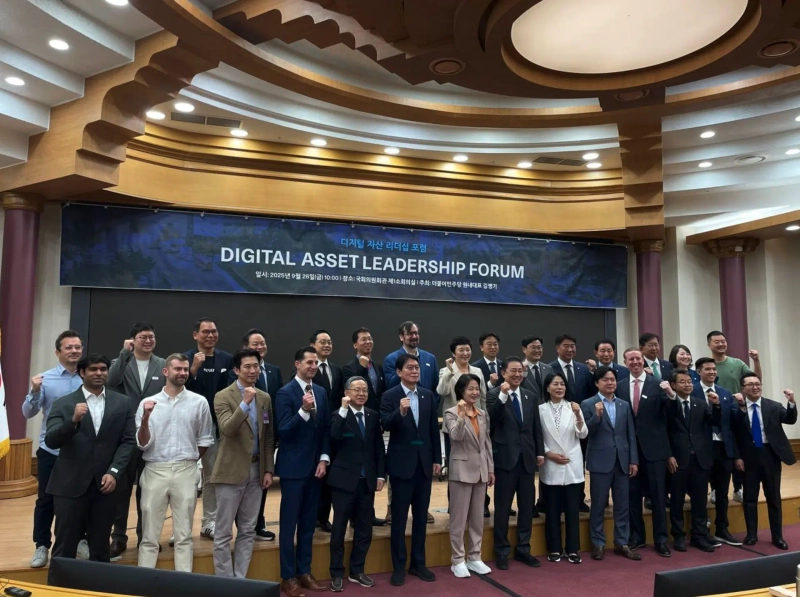
On the 26th, global Web3 industry representatives attended the 'Digital Asset Leadership Forum' hosted by Kim Byung-gi, floor leader of the Democratic Party of Korea, at the National Assembly Members' Office Building in Yeouido, Seoul. They discussed the changes to the financial industry that Web3 technologies, such as stablecoins and asset tokenization, will bring.
The event was attended by, among others, Kim the lawmaker, Ryan de Souza, Head of Asia-Pacific (APAC) at Offchain Labs; Sam Kazemian, Chief Technology Officer (CTO) of Stable; Joao Reginatto, Chief Strategy Officer (CSO) of M0; Aaron Gwak, founder of Libeara; Benjamin Fielding, founder of Gensyn; Rachit Agarwal, Head of Global Expansion at Wormhole; and Alex Xu, Vice President (VP) of Kraken.
In his opening remarks, Kim Byung-gi said, "The flow of digital assets is already a reality, and stablecoins have established themselves as a new means of payment," adding, "It is urgent to prepare a regulatory framework that can safely and transparently support all these changes. South Korea should advance beyond mere financial innovation to become a leading country in digital assets that injects new vitality across industries."
He added, "Korea should take the lead in creating rules and setting standards, and the National Assembly, government, industry, and academia must pool their wisdom together," and said, "We will protect investors and pursue balanced policies. I hope this forum will contribute to South Korea's new leap forward."
In the keynote that followed, Ryan de Souza, Offchain Labs APAC head, said, "Korea has strengths in both technology and finance, so it has the opportunity to lead the construction of next-generation digital infrastructure," adding, "Based on banking infrastructure and a high degree of digital friendliness, it can serve as a bridge connecting DeFi and traditional finance." He also predicted, "If an innovation-friendly environment is created from startups to major financial institutions and regulatory clarity is secured, Korea could establish itself as a global blockchain governance and innovation hub."
Alex Xu, Kraken's Vice President (VP), said in his keynote speech, "In the US, the recent passing of the GENIUS Act, a bill to regulate stablecoin development, is signal that the next wave of evolution of global payment is coming, and this time it is triggered by blockchain development." He continued, "Corporate digital asset treasury (DAT) strategies that stockpile coins are drawing liquidity into the crypto market," and predicted, "If policy clarity combines with mature operational principles in the industry, cryptocurrencies can also grow into an institutionalized industry on par with Wall Street."
"Tokenization and stablecoins, the gateway to South Korea's digital financial leap"
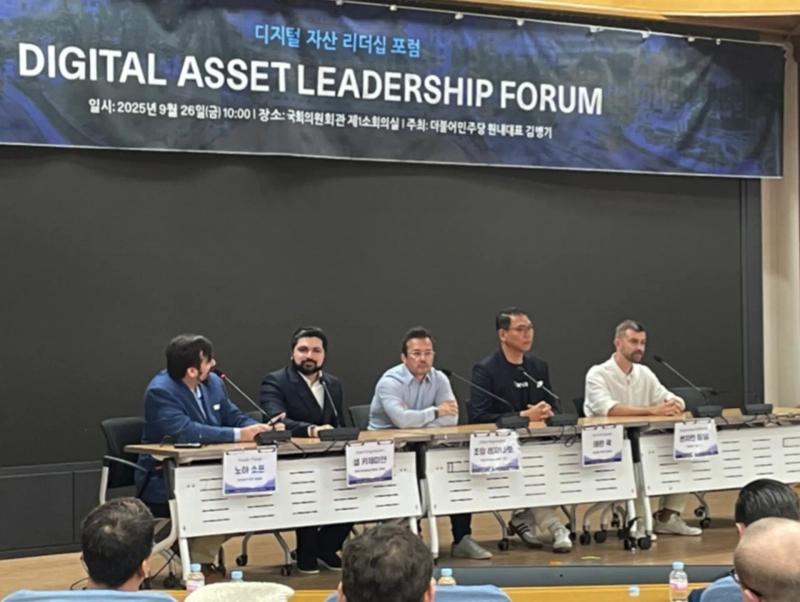
Web3 experts participating in the panel discussion covered tokenization, blockchain, stablecoins, and artificial intelligence (AI), presenting directions for the evolution of digital finance and strategic tasks for Korea.
Joao Reginatto, Chief Strategy Officer (CSO) of M0, said, "Blockchain is innovative in that it provides a global digital ledger that did not exist in terms of financial infrastructure," and predicted, "The moment assets are issued and built on blockchain technology, they become far more powerful than in the analog era, and from this will arise countless businesses and products that form the foundation of transformation."
Sam Kazemian, Chief Technology Officer (CTO) of Stable, said, "First, stablecoins must be able to actually move within the financial ecosystem. Only after that can assets that hold value, like gold or commodities, be added to the ecosystem." He added, "Once most assets are tokenized, a significant portion of economic activity will take place on-chain on digital assets," and proposed, "If Korea quickly pursues the digitalization of the won, it could become a core leader of the 21st-century digital economy."
Benjamin Fielding, founder of Gensyn, said, "Fields with huge costs like artificial intelligence (AI) can enable individual participation through tokenization, reflecting diverse opinions in funding," analyzing, "If financial actions are delegated to AI, the only realistic way to perform this in a trustworthy environment is via on-chain networks."
Aaron Gwak, founder of Libeara, said, "Tokenization is an area that combines legislative understanding, technology, and patience with traditional markets," noting, "Blockchain was built to minimize intermediaries and create a fair competitive environment for everyone from small participants to large investors."
"Stablecoins: a key means to strengthen Korea's economy and global linkage"
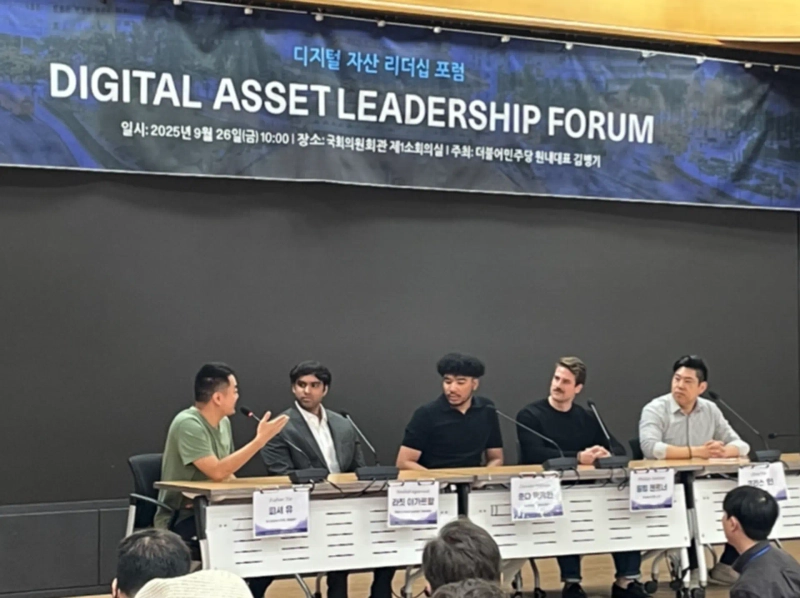
In the subsequent panel, Web3 experts identified key success factors for stablecoin adoption and offered policy recommendations for the future.
Philipp Zentner, founder of LiFi, said, "One of the core success factors for stablecoin adoption depends on distribution and usability," adding, "When stablecoins are deposited, lending and borrowing should be possible, and many issuers need to prioritize stronger lending systems to achieve this." He said, "Although we cooperate with most stablecoin issuers, there remains a large knowledge gap on how to ensure usability in DeFi-based, off-chain environments," and emphasized, "Ultimately, securing utility in appropriate environments is most important."
Chris Yin, founder of Plume, said, "Stablecoins must start from the end user's perspective," explaining, "People prefer stablecoins because they are easy to understand and at the same time programmable for various uses." He also stressed, "Stablecoins should be a means to implement ideas and be actually usable, and it is necessary to build an ecosystem usable in multiple places to secure network effects."
Chunda McCain, founder of Paxos Labs, said, "Anyone using the largest stablecoins in the U.S., such as USDC or USDT, is in some way directly connected to the U.S. economy," and predicted, "Korean policymakers who want to strengthen the domestic economy through stablecoins will want this kind of 'pressuring mass,' and will pay attention to what benefits related policies bring in terms of investment and prosperity."
Rachit Agarwal, Head of Global Expansion at Wormhole, emphasized, "Stablecoins are a means of opportunity and can more easily open the domestic market to international markets," adding, "This allows not only Korean investors but also expatriates to reinvest in the Korean market." He also said, "For stablecoins to be widely adopted, ecosystem and interoperability are important," and suggested, "A Korean-style stablecoin with various options and partnerships could be the solution."
Experts: "Stablecoin regulation and design will determine Korea's financial future"
It was also suggested that stablecoins could become the next-generation cash payment method.
John Cahill, Chief Operating Officer (COO) of Galaxy Digital, said regarding the Korean situation, "There may be a trend to have banks be the only issuers of stablecoins, but the key is to allow retail capital to freely move in and out and to interact across borders," explaining, "External capital must be able to enter, and a domestic stablecoin could be that means."
He stated that the management principles for the stablecoin market are, "First, clearly defining the relationship between holders and issuers, and second, the relationship between holders and customers is key," and pointed out, "There are cases where, if problems occur, holders find it difficult to directly demand reimbursement from issuers, so regulators should prioritize addressing this." He added, "Next should follow reserve verification, backstop functions, and collateral asset discipline."
Professor Lee Jong-sub of Seoul National University's Department of Business Administration also said, "Stablecoins should be treated not as a mere industry promotion measure but as a serious area of consideration connected to financial markets," arguing, "If payment and settlement are limited to private environments, a fragmented digital economy will form and conflict with the overall financial system. Using private chains to simplify user authentication (KYC) and anti-money laundering (AML) procedures is not a solution."
He continued, "Public blockchains operate on the premise of a multi-chain environment, so Korea should respond according to this structure," suggesting, "This presents additional technical tasks different from traditional finance, but ultimately it is an issue that the regulatory system must accept."
Kang Min-seung, Bloomingbit reporter minriver@bloomingbit.io

Minseung Kang
minriver@bloomingbit.ioBlockchain journalist | Writer of Trade Now & Altcoin Now, must-read content for investors.