

'Money Machine' Trump's tariffs targeting South Korea and Japan…"It's prepayment" unilateral notice [Sang-eun Lee's Washington Now]
Summary
- President Trump demanded the $350 billion investment as 'prepayment,' insisting on cash transfers that exclude loans or guarantees.
- The U.S. has been continuously raising and ambiguously changing the price for reciprocal tariffs and investment terms, worsening South Korea's negotiation environment.
- Because of the prepayment demand, the likelihood of Korean firms recovering principal or sharing profits has become significantly lower, raising concerns about investment security.
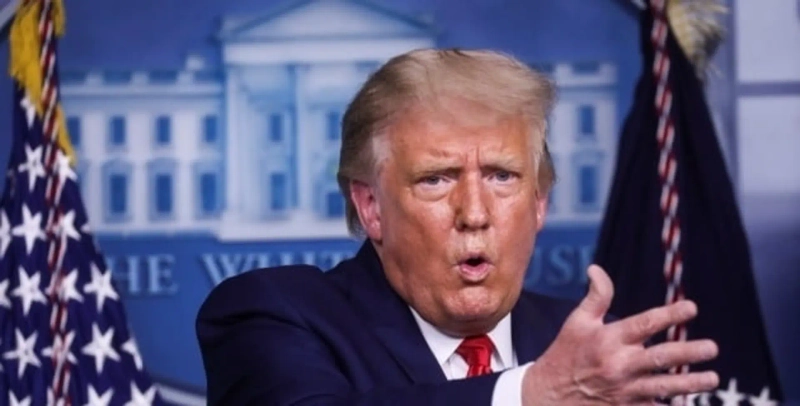
On the 25th (local time), U.S. President Donald Trump claimed that South Korea's $350 billion investment was "prepayment." He excluded loans or guarantees and demanded cash on a blank check without specifying investment targets.
The Trump administration is anxious to show the world that it can succeed on tariffs against close allies with high export dependence on the U.S., namely South Korea and Japan. The U.S., which believes it has achieved a considerable level of success with Japan, fears that if it allows more favorable terms for South Korea it may have to roll back the hard-won negotiation outcomes with Japan.
○ The ever-increasing price for tariff reductions
When President Trump sent letters listing new reciprocal tariff rates to each country in July, he first made public letters showing 25% for both South Korea and Japan. White House spokeswoman Caroline Levitt explained the new tariff rates and used the letters to Korea and Japan as examples.
Since then, White House officials have portrayed tariff issues differently: as a temporary pressure tactic to change policies regarding China or Russia, but as a bargaining tool to extract money from South Korea and Japan. Although the Trump administration is using a variety of elaborate techniques regarding reciprocal and item-specific tariffs, these techniques appear to have been aimed from the start at the 'money machine' South Korea and Japan rather than at China, Russia, or India.
Moreover, the 'price' the Trump administration wants for tariff reductions has been evolving, with its scale and form continually changing. Rather than setting specific targets from the outset, it seems to be targeting the point that will extract the greatest concessions based on the counterpart's responses.
This has created the double burden of 'same dream, different agendas' in negotiations for South Korea and Japan. At the time the tariff negotiations were settled on July 30, both South Korea and Japan understood the amount to include loans and guarantees, and the U.S. side did not at that time raise issues or say it thought differently about such understandings.
In particular, the U.S. welcomed the shipbuilding-only fund (MASGA fund) at the time. Considering the lack of competitiveness of U.S. commercial shipyards, it was natural to view these funds as supporting the entry of Korean firms into the U.S. market, and for the support to take the form of a financial package including loans and guarantees. There was a sense that what Kim Yong-beom, the policy chief, had written in his memorandum was not simply one-sided wishful thinking.
The moment differences became serious was on August 25, when no joint statement or fact sheet was released ahead of the summit. Just before the summit, Jamison Greer of the U.S. Trade Representative (USTR) is reported to have told the Korean side that "an agreement was near." Specific agreement language was exchanged between the parties. But negotiations broke down a day before the summit when Korea refused the U.S. demand for a $350 billion blank check.
○ Overreaching to make the Korea-Japan cases succeed
Contrary to the friendly atmosphere on the day of the summit, subsequent U.S. remarks have been increasingly strong. After Secretary Lutnick called acceptance of high tariff rates and investment terms a "black-and-white issue," President Trump mentioning "prepayment" is significant. The Wall Street Journal (WSJ) reported that Howard Lutnick, U.S. Commerce Secretary, said the cash portion of the $350 billion should be increased and that the final amount should be somewhat closer to Japan's pledged $550 billion.
The Korean side's continued tough rhetoric has clearly tended to provoke even more provocative responses from the U.S. Remarks such as President Lee saying that accepting U.S. terms could lead to "impeachment" or warning that another foreign exchange crisis could occur have offended the U.S.
Japan's signing onto negotiation terms that largely accept the U.S. position is making it difficult for the U.S. to make concessions to South Korea. The WSJ, citing anonymous sources, reported that Secretary Lutnick is concerned that if Korea is offered a markedly different deal structure, the agreement made with Japan without legal binding could be undermined.
With the price for tariffs stretching like a rubber band and President Trump even mentioning prepayment, South Korea's tariff negotiations have become even more difficult. By its nature, prepayment cannot mean loans or guarantees. It has become clear that the U.S. wants a unilateral transfer of funds without specified investment targets.
The Korean government had anticipated participation by the Export-Import Bank and the Korea Trade Insurance Corporation in the fund, but if the money is given as a prepayment, there will be very little room for such institutions to be involved. Not only is there no guarantee that the funds will be used for Korean firms' entry into the U.S., but there is a high possibility they would be allocated to President Trump's political ventures. If one cannot rule out the possibility that the projects are ones from which the principal cannot realistically be recovered, discussions about principal recovery or profit distribution become meaningless.
Washington=Sang-eun Lee, correspondent selee@hankyung.com

Korea Economic Daily
hankyung@bloomingbit.ioThe Korea Economic Daily Global is a digital media where latest news on Korean companies, industries, and financial markets.