

PiCK
[Exclusive] Naver must overcome 'separation between finance and virtual assets' regulation to acquire Dunamu
Summary
- Naver Financial's push to incorporate Dunamu as a subsidiary has highlighted the 'separation between finance and virtual assets' regulation as a key issue.
- The financial authorities are reviewing whether to apply the regulation to fintech companies such as Naver Pay and have hinted at potential regulatory changes.
- If the deal goes through, Naver Financial would secure 100% of Dunamu's shares, and attention should be paid to moves toward integration between the finance and virtual asset industries domestically and internationally.
Restrictions on financial firms' virtual asset investments
Divided interpretations over applying Naver Pay
Possibility of regulatory adjustment by financial authorities
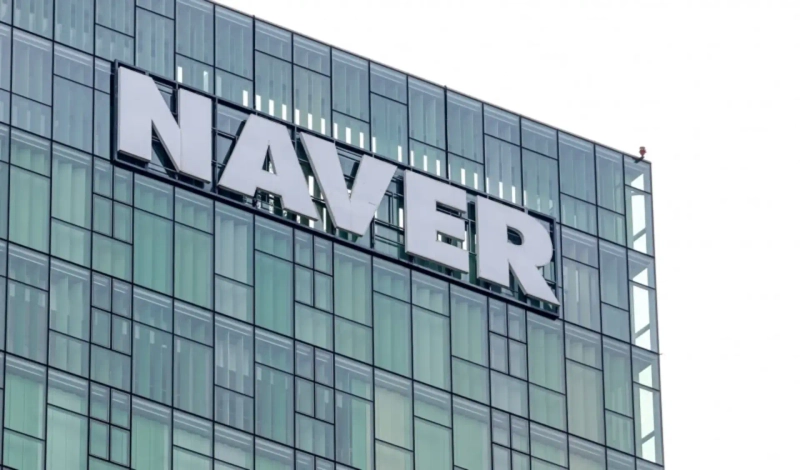
In talks over a merger between Naver and Dunamu, there is an expectation that the 'separation between finance and virtual assets' regulation will emerge as a key issue. Naver's financial affiliate Naver Financial is pursuing a plan to incorporate Dunamu as a subsidiary, prompting the financial authorities to examine whether this would conflict with the separation regulation.
On the 26th, a financial authority official said, "We will review whether Naver's incorporation of Dunamu, which operates the cryptocurrency exchange Upbit, violates the separation between finance and virtual assets." The separation rule has been a long-held government principle. The financial authorities strictly limit financial companies from investing in virtual assets or collaborating with related firms to prevent shocks in the virtual asset market from spilling over into traditional finance.
According to the investment banking (IB) industry, Naver Financial plans to issue a large number of new shares to swap for all the shares held by existing Dunamu shareholders. If the deal is concluded, Naver Financial is expected to secure 100% of Dunamu's shares and incorporate it as a subsidiary. If the major shareholder changes, Dunamu, as a virtual asset operator, must apply for a major shareholder change to the Financial Intelligence Unit (FIU) of the Financial Services Commission.
Some argue that Naver Pay, a fintech company and electronic financial service provider, having Dunamu as a subsidiary would directly conflict with the principle of separation between finance and virtual assets. On the other hand, there is a strong counterargument that traditional financial companies such as banks and insurers should be viewed differently from fintech firms like Naver Pay. A financial authority official also said, "Opinions vary on whether the separation regulation should apply to fintech companies."
There is also speculation that the financial authorities may use this opportunity to substantially revise the separation regulation. Unlike 'separation between finance and industrial capital' (prohibition on the combination of financial and industrial capital), the separation between finance and virtual assets is not a regulation explicitly specified in law. This means it can be changed at the discretion of the financial authorities. In major advanced countries, attempts to combine traditional finance and virtual assets, including spot Bitcoin exchange-traded funds (ETFs), are increasing. Recently in Korea, discussions have also intensified over banks and card companies issuing won-denominated stablecoins and entering virtual asset custody (custody) businesses.
Reporter Seo Hyung-gyo seogyo@hankyung.com

Korea Economic Daily
hankyung@bloomingbit.ioThe Korea Economic Daily Global is a digital media where latest news on Korean companies, industries, and financial markets.