

"Dollar assets are a safeguard"… How a 'star' PB picks private equity funds [Interview+]
Summary
- Kim Jeom-sun, Executive Director of Hana Securities Dogok WM Center, emphasized the importance of dollar-denominated assets within investment portfolios, stating that the dollar strengthens in crises.
- In equity investing, he cited using U.S stocks and private equity funds, noting that he prioritizes fund managers who delivered strong performance even during prolonged market downturns.
- He judged that the U.S. regulators' approval of financial products linked to virtual assets has led to virtual assets being recognized within the institutional framework, and that they should be included as part of financial assets.
Kim Jeom-sun, Executive Director, Hana Securities Dogok WM Center
"The dollar that strengthens in crises"
"Prefers fund managers who performed well even during prolonged market downturns"
"When interest rate volatility increases, you must check if it signals a recession"
"The U.S. Fed's September rate cut is 'insurance'… favorable for growth stocks"
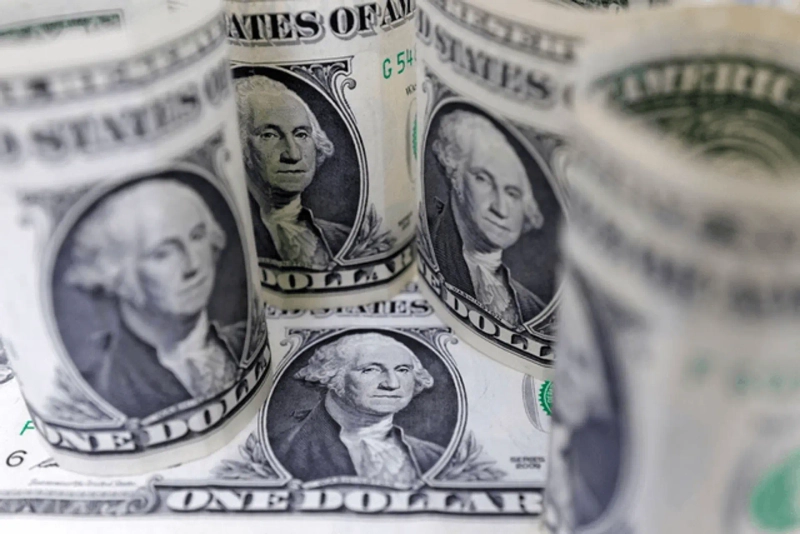
"From the standpoint of someone who has made asset management a long-term profession, the dollar is an insurance-like asset that is essential to a portfolio. Because real estate occupies such a large portion of Koreans' total assets, no matter how much you increase the share of dollar-denominated assets within financial assets, it will inevitably be negligible compared to total assets."
Kim Jeom-sun, Executive Director of Hana Securities Dogok WM Center, emphasized the importance of the dollar within a financial asset portfolio in an interview with Hankyung.com on the 28th, saying, "Do not think of dollar-denominated assets converted into won; you should diversify currencies within the portfolio." He worked as a private banker (PB) at Citibank Korea for 17 years, serving as branch manager and center head, and joined Hana Securities in 2022.

Regarding why dollar-denominated assets are important, Kim said, "They strengthen in crises."
In fact, whenever a global financial crisis occurs, the value of the dollar soars. The most representative cases are the 2008 global financial crisis and the early phase of the COVID-19 pandemic in 2020.
Looking at the dollar index, which compares the value of the dollar against the currencies of six major countries, the index surged from the 70s to near 90 around the time of Lehman Brothers' bankruptcy that triggered the 2008 global financial crisis. The won-dollar exchange rate was around 1,180 won per dollar in September 2008, just before the crisis broke out, and then shot up to about 1,570 won per dollar by March 2009. In March 2020, when the global economy was paralyzed by the spread of COVID-19 and financial markets were hit hard, the dollar index temporarily jumped from the low 90s to above 100.
This is because a credit crunch creates a shortage of dollars. The United States is the world's financial hub and the dollar is the key currency. Most financial transactions are conducted in dollars. When a credit crunch occurs, financial institutions stop trusting one another and even short-term instruments are not rolled over or reissued, with lenders demanding repayment. Since dollar-denominated bonds must be repaid in dollars, debtors sell whatever they can to secure dollars. In the early stages of a financial crisis, the prices of all assets tumble while only the value of the dollar soars.
Even without shocks, Kim explained there is an inverse correlation between the value of the dollar and the value of U.S. companies.
"Most U.S. companies are global companies. When the dollar weakens, the profits of those global companies increase, which leads to stock price gains. Historically, when the dollar was weak, U.S. stocks were strong, and when U.S. stocks weakened, the dollar tended to strengthen."
Within a stock portfolio, he gives more weight to U.S. stocks than to Korean stocks. Besides currency (dollar) gains, the U.S. is the most outstanding country in terms of 'growth.' Kim emphasized that the U.S. has the most companies creating innovations, including in the field of artificial intelligence (AI). Also, even if the most innovative companies are not headquartered in the U.S., they often seek listing on U.S. stock exchanges. A well-known example among domestic investors is Coupang.
However, recently his clients' allocation to Korean stocks has risen to about half of their equity portfolios, Kim said. Since around June this year when the new government took office, the Korean stock market has been one of the fastest rising in the world, increasing the proportion of previously held Korean equities. In addition, wealthy investors have shown increased interest in the new government's policies to revitalize the stock market. He said they have also raised the equity portion within financial assets to around 70%. They are using proceeds from short-term bonds that are maturing and not being rolled over to receive cash and allocate it into stocks.
When investing in domestic stocks, he primarily uses private equity funds.
He said, "The reason I moved to a securities firm in 2022 was to handle a variety of assets," adding, "When I was at the bank and couldn't use private equity fund products, I saw many clients achieving high returns through unlisted stock or overseas stock investments." The year after he joined Hana Securities, in 2023, while screening private equity fund products worth investing in, he discovered a manager who had achieved high returns even in 2022 when the domestic stock market sentiment was poor, and he invested in that company's product and earned high returns.
When selecting private equity fund products, Kim pays close attention to the fund manager's past performance and investment methods. First, they must have delivered absolutely high returns even during bear markets and have run funds for more than 10 years. He said the ability to accurately identify stock price trends is important for trading stocks.
Kim said, "I look at whether they didn't sell a major trending stock too early and captured sufficient gains, and whether, after confirming a trend reversal, they quickly sold stocks and used short selling to capture alpha (additional returns)."
He cites interest rates as the indicator to gauge when to reduce the currently increasing equity allocation. He said, "When interest rate volatility rises, whether up or down, it's the first signal to be cautious. If the reason for increased interest rate volatility is a recession, we will increase the bond allocation again."
Regarding the U.S. central bank (the Fed)'s rate cut that is behind the current interest rate volatility, Kim described it as an "insurance rate cut" that will not break the market. He expects that continued rate cuts through next year will support the strength of growth stocks.
Industries he sees as promising in the mid-to-long term are AI, healthcare, and defense.
Kim said, "With AI being applied across all industries, semiconductors are a must-invest sector, and energy and security, which are part of AI infrastructure, are also growth industries. With unstable international conditions, countries are increasing defense spending, and with the era of private space development opening, rockets and satellite communications will stand out for their growth potential." He added, "Bio and healthcare, which are expanding due to aging populations and are increasingly combining with AI, also have high growth potential."
From an asset allocation perspective, Kim views last year's approval by U.S. regulators of financial products backed by virtual assets as a turning point. It means there is one more asset class to invest in.
He said, "Wealthy investors now clearly recognize virtual assets as 'assets incorporated into the institutional framework,'" and judged that, "Since it has become a sector of assets, it should be held as part of financial assets."
He added, "As a PB, what I can do is buy stocks or financial products related to virtual assets, but recently an elderly client wanted to invest directly in virtual assets, so I helped install a virtual asset trading app for them."
Hankyung.com reporter Han Kyung-woo case@hankyung.com

Korea Economic Daily
hankyung@bloomingbit.ioThe Korea Economic Daily Global is a digital media where latest news on Korean companies, industries, and financial markets.