

"150 yen per dollar"… Yen depreciation outlook after Takaichi's victory in Japan
Summary
- There are forecasts that Takaichi's victory will likely delay the Bank of Japan's policy rate increases, accelerating yen depreciation.
- The market has suggested that the yen-dollar exchange rate could rise from the current around 147 yen per dollar to the 150 yen range per dollar.
- It also reported that investors are paying attention to the possibility of fiscal burden and rising government bond yields resulting from proactive fiscal policy and policies that reduce tax revenue.
Takaichi "Responsible proactive fiscal policy"
A catalyst for stock price gains, but a burden on public finances
Possibility of rising government bond yields
Signals possible intervention despite Bank of Japan policy
Difficulties for a rate hike this month
Possibility of a sharp fall in the yen's value
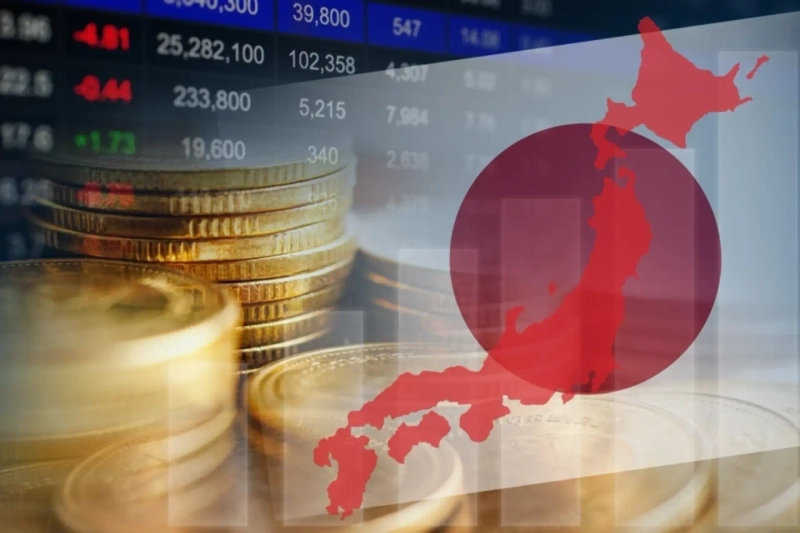
Sanae Takaichi, the new Liberal Democratic Party leader who will become Japan's first female prime minister, faces a mountain of economic challenges. Her pledge of "responsible proactive fiscal policy" is a factor that could boost stock prices, but it also raises concerns about deteriorating public finances and could push up government bond yields. With the election of Takaichi, who is an advocate of monetary easing, there is also a view that further policy rate increases by the Bank of Japan will be delayed, accelerating yen depreciation.
On the 5th, according to the Mainichi Shimbun and others, Takaichi has long advocated "proactive fiscal policy." The focus is on measures to raise prices. At a press conference after her election as party leader on the 4th, she expressed determination, saying, "No matter what happens, I want to devote myself to measures to raise prices." She is likely to pursue a plan to abolish the provisional tax rate that was added to the gasoline tax.
There is also a possibility of progress in consultations with opposition parties. The "benefit-type tax credit" that Takaichi raised during this election as a price measure was originally proposed by the main opposition Constitutional Democratic Party. It is a method that combines income tax cuts and cash payments. Takaichi also said she "agrees" with the third party, the Democratic Party for the People, proposal to raise the annual tax-exempt income threshold to 1.78 million yen.
Takaichi remained silent on the opposition's demand for a cut in the consumption tax. During this leadership race, former Prime Minister Taro Aso, who had backed her, took a cautious stance on cutting the consumption tax. Aso is a former finance minister. At a press conference the previous day, Takaichi said, however, that "it is by no means something to be ruled out as an option."
These policies would reduce government revenue and increase fiscal burdens, making securing funding a major challenge. Takaichi plans to use increased tax revenues where possible and, if insufficient, to fill the gap by issuing deficit-covering government bonds. However, a senior Ministry of Finance official warned, "How much (Takaichi) understands the current fiscal difficulties is a concern."
It is not only the government that is wary of Takaichi. In last year's LDP leadership race, she targeted the Bank of Japan, saying, "I think raising the (policy) rate now would be a foolish thing to do." She criticized efforts to normalize monetary policy by raising the policy rate. At the press conference the previous day, Takaichi also hinted at possible intervention in monetary policy.
The Bank of Japan is considering the timing of additional policy rate increases. Until now, markets have viewed a rate hike this month as the most likely. However, with Takaichi's election, there is a view that an October rate hike has become less likely. If the policy rate is left unchanged, there is concern that yen depreciation will accelerate; but if it is raised, yen appreciation could reduce exporters' profitability and risk putting downward pressure on the economy.
Markets are forecasting a sharp yen depreciation early next week. Earlier, markets had expected the election of Shinjiro Koizumi, who advocated "normalization of monetary policy" and "fiscal consolidation," but since that expectation was missed, the foreign exchange market is expected to swing significantly. There is also a view that the yen-dollar exchange rate could rise from the current around 147 yen per dollar to the 150 yen range per dollar. This means the value of the yen would fall.
Tokyo=Kim Il-gyu, correspondent
Kim Il-gyu, reporter black0419@hankyung.com

Korea Economic Daily
hankyung@bloomingbit.ioThe Korea Economic Daily Global is a digital media where latest news on Korean companies, industries, and financial markets.