

Summary
- Wall Street experts said dollar weakness is expected to fall an additional 10% by the end of next year.
- They said the U.S.'s economic growth rate and interest rates are expected to fall to levels similar to those of other advanced economies.
- They added that some also predicted a sideways dollar, citing the narrowed real interest rate gap between the U.S. and the eurozone and purchasing power parity.
Wall Street "Recent rebound is technical resistance
Likely to fall another 10% by the end of next year"
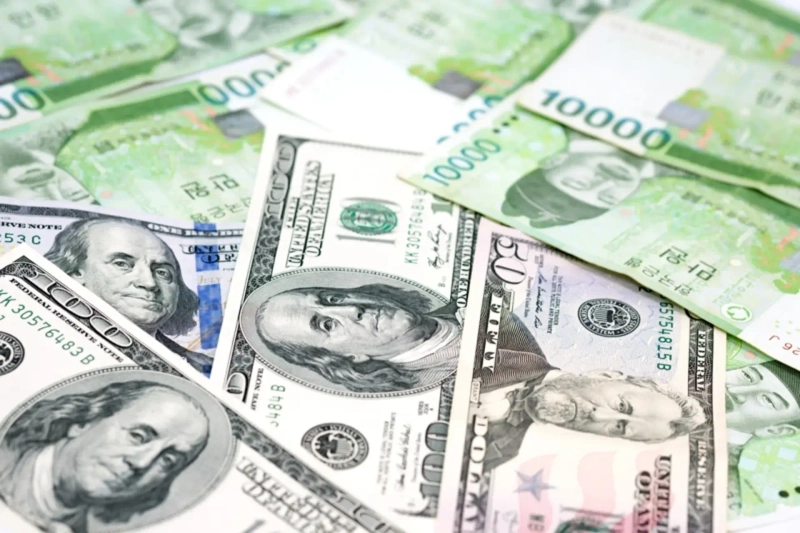
The U.S. dollar fell 11% as it remained weak throughout the first half of this year. This is the largest half-year decline in 52 years since 1973. Wall Street experts say that although a recent weakening of the Korean won has emerged, the dollar's weakness is expected to be greater over the medium to long term.
On the 7th (local time), according to the New York Intercontinental Exchange (ICE), the ICE Dollar Index, which measures the value of the U.S. dollar against six major currencies, stood at 98.57. It has fallen more than 9% so far this year but is more than 2% higher than the early July annual low (96.22). Analysts say the economy is showing signs of recovery — with U.S. third-quarter gross domestic product (GDP) growth estimated at around 3% — and overseas investors have resumed buying U.S. assets since May, leading to a partial rebound in the dollar's value.
Concerns that tariffs could raise inflation have kept U.S. long-term interest rates in the mid-4% range, higher than those in Europe and Japan, which is also a supporting factor for the dollar. In October, the yen weakened as Sanae Takaichi, president of Japan's Liberal Democratic Party, was expected to take office as prime minister, and the euro also weakened amid political turmoil in France, supporting the dollar's strength.
However, Wall Street investment banks say the pace of the first-half decline was so fast that it is merely facing technical resistance and that the weak-dollar trend is expected to continue. Morgan Stanley said, "The structural dollar-strengthening cycle that began in 2010 has effectively ended," and predicted an additional 10% decline by the end of 2026, because the U.S.'s relatively higher economic growth rate and interest rates are expected to fall to levels similar to those of other advanced economies.
Goldman Sachs said, "The dollar is expected to fall further over the coming months." ING observed that if the U.S. central bank (Fed), which resumed rate cuts last month, turns out to be more dovish than expected, the dollar could fall further.
However, some forecast that the dollar will move sideways. Ned Davis Research explained that the real interest rate gap between the U.S. and the eurozone has narrowed significantly, and that the dollar index is no longer overvalued on a purchasing power parity (PPP) basis.
New York=Kim Hyun-seok, correspondent realist@hankyung.com

Korea Economic Daily
hankyung@bloomingbit.ioThe Korea Economic Daily Global is a digital media where latest news on Korean companies, industries, and financial markets.