

"I'm the only one without gold"…FOMO joins, 91 trillion won flows into gold ETFs this year
Summary
- About 91 trillion won has flowed into gold ETFs this year, marking a record inflow of funds.
- Political and economic uncertainty, expectations of rate cuts, and central bank buying have combined to drive gold price increases.
- Analysts expect that next year continued inflows into gold ETFs and further U.S. rate cuts will support gold prices.
In an era of political and economic uncertainty, it overtakes the U.S. dollar and U.S. Treasuries
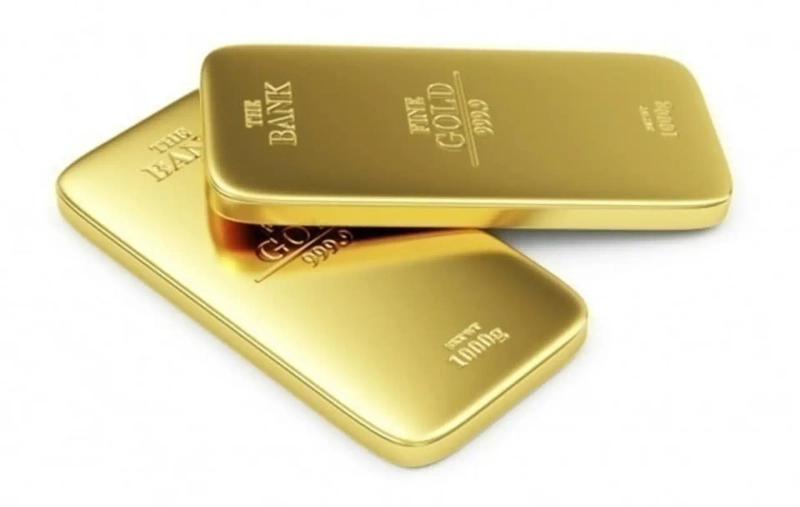
Investors, seeking a hedge against global economic uncertainty, have been hoarding the safe-haven asset gold, pushing gold past $4,000 per ounce without a pullback.
Based on Greenwich Mean Time (GMT), at 11:54 the December-delivery U.S. gold futures price rose 1.3% to $4,058.
Silver also, buoyed by gold's rise, rose 2.4% to $48.97 per ounce, just shy of an all-time high of $49.51.
Year-to-date, gold has risen about 54% from the start of the year, outpacing global stocks and bitcoin. Gold rose 27% last year. Meanwhile, the U.S. dollar and oil have declined this year.
This year's rally has been particularly supported by huge inflows into gold exchange-traded funds (ETFs).
According to data from the World Gold Council cited by Reuters on the 8th (local time), global inflows into gold ETFs this year reached $64 billion (about 91 trillion won). In September alone, inflows reached a record $17.3 billion (about 24.6 trillion won).
The rush into gold ETFs reflects a combination of factors: high political and economic uncertainty worldwide, expectations of rate cuts, strong central bank buying, and weakness in the dollar and U.S. Treasuries, which have long been considered safe assets.
Rona O'Connell, an analyst at StoneX, said, "The background factors in terms of geopolitical uncertainty are the same as before, but the additional factor of a U.S. government shutdown has had a large effect." She said the U.S. government shutdown is not preventing the stock rally, but investors are expecting gold to hedge risks.
The U.S. government shutdown, now entering its eighth day on Wednesday, is delaying the release of economic data. Markets expect the Federal Reserve to cut rates by 25 basis points at its October meeting. A similar cut is expected in December.
Political turmoil in France and Japan is also increasing interest in safe-haven assets.
Analysts expect that next year, continued inflows into gold ETFs, central bank buying, and U.S. rate cuts will support gold prices. Major banks have repeatedly raised their price forecasts for next year in response to this rally.
Analysts said that popular psychology riding on "FOMO (Fear of Missing Out: the fear of missing out" is also fueling the gold rally. Nitesh Shah, a commodity strategist at WisdomTree, reiterated his previous forecast that "gold will reach $4,530 per ounce by the end of the third quarter of 2026."
UBS analyst Giovanni Staunovo said, "One headwind for gold would be the Fed being more hawkish in its rate policy." However, he said, "Gold's appeal will continue to rise due to the Trump administration's push for rate cuts and policy uncertainty."
Meanwhile, HSBC raised its average silver price this year to $38.56 per ounce and to $44.50 per ounce for 2026.
Gold's rise is affecting other precious metals. Platinum traded at $1,652.80 per ounce, up 2.4%, and palladium traded at $1,392.26, up 4.1%.
Guest reporter Jeong-A Kim kja@hankyung.com

Korea Economic Daily
hankyung@bloomingbit.ioThe Korea Economic Daily Global is a digital media where latest news on Korean companies, industries, and financial markets.