

'Billionaire' warns…"Gold frenzy is worrisome"
Summary
- Citadel's CEO Ken Griffin said he is concerned about investors crowding into dollar-alternative assets such as gold and Bitcoin.
- Griffin questioned investors' preference for safe assets, saying that shifting away from the dollar has caused significant inflation in assets like gold.
- Gold prices fell from the $4,000-per-ounce range after recent Middle East tensions eased, and the market noted the unusual phenomenon of gold and Bitcoin rising together.
Ken Griffin "It's hard to believe investors are moving into dollar alternatives"
Gold retreats from $4,000 per ounce as Middle East tensions ease
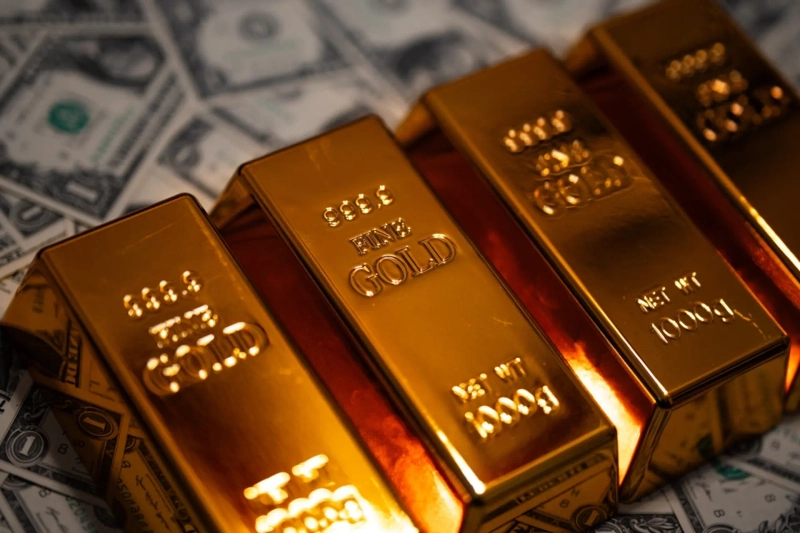
Amid a 'gold rally' in which safe-haven demand has pushed international gold prices toward the $4,000-per-ounce range, a Wall Street billionaire issued a warning.
Ken Griffin (Ken Griffin), CEO of hedge fund firm Citadel, told Bloomberg at the Citadel Securities conference held in New York this week, "Investors are crowding not only into gold but also into dollar-alternative assets like Bitcoin. It's hard to believe," adding, "It's really worrisome that people view gold as a haven asset the way they once viewed the dollar."
Billionaire investor Griffin is also regarded as a major donor who has contributed large sums to the U.S. Republican Party.
Griffin assessed, "Effectively reducing dollar exposure or seeking ways to lower portfolio risk relative to U.S. Treasury risk has led to significant inflation in assets outside the dollar," expressing this view.
With forecasts still calling for further gains in gold prices, he questioned the trend of investors beginning to see gold as a safer asset than the dollar.
Goldman Sachs recently estimated in a report that if just 1% of U.S. Treasuries held by individuals were converted into precious metals, gold prices could approach the $5,000-per-ounce level.
On the current economic situation, Griffin diagnosed, "The U.S. is implementing fiscal and monetary stimulus broadly similar to what occurs in a recession, and this is heating up the market," adding, "The current U.S. economy is certainly in a temporary state of excessive stimulus."
Bloomberg noted that this year investors have been making large bets on gold, silver, and Bitcoin in a phenomenon called the 'debasement trade.'
The 'debasement trade' refers to a 'debasement trade (debasement trade)' aimed at hedging against a qualitative deterioration in the value of money.
Traditionally, investors would buy U.S. Treasuries as a form of insurance when economic uncertainty increases, but now they are seeking gold or other alternatives instead of U.S. Treasuries.
Some voices say that instead of the usual inverse correlation—where safe-haven assets like gold rise while risk assets such as stocks and cryptocurrencies fall—an anomalous phenomenon is occurring in which stocks, gold, and Bitcoin are all rising together.
The gold price rally that had been surging relentlessly eased somewhat that day. The move reflected eased Middle East tensions after Israel and Palestinian militant group Hamas signed the first phase of a ceasefire agreement in the Gaza Strip.
On the 9th (local time), December gold futures on the New York Mercantile Exchange (COMEX) closed down 2.4% at $3,972.6 per ounce.
Reporter Kim Bo-seon sunrise@wowtv.co.kr

Korea Economic Daily
hankyung@bloomingbit.ioThe Korea Economic Daily Global is a digital media where latest news on Korean companies, industries, and financial markets.