

Stablecoin surge?…Why only the won was distorted [Hankyung Koala]
Summary
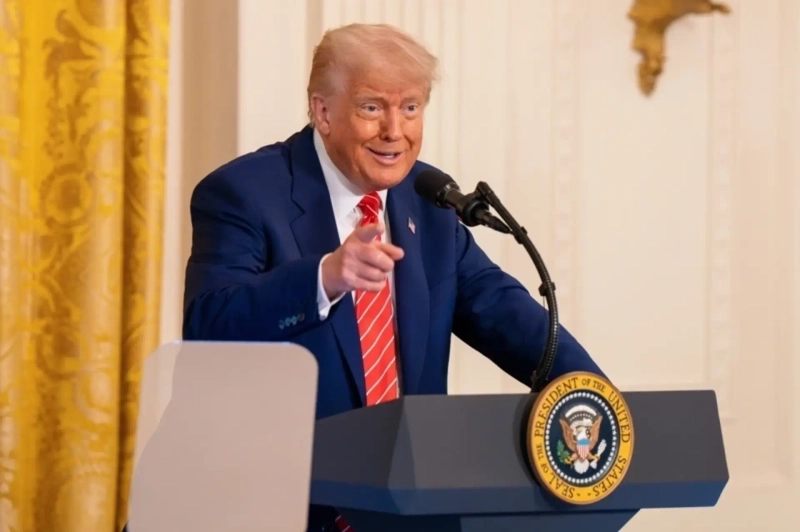
- The market plunge following President Trump's remarks on the 10th caused the won price of stablecoins to surge.
- It stated that price distortions resulting from buy–sell mismatches occurred because there are no official market makers in the domestic virtual asset market.
- It argued that introducing a market maker system is essential to resolve price distortions and protect investors.
Kim Min-seung's ₿ficial
The real cause of the stablecoin surge was the absence of market makers
On the 10th, the virtual asset market plunged on a single remark by President Trump. In the process, an unusual price spike was observed on domestic exchanges, with USDT reaching 5,700 won and USD1 exceeding 10,000 won. This led to questions that 'stablecoins were not stable,' but this misunderstands the essence of the phenomenon. According to the data, the dollar peg of the stablecoins rose by only 0.5% at one point on the 10th and remained stable. The only thing that was distorted was the won price.
The real cause of Tether's price surge
Why did this happen? Because there were no market makers to absorb the surge in market buy orders. When Bitcoin collapsed on the 10th, altcoins plunged by tens of percent, and it is estimated that domestic leveraged investors who had bet on upside—expecting 'Uptober' and a 'Santa rally'—were massively margin-called on overseas exchanges. To avoid forced liquidation they had to post additional margin, and the asset most commonly used as margin is dollar stablecoins. This caused cash buying demand to secure stablecoins domestically to surge in a short period.
The problem was that there was very little sell volume to meet this explosive buy demand. By basic supply-and-demand principles, the won price of stablecoins, which were in short supply, could not help but skyrocket. Under normal circumstances a price above 1,500 won would be shunned, but investors facing tens of percent asset declines and margin call pressure likely rushed to market-buy regardless of price. Prices of Tether at 5,700 won and USD1 at 10,000 won are analyzed as results born of that market desperation.
The safety mechanisms that prevent market distortions from buy–sell mismatches are the 'market maker (Market Maker)' and 'liquidity provider (Liquidity Provider)' systems. They play a key role by tightly quoting both buy and sell sides to support smooth trading for investors and reduce actual trading costs. These systems are already commonplace in major stock markets like Nasdaq and are institutionalized in our stock market as well. BlackRock's spot Bitcoin ETF IBIT also specifies in documents submitted to the SEC that it will use market makers (MM-BD, MM-crypto).
Market makers are prohibited in the domestic virtual asset market
Global virtual asset exchanges like Coinbase and Binance also secure market stability through liquidity provider systems. However, there are no official market makers in the domestic virtual asset market. Unlike the Capital Markets Act, which exceptionally allows stabilization operations or market making to facilitate securities underwriting and sales, the Act on the Protection of Users of Virtual Assets does not contain such provisions. In addition, the won market can only be used by domestic individuals, fundamentally blocking corporations or financial institutions from acting as market makers.
The chronic 'kimchi premium' or 'reverse premium' phenomena can also be seen as stemming from a structural problem where formal market makers cannot operate. Individuals face many restrictions in conducting arbitrage via capital movement with overseas markets, so there are clear limits to normalizing price distortions. If companies legally managing large capital could operate in domestic and overseas markets and the foreign exchange market, both price distortion resolution and profit generation would be possible, but this too is blocked.
In the past, 'MM (Market Maker)' in the domestic virtual asset market carried a negative image as a price-manipulating force that conducted 'pump-and-dump.' But that was because, in the absence of a system, unqualified operators falsely claiming to be 'market makers' disrupted the market. Now, like in the capital market, a reasonable market maker system should be introduced in the virtual asset market to protect honest investors and eradicate illegal acts by unqualified operators.
Market making is not a peculiar or strange activity but the 'common sense' of advanced financial markets. The persistently controversial issues of 'listing pump' and the 'kimchi premium' can find a way to be resolved through institutionalizing market makers. Furthermore, the role of market makers is essential for the stable circulation of a domestic spot Bitcoin ETF that may be allowed someday and for a won stablecoin whose legalization is currently under discussion.
If won stablecoins used in everyday life suddenly surge to 5.7 won or plunge to 0.3 won, it would cause major shocks to society and could even shake the foreign exchange market. Remember that the collapse of Terra·Luna also began with a sharp drop in the price of TerraUSD that occurred when liquidity was temporarily removed from decentralized exchanges. Sudden asset price swings can happen at any time without properly functioning market makers and liquidity providers. Discussions on institutionalization must begin as soon as possible.
Kim Min-seung, head of the Korbit Research Center, ...
He is a founding member and head of the Korbit Research Center. He explains complex events and concepts in the blockchain and virtual asset ecosystem in an easy-to-understand way and helps people with different perspectives understand each other. He has experience in blockchain project strategy planning and software development.
▶This article is a guest column introduced to provide various perspectives to subscribers of the cryptocurrency investment newsletter and does not represent the position of The Korea Economic Daily.

Korea Economic Daily
hankyung@bloomingbit.ioThe Korea Economic Daily Global is a digital media where latest news on Korean companies, industries, and financial markets.