

13,000 times faster than supercomputers… Google develops 'quantum echo' technology
Summary
- Google said it succeeded for the first time in running a verifiable algorithm using its own quantum chip Willo.
- Google said Willo showed a processing speed 13,000 times faster than the world's highest-performance supercomputer.
- It said this experiment suggests that as quantum computers become capable of repeated computation, they can be transformed into tools for new scientific discoveries.
Using its state-of-the-art quantum chip Willo
Running verifiable algorithms
Opens the path for using quantum computers in scientific research
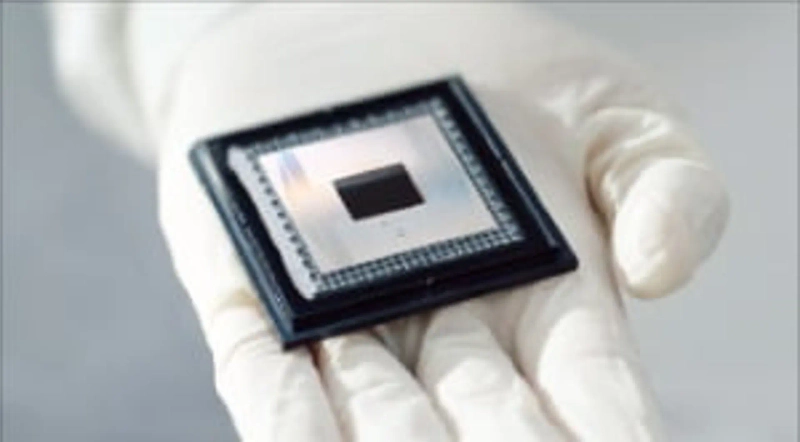
13,000 times faster than supercomputers… Google develops 'quantum echo' technology. Google has developed 'quantum echo' technology that can verify the computational results of quantum computers.
Google announced it succeeded for the first time in running a verifiable algorithm using its state-of-the-art quantum chip Willo (photo). This means that when the same calculation is performed on Willo or another quantum computer, the same result can be obtained repeatedly. Google said that when it ran this algorithm on Willo, it demonstrated a processing speed 13,000 times faster than the world's fastest supercomputer.
The basic unit of quantum computing, the qubit, is extremely sensitive to external factors such as light, so even slight interference causes computational errors. This instability was a major reason that made it difficult to use quantum computing in scientific research. However, Google explained that as repeated computation has become possible, quantum computers have shifted from objects of study to tools for new scientific discoveries.
Google introduced the quantum echo technique to repeat algorithm runs. It is a method that sends precisely tuned signals into the quantum system (Willo's qubits) and then detects the process of them returning in reverse. Google explained, "Quantum echo has improved measurement sensitivity unbelievably through constructive interference, a phenomenon where quantum waves combine and become stronger."
Google verified this approach through joint research with UC Berkeley. Using the Willo chip quantum computer and nuclear magnetic resonance analysis (NMR), they analyzed molecules composed of 15 and 28 atoms, respectively. The experimental results of the two analyses matched. Google said, "Just as telescopes and microscopes opened up new worlds previously unseen, this experiment is the first step toward a 'quantum-scope' that can measure natural phenomena that could not be observed until now."
Silicon Valley=Kim In-yeop, special correspondent

Korea Economic Daily
hankyung@bloomingbit.ioThe Korea Economic Daily Global is a digital media where latest news on Korean companies, industries, and financial markets.