

PiCK
Lee Chang-yong "Tariff talks, Japanese PM, US-China tensions raised the exchange rate by 26 won" [Hankyung Foreign Exchange Market Watch]
Summary
- Bank of Korea Governor Lee Chang-yong said only one-quarter of the recent rise in the won–dollar exchange rate was due to dollar strength.
- He cited delays in US-Korea tariff negotiations, concerns about expansionary fiscal policy by the new Japanese prime minister, and US-China tensions as the main factors behind the rise.
- He said that if uncertainty in the tariff negotiations is resolved favorably, the exchange rate could fall, and that efforts are being made to reduce volatility.
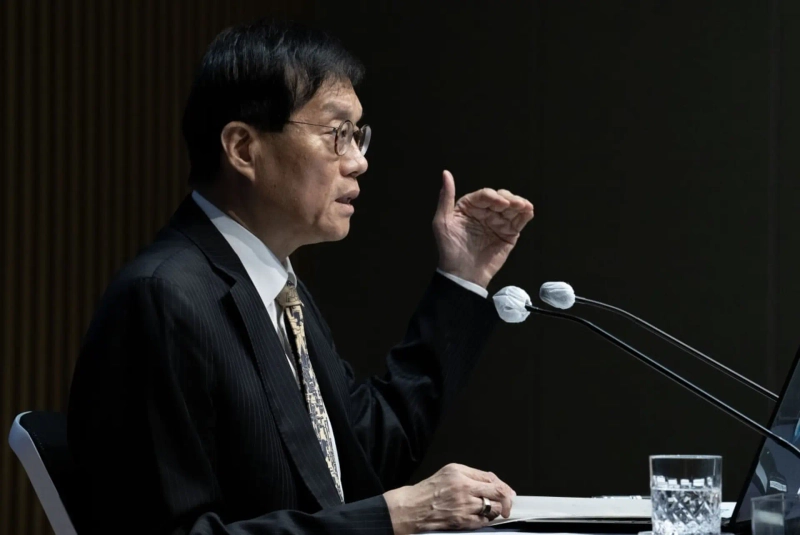
Bank of Korea Governor Lee Chang-yong said on the 23rd that only about one-quarter of the recent rise in the won–dollar exchange rate was due to a stronger US dollar. He explained that the remainder was due to regional factors such as delays in US-Korea tariff negotiations, concerns about expansionary fiscal policy by new Japanese Prime Minister Sanae Takaichi, and US-China tensions.
At a press briefing at the Bank of Korea headquarters on Namdaemun-ro in Seoul, Governor Lee gave this explanation in response to a question about the recent rise in the exchange rate. He said the exchange rate had "risen by about 35 won" since the monetary policy meeting held on August 28, and then analyzed the factors behind the increase.
Governor Lee said, "Of that, the effect from dollar strength is one-quarter, and the rest is due to yuan fluctuations from US-China tensions, concerns about expansionary fiscal policy by the new Japanese prime minister, delays in tariff negotiations, and issues related to raising $350 billion," adding, "The depreciation is mostly due to regional and domestic factors rather than the dollar." He viewed about 9 won of the roughly 35 won as due to the dollar, and about 26 won as due to the other factors.
He also mentioned overseas securities investment, which has been cited as another factor in the exchange rate rise. He said, "Our outflows are about four times what comes in," noting that "overseas securities investment is exerting pressure on the exchange rate."
Regarding future exchange rate prospects, he said, "If the uncertainty around tariff negotiations disappears in a favorable way, the exchange rate will fall," and added, "We are working to reduce volatility." The favorable outcome he referred to means tariff rates falling from 25% to 15%. He also mentioned as a variable how the plan to secure $350 billion in funding in the investment agreement will be resolved.
On the day, the won–dollar exchange rate in the Seoul foreign exchange market briefly surpassed 1,440 won. On why the exchange rate rose despite the policy rate being left unchanged, Governor Lee told reporters, "(Today) we need to look at the dollar index trend," and referred to the dynamics of US-China tensions.
Overnight, reports that the US administration is considering measures to restrict software exports to China led US stock markets to fall and heightened risk-off sentiment. The dollar index, which measures the value of the dollar against the currencies of six major countries, rose from the high 98s the previous day to around 99. It is also understood that foreign investors switching to net selling in the domestic stock market has contributed to the exchange rate rise.
Reporter Kang Jin-kyu josep@hankyung.com

Korea Economic Daily
hankyung@bloomingbit.ioThe Korea Economic Daily Global is a digital media where latest news on Korean companies, industries, and financial markets.