

[Editorial] Interest rate cuts hampered by house prices, exchange rate, and tariff negotiations
Summary
- The Bank of Korea said the main reasons for keeping the policy rate at an annual 2.5% were rising housing prices in the Seoul metropolitan area and instability in the won–dollar exchange rate.
- A majority of Monetary Policy Board members left open the possibility of interest-rate cuts within three months, but said stabilization of the real estate and foreign exchange markets is a prerequisite.
- They said that if the government's expansion of housing supply and reform of reconstruction and redevelopment regulations are successfully implemented, it would positively affect the easing of market anxiety and the realization of rate cuts.
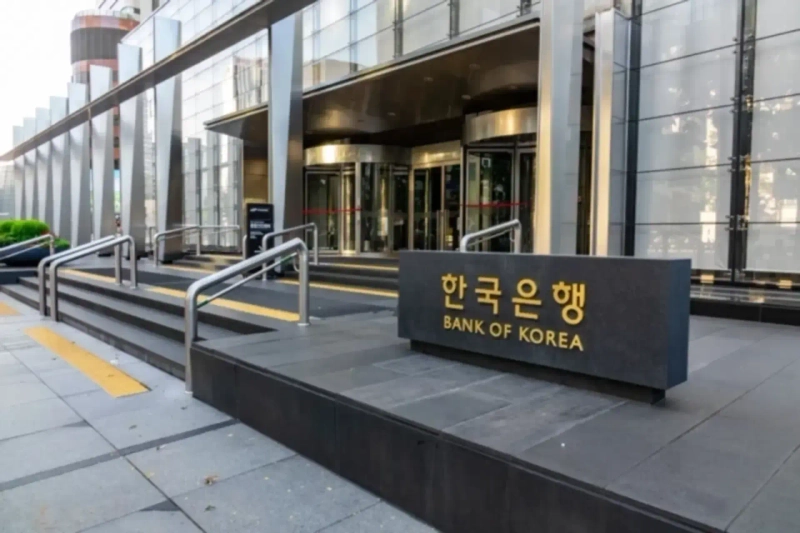
The Bank of Korea's Monetary Policy Board kept the policy rate at an annual 2.5% yesterday. This is the third consecutive hold and was an expected decision. Although economic weakness raises the need for rate cuts, the biggest reason is that housing prices in the Seoul metropolitan area are rising. Bank of Korea Governor Lee Chang-yong also explained, "The government has announced additional real estate measures, and we judged that it is necessary from a monetary policy perspective to avoid stimulating expectations of rising housing prices."
Seoul apartment prices show no sign of stabilizing downward despite the '10·15 real estate measures.' According to the Korea Real Estate Board's tally, Seoul apartment prices in the third week of October (as of Oct. 20) rose 0.5% from the previous week. Following the previous week's 0.54%, a large increase continued for two consecutive weeks. The won–dollar exchange rate, which is soaring in the 1,430-won range, is also tying the hands of rate policy.
Even excluding the governor, four of the six Monetary Policy Board members expressed the view that the possibility of lowering the policy rate within three months should be kept open. For a Monetary Policy Board that is thus prepared to actually cut rates, stabilization of the real estate and foreign exchange markets is essential. Since tariff negotiations with the United States are approaching the final stage and the exchange rate is likely to stabilize downward, ultimately calming the sharp rise in Seoul housing prices is the key.
It is at least fortunate that the government and the Democratic Party of Korea decided to prepare additional high-intensity housing supply measures by the end of the year. As Moon Jin-seok, the Democratic Party's deputy chief of floor operations, said, any land in Seoul where houses can be built should be put up for consideration. Even the signal of when and how much housing will be supplied on public and idle land in each of the 25 districts could to some extent calm anxious sentiment.
A more certain way to allay supply concerns is to institutionally support the activation of reconstruction and redevelopment. Increasing floor-area ratios and abolishing the reconstruction excess profit recovery levy are concrete methods. These are policies experts have continuously proposed. If these are not boldly adopted, neither stabilization of the real estate market nor the Bank of Korea's role in stimulating the economy can be expected.

Korea Economic Daily
hankyung@bloomingbit.ioThe Korea Economic Daily Global is a digital media where latest news on Korean companies, industries, and financial markets.