

Xi Jinping, carrying the weight of a fourth term, 'trade showdown' with Trump after 6 years
Summary
- It reported that strategic issues such as tariffs, export controls, and rare-earth controls are expected to be discussed at the US-China summit.
- It stated that China's trade diversification and strengthened rare-earth controls, combined with US tariff policies, could cause the global economy to fluctuate depending on the negotiation outcomes.
- It reported that while both countries do not want the trade war to be prolonged, they are more likely to focus on their own achievements rather than fundamental resolution, meaning investors should take a cautious approach.
APEC summit on the 30th, meeting after 6 years and 4 months
China strengthened its muscle, negotiations expected with no concessions
Considering economic slowdown, likely to avoid a prolonged trade war
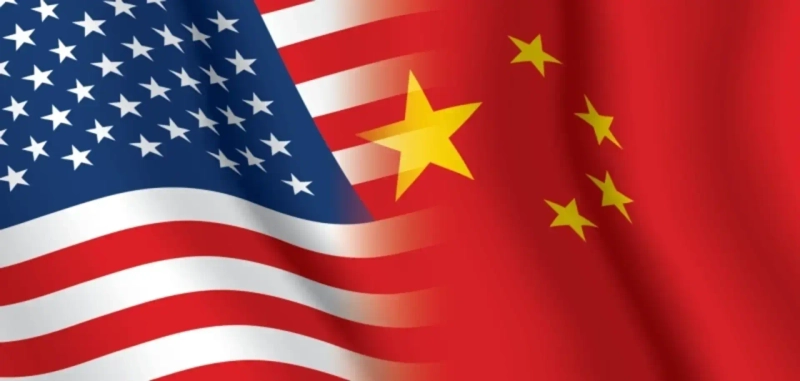
Donald Trump, President of the United States, and Xi Jinping, President of China, will meet on the 30th in Gyeongju, South Korea, on the sidelines of the Asia-Pacific Economic Cooperation (APEC) summit, marking their first meeting in 6 years and 4 months.
As President Trump, who advocates America First, and President Xi, who aims to be a global hegemon and offers no concessions, clash by imposing tariffs and various export controls, the global economy is expected to fluctuate depending on the outcome of the negotiations.
Observers say that, given the sharply diverging interests of the US and China, the talks are likely to remain at the level of a "temporary compromise" that momentarily patches up immediate points of contention such as tariff wars rather than producing a "deal of the century."
China still controls its rare-earth resources
On the 23rd (local time), the White House announced President Trump's Asia tour schedule at a briefing. Over four nights and five days, he will start in Malaysia and then visit Japan and South Korea. The Malaysia leg begins on the 26th. On the morning of the last day of the Asia tour, the 30th, President Trump will meet President Xi, who will visit Korea to attend APEC.
President Trump has continued a tough tariff policy and controls on advanced technology toward China, citing the need to reduce the US trade deficit with China and to block the inflow of fentanyl, dubbed the "zombie drug."
Unlike during Trump's first administration, China, confident in its economic and military strength, has strongly confronted the US using retaliatory tariffs and a rare-earth control card. Although President Trump has declared, "tariffs are much stronger than rare earths," China, having confirmed the potency of the rare-earth control card, has frequently targeted the United States by calling for a fair trade order and the abolition of protectionism.
Many analysts say China, having learned during Trump's first administration, prepared a phased trade-war scenario over several years including rare-earth export controls and suspension of US soybean imports, and has built the strength to withstand a prolonged US offensive.
Ahead of the summit at the end of this month, China Rare Earth Group, the world's largest state-owned rare-earth company, reconfirmed its intention to strictly enforce export controls in the fourth quarter. This amounted to the Chinese government publicly declaring its continued intention to strengthen control over its rare-earth resources.
In fact, the proportion of China's total exports to the US was 19.3% in 2018 during Trump's first administration, but this year it is below 10%. This is thanks to China's active trade diversification, which has greatly increased exports to Southeast Asia, Africa, and India. Even amid the trade war with the US this year, China's export performance has been strong.
Economic growth slowdown, internal discontent a 'worry'
However, for China too, a prolonged trade war with the US would be a burden. China's third-quarter economic growth this year was 4.8%, the worst in a year. While investment and consumption contraction are being offset by exports, if the trade war with the US continues into next year, domestic economic instability in China could intensify and public discontent could grow.
Even excluding college students from the calculation, China's youth unemployment rate is close to 20%, and in strategic industries such as electric vehicles and solar power, companies' profitability is falling due to low-price competition. If US export controls on semiconductors or core software are strengthened in addition to high tariffs, they are expected to directly hit the advanced technology industries that are currently driving China's economic growth.
Such economic slowdown is far from welcome for President Xi, who is seeking a fourth term. The Fourth Plenary Session of the 20th Central Committee of the Chinese Communist Party (the Fourth Plenum), which concluded on the 23rd, emphasized a Xi-centered system and only the medium- and long-term goals to be achieved by 2035, without signaling a successor to President Xi.
If President Xi intended to finish his term after a third term and hand over power, given the time remaining until the 21st Party Congress in 2027, this Fourth Plenum would have been the last real opportunity to designate a successor. For that reason, many analysts say that this Fourth Plenum, which saw no dramatic personnel changes, lends weight to President Xi's bid for a fourth term.
In this situation, the Hong Kong-based South China Morning Post (SCMP) analyzed that the only solution to US-China trade negotiations would be for the US and China to substantially relax export controls on artificial intelligence (AI) chips and rare earths.
The fifth high-level trade talks will be held for four days from the 24th in Malaysia, and whether an agreement linking rare earths and AI chips is reached at that forum is said to determine the outcome of the summit.
Experts say that because both the US and China do not want a prolonged trade war, US-China relations are likely to be redefined through this summit. However, many predict that rather than fundamentally resolving conflicts, the talks will result in a strategic patch-up that brings various contentious issues such as strategic materials, the Taiwan issue, and fentanyl to the table and allows each country to claim limited achievements at home.
Xu Weijun, a researcher at the South China University of Technology, said, "The two countries still face many unresolved disputes, from trade imbalance to supply chain security, so the likelihood of a comprehensive agreement being reached at APEC is low," and "a single summit cannot resolve all technical and legal details, but it may have the significance of advancing negotiations to the next stage."
Beijing=Eunjeong Kim, correspondent kej@hankyung.com

Korea Economic Daily
hankyung@bloomingbit.ioThe Korea Economic Daily Global is a digital media where latest news on Korean companies, industries, and financial markets.