

Parallel for 3 months…Will the $350 billion tariff negotiations be concluded if Trump comes?
Summary
- Reports that discussions on a $350 billion U.S. investment fund have been stalled for three months.
- Says that even if negotiations are concluded, there could be additional shocks due to exchange rate fluctuations and rising uncertainty.
- States that detailed issues remain—such as the cash-equivalent investment amount, payment period, and product-specific tariffs—and that attention should be paid to changes in the investment environment.
Exchange rate surges amid rising uncertainty
Even if concluded, there are concerns about secondary shocks
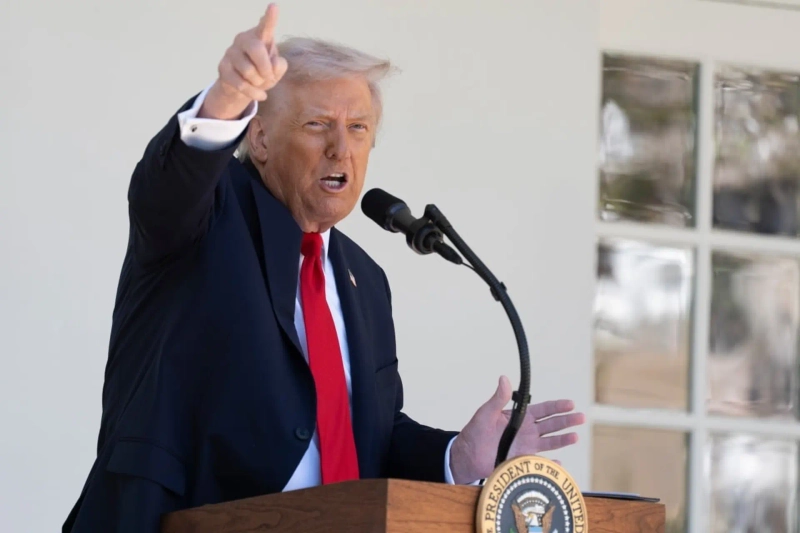
Attention is focused on whether U.S. President Donald Trump's visit to Korea could be a turning point in composing a $350 billion (about 504 trillion won) U.S. investment package, which has remained in parallel for three months.
According to industry sources on the 26th, many believe President Trump's visit will be a first crossroads for the Korean economy.
President Trump will visit Korea on the occasion of the Asia-Pacific Economic Cooperation (APEC) summit in Gyeongju on the 29th–30th. Officials from both the Korean and U.S. governments expect that an agreement on the $350 billion U.S. investment fund could be reached at that time.
The U.S. investment fund is key to lowering the reciprocal tariff rate. On July 31, the two countries agreed to lower the reciprocal tariff rate that the U.S. planned to apply to a wide range of Korean goods from 25% to 15%.
The problem is that the two countries have large differences over the size and composition of this fund. Therefore, the possibility of concluding related negotiations is uncertain. President Trump demanded the entire amount as direct investment, i.e., an up-front payment, but our government is persuading that direct investment should be mixed with loans and guarantees.
As tariff negotiations clash on details, uncertainty has increased sharply and the exchange rate is unstable. When the July 31 agreement news was reported, the won-dollar exchange rate was in the 1,390-won range, but by around September, when President Trump warned "that is up front," it rose to the 1,410-won range. As clear points of agreement were not found afterward, the exchange rate spiked intraday to the 1,440-won range. Due to exchange rate fluctuations, the $350 billion fund swelled in won terms from about 487 trillion won to 504 trillion won.
Experts expect an agreement will be reached grudgingly, to avoid further expansion of uncertainty for Korea.
So far, face-to-face talks have roughly set the direction. It appears the U.S. has been informed that a one-time $350 billion investment is impossible given Korea's economic size. Koo Yun-cheol, Deputy Prime Minister and Minister of Economy and Finance, and Lee Chang-yong, Governor of the Bank of Korea, said Korea can spend at most $15–20 billion per year. On the 20th, Kim Jeong-gwan, Minister of Trade, Industry and Energy, also said in response to a question about whether the U.S. still demanded the entire amount as cash investment, "Not to that extent."
Ultimately, the major issue is how large the cash-equivalent investment portion will be among the $350 billion and how long the payment period will be. Specific matters such as the profit-sharing structure and the possibility of intervention in selecting investment destinations appear to be under discussion.
However, even if reciprocal tariffs are settled, uncertainty about product-specific tariffs remains.
The U.S. is imposing tariffs of up to 50% on items such as steel and aluminum under Section 232 of the Trade Expansion Act, which grants the president the authority to restrict imports on national security grounds. In July, Korea's steel exports to the U.S. amounted to $280 million, a 26% decrease from a year earlier, already showing damage from product-specific tariffs. If the U.S. imposes high product-specific tariffs on semiconductors, Korea's main export item, it would inevitably deal a severe blow to exports to the U.S.
In the end, many say nothing can be certain until it is finally documented. Opinions may also clash over the detailed terms of the $350 billion investment fund. Even if partial, having to pay a substantial amount of cash could drive up the exchange rate and destabilize the foreign exchange market.
Lee Song-ryeol, Hankyung.com reporter yisr0203@hankyung.com

Korea Economic Daily
hankyung@bloomingbit.ioThe Korea Economic Daily Global is a digital media where latest news on Korean companies, industries, and financial markets.