

PiCK
"If a 'coin run' happens faster than a bank run..." Bank of Korea's warning
Summary
- The Bank of Korea pointed out that issuance of won-denominated stablecoins could cause instability in the monetary and financial system.
- Stablecoins contain various risk factors such as depegging, coin runs, lack of depositor protection, and erosion of the separation between banking and commerce.
- It said that expansion of stablecoins could lead to weakening of monetary policy due to increased liquidity and a reduced role for banks in providing funding.
Seven risk factors of issuing won-denominated stablecoins identified by the Bank of Korea

The Bank of Korea presented seven risk factors from a central bank perspective regarding the issuance of won-denominated stablecoins. While noting their innovation potential, it pointed out in detail that they could cause instability in the monetary and financial system. This was set out in the 157-page report published that day, 'Key Issues and Responses for Stablecoins'.
① 'Unstable' coin
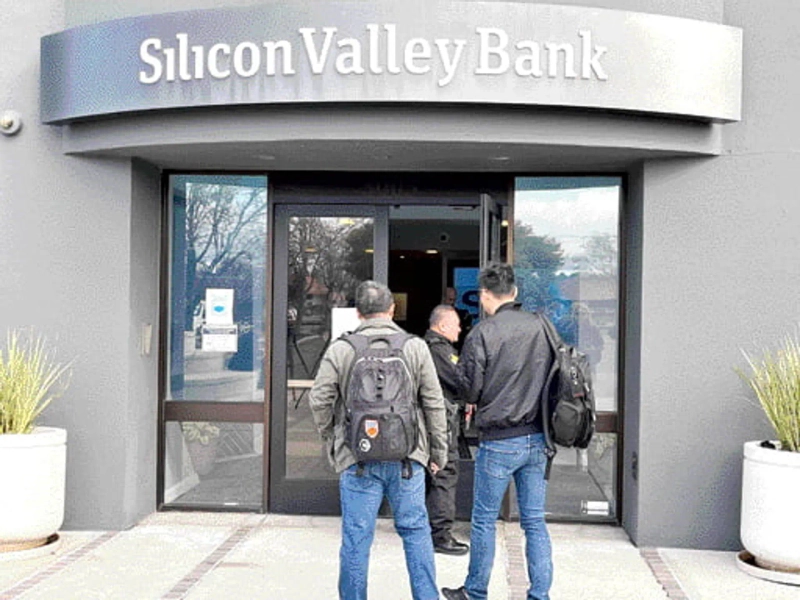
The first risk the BOK cited is the 'depegging' problem. Stablecoins inherently promise to maintain a 1:1 value with fiat currency (pegging), but that promise is frequently broken. Major dollar stablecoins such as USDT and USDC have also experienced depegging. A representative example is USDC falling to $0.88 in early 2023 due to the failure of Silicon Valley Bank (SVB).
The BOK explained that stablecoins pegged to currencies other than the dollar experience depegging more frequently. For example, the euro-linked stablecoin EURC traded below the euro's value for most of the period since its issuance in June 2022. The BOK noted, "If the value of stablecoins is shaken, the credibility of the overall monetary and payment system could be undermined."
It also assessed the recent incident in which Paxos, the issuer of PayPal's dollar stablecoin PYUSD, accidentally minted stablecoins worth US$300 trillion as an example that highlighted system vulnerabilities. During the deployment of a smart contract, a parameter was applied incorrectly so that the issuance cap did not take effect, resulting in stablecoins being minted at once amounting to roughly three times the nominal GDP of all countries worldwide. Paxos activated an emergency burn function to stop further circulation, but regulators did not notice this.
The BOK explained, "This is an empirical example showing that stablecoins fundamentally contain technical and operational risks and the dangers of technological omnipotence when blockchain is applied to the monetary and financial system."
② Coin run faster than a bank run
The report also pointed out the risk that a 'coin run' could occur if problems arise at a stablecoin issuer and requests to convert stablecoins into cash suddenly surge. Even if reserve assets are composed of 100% safe assets, they may be insufficient to prevent a 'coin run' when panic concentrates.
Even U.S. Treasury securities, considered safe assets, can experience large price swings due to concentration of flows. Just as holders might rush to sell treasuries—not because they will default but because falling treasury prices could prevent timely liquidation—stablecoins could undergo a similar phenomenon.
Deposits require procedures such as going to a bank to request a withdrawal, whereas coins can be sold with a single click, so the BOK judged that the speed of a coin run would be faster than that of a bank run. During the earlier SVB incident, USDC depegged after it became known that Circle, the issuer, had 8% of its reserves deposited at SVB, prompting redemption requests totaling US$7.8 billion.
③ 100 million won deposit protection does not apply to coins
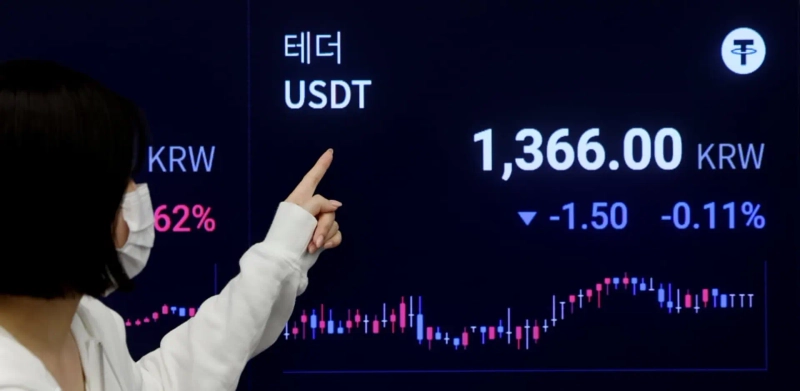
Stablecoins issued by the private sector are basically private contracts between individuals and companies. The promise that 1 coin = 1 won is an agreement between issuer and user, and the state does not guarantee its value, the BOK explained.
For this reason, if an issuer fails to honor coin withdrawal promises, users may not be protected. In contrast, even if a bank fails, depositors can recover up to 100 million won under the Deposit Insurance Act.
④ The principle of separation of banking and commerce is undermined
One of the core principles of the Korean financial system is the separation of banking and commerce. This prevents industrial capital from engaging in banking. The intent is to stop companies from using banks as corporate safes.
The BOK said that allowing IT firms or conglomerates to issue stablecoins would undermine this principle. The BOK explained, "It is akin to allowing 'narrow banking' that issues currency and handles payments."
It also rebutted claims by some that stablecoin issuers do not violate the separation principle because they do not make loans or pay interest. The BOK explained, "Even in this case, there is a risk that large corporations could absorb funds and concentrate economic resources in one place." It also said, "Conversely, if stablecoins become unstable due to external factors, they could undermine corporate stability."
Taking this into account, the BOK added that the U.S. Genius Act also applies strict standards to stablecoin issuance by non-bank listed companies.
⑤ A channel for taking dollars overseas
The possibility of circumventing foreign exchange regulations was cited as another risk. Since the foreign exchange crisis, Korea has strictly applied controls on dollar outflows. Amounts above a certain threshold must be reported before they can be sent abroad.
However, moving foreign currency abroad by buying stablecoins and transferring them to a personal wallet cannot be controlled and there is not even a way to monitor it. Recently, cases of using this method to move dollars overseas to buy real estate have been uncovered.
The ease of regulatory circumvention also makes them prone to use in illegal transactions. According to Chainalysis, a global blockchain transaction analysis firm, 63% of global illicit virtual asset transactions in 2024 involved stablecoins. According to the Korea Customs Service, the share of domestic illegal foreign exchange transactions using virtual assets surged from 3% in 2020 to 52% last year.
Hacking crimes by North Korea involving virtual assets are also occurring frequently. In February, a record US$1.5 billion was hacked, but seven months later in September, less than 5% of the amount had been frozen or recovered.
⑥ Increased liquidity, weakening of monetary policy effectiveness
The BOK is also concerned that the effectiveness of monetary policy could be weakened. Because stablecoins are issued privately, issuance can proceed independently of central bank policy.
Even when the BOK raises interest rates to curb liquidity in response to concerns over surging inflation, rising property prices, and increasing household debt, if stablecoin issuers continue issuing regardless, liquidity could instead increase.
There is also a risk that volatility in financial markets could rise as stablecoin issuers buy and sell reserve assets. The BOK explained, "Considering these points, the U.S. central bank (the Fed) participates in inter-agency policy councils to implement regulations."
⑦ Reduction of banks' role in providing funding
If stablecoin issuance expands, bank deposits are likely to be substituted. Bank deposits are the basis for loans. If deposits decrease, lending decreases. The BOK warned that banks' stable role in supplying funds could be greatly weakened. The BOK expressed concern that if banks raise lending rates to maintain profitability, small business owners and SMEs with low access to capital markets could face greater difficulties.
Reporter Kang Jin-gyu josep@hankyung.com

Korea Economic Daily
hankyung@bloomingbit.ioThe Korea Economic Daily Global is a digital media where latest news on Korean companies, industries, and financial markets.