

"Won stablecoin increases exchange rate volatility"
Summary
- The Bank of Korea expressed concern that won stablecoins could increase won·dollar exchange rate volatility.
- The Bank emphasized that stablecoins could constrain the effectiveness of monetary policy.
- The Bank warned about the characteristics of digital currencies such as coin runs and the possibility of circumventing foreign exchange and financial regulations.
Bank of Korea presents seven risk factors
"Concerns about constraints on the effectiveness of monetary policy"
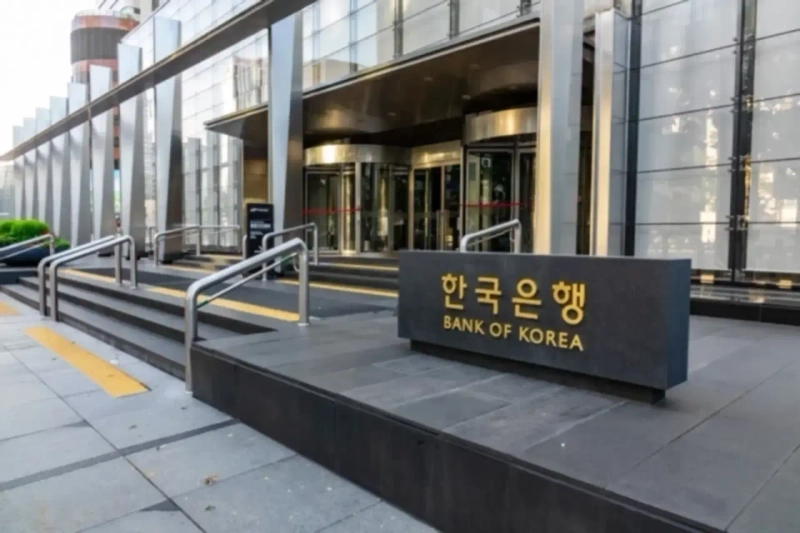
The Bank of Korea expressed concern that the issuance of won stablecoins could increase won·dollar exchange rate volatility and constrain the effectiveness of monetary policy. The Bank argued for allowing coin issuance by a consortium that is "bank-centered" rather than merely "bank-participated."
On the 27th, the Bank of Korea stated this in a report titled "Major Issues of Stablecoins and Countermeasures." It summarized the Bank's position on controversies surrounding stablecoins in a 157-page document.
The Bank presented seven risk factors of stablecoins in the report. It noted that although stablecoins promise to maintain a 1-to-1 value with fiat currency (pegging), that promise is often broken. Circle's USDC plunged to $0.88 during the collapse of Silicon Valley Bank (SVB) in early 2023, and the euro-linked coin EURC traded below 1 euro for most of the period since its issuance in June 2022.
The Bank explained, "Promises such as 1 coin = 1 dollar are private contracts between the issuing company and users," and "the state does not guarantee the value."
The report also mentioned the possibility that they could constrain the effectiveness of monetary policy. If the Bank raises interest rates to withdraw liquidity amid concerns such as inflation and rising real estate prices, liquidity supplied through stablecoin issuance could offset the policy's effects.
The Bank also predicted that, due to the characteristics of digital currencies, the speed of a 'coin run' in a crisis would be faster than a bank run. It warned that stablecoins could be used to circumvent Korea's foreign exchange regulations and regulations separating banking and commerce. Kim Shin-young, head of the Bank of Korea's foreign exchange operations department, said, "Allowing the issuance of won stablecoins could increase won·dollar exchange rate volatility."
Reporter Kang Jin-kyu josep@hankyung.com

Korea Economic Daily
hankyung@bloomingbit.ioThe Korea Economic Daily Global is a digital media where latest news on Korean companies, industries, and financial markets.