

Fading hopes for a 'November rate cut'…3-year yield 'highest' in 11 months
Summary
- The Bank of Korea's weakening possibility of a policy rate cut pushed the 3-year government bond yield to an annual 2.677%, its highest in 11 months.
- Q3 economic growth exceeding initial forecasts and instability in the real estate market increased the likelihood of a November rate hold.
- Alongside rising bond yields, falling bond prices and the won-dollar exchange rate hovering in the 1,430 won range affected the market.
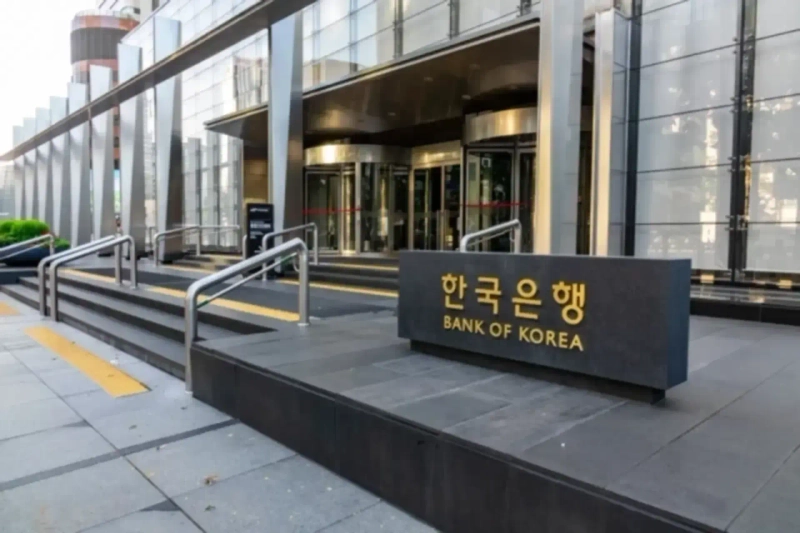
As the Bank of Korea's possibility of a policy rate cut weakened, government bond yields rose across the board (bond prices fell). The 3-year yield climbed to levels seen around last November's Monetary Policy Committee, marking the highest in 11 months.
On the 29th in Seoul's bond market, the 3-year government bond yield closed at an annual 2.677%, up 0.044 percentage points from the previous trading day. That level was the highest in about 11 months since it recorded an annual 2.741% on November 27 last year. That was the day before the BOK cut its policy rate from an annual 3.25% to an annual 3.0%. Immediately after the BOK cut rates, the 3-year yield fell to an annual 2.638%.
It appears that bond market investors, judging that the BOK's chance of a November rate cut has diminished, sold bonds and pushed yields higher. The possibility of a November rate hold resurfaced after President Lee Jae-myung, in a foreign media interview on the 27th, evaluated the BOK's decision to hold rates in October based on rising real estate prices as "well done."
In the consumer sentiment survey published by the BOK on the 28th, the housing price outlook index rose to 122, the highest since April 2022, suggesting a low likelihood of real estate market stabilization next month and reinforcing perceptions that rates could be held again.
The Q3 economic growth figure released the same day is also seen as supporting the possibility of a rate hold. According to the BOK, Q3 growth was 1.2% quarter-on-quarter, exceeding the initial forecast of 1.1%. The likelihood of achieving an annual 1.0% growth rate has also increased. If the economy performs better than expected, the need for rate cuts driven by recession concerns diminishes.
Bank of Korea Governor Lee Chang-yong also said at the National Assembly's Budget and Accounts Committee hearing on Q3 growth and outlook, "(In Q3) there was some effect from consumption coupons and exports were good," adding, "The likelihood that this year's growth rate will be 1% or more, rather than 0.9% (BOK's August forecast), has increased."
The 10-year yield rose 0.049 percentage points to an annual 2.984%. The 5-year and 2-year yields rose 0.047 percentage points and 0.031 percentage points, respectively, closing at an annual 2.798% and an annual 2.605%. The 20-year rose 0.041 percentage points to an annual 2.977%, and the 30-year and 50-year rose 0.047 percentage points and 0.042 percentage points, respectively, to an annual 2.882% and an annual 2.722%.
In Seoul's foreign exchange market that day, the won-dollar exchange rate (as of 3:30 p.m.) closed the week's trading at 1431 won 70 jeon, down 6 won from the previous day. The rate opened at 1432 won 30 jeon, down 5 won 40 jeon, and then hovered in the low-1430 won range throughout the day.
Kang Jin-gyu Reporter josep@hankyung.com

Korea Economic Daily
hankyung@bloomingbit.ioThe Korea Economic Daily Global is a digital media where latest news on Korean companies, industries, and financial markets.