

Xi Jinping·Takaichi first meeting…"Reaffirmation of strategic reciprocal relationship"
Summary
- Chinese and Japanese leaders said they reaffirmed pursuing a strategic reciprocal relationship and a 'constructive and stable relationship.'
- Prime Minister Takaichi said she discussed rare earth export controls and the resumption of China's imports of Japanese seafood.
- President Xi was reported to have stressed Japan's observance of commitments on history and the Taiwan issue.
Xi "Must keep commitments on history and the Taiwan issue"
Takaichi "Concern over rare earth export controls"
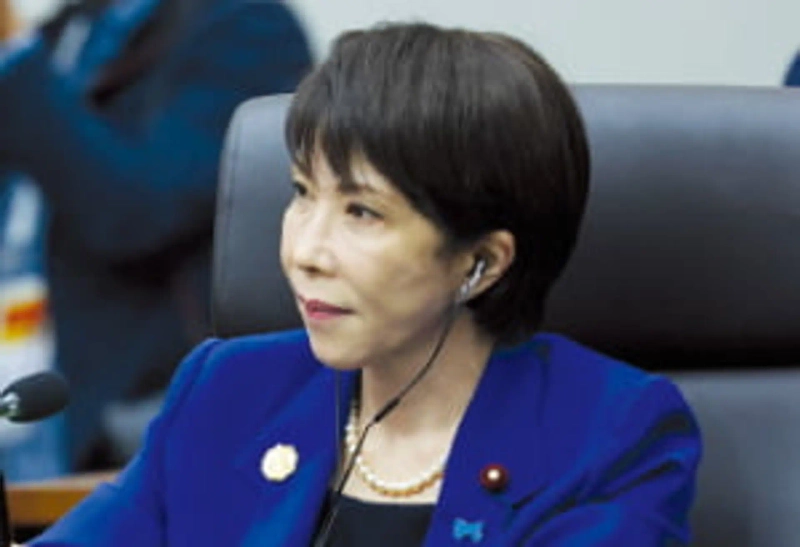
Chinese President Xi Jinping and Japanese Prime Minister Sanae Takaichi held their first summit in Gyeongju, North Gyeongsang Province, on the 31st and agreed to build a constructive and stable bilateral relationship.
President Xi and Prime Minister Takaichi met face-to-face for the first time in Gyeongju, where they had visited to attend the Asia-Pacific Economic Cooperation (APEC) leaders' meeting. The China–Japan summit is the first in about a year since the APEC summit in Peru in November 2024. The two leaders confirmed the promotion of a 'strategic reciprocal relationship' pursuing mutual interests and, as with last year's summit, also agreed on the importance of a 'constructive and stable relationship.'
The China–Japan leaders also discussed bilateral issues. Prime Minister Takaichi reportedly expressed concern about China's rare earth export controls and its moves into the East and South China Seas. She is also said to have demanded the safety of Japanese nationals staying in China. The resumption of Chinese imports of Japanese seafood was also raised on the agenda. The Chinese government announced in June that it would resume imports of Japanese seafood, which had been halted after the discharge of contaminated water from the Fukushima No.1 Nuclear Power Plant, and is proceeding with related procedures.
President Xi is believed to have conveyed to Prime Minister Takaichi that Japan must keep its commitments regarding history and the Taiwan issue. He urged adherence to the principles of the so-called four political documents between China and Japan, including the 1972 China–Japan Joint Communiqué. These documents contain the 'One China' principle, mutual respect for sovereignty and territorial integrity, opposition to the pursuit of hegemony, and other provisions.
Prime Minister Takaichi had taken a hardline stance toward China before taking office. However, after assuming office she has appeared to adopt a more pragmatic approach. Recently in parliament she said, "There are security concerns, including economic security, between Japan and China," while also stating, "The leaders will engage in frank dialogue repeatedly and comprehensively pursue a strategic reciprocal relationship."
China earlier sent a congratulatory telegram from Premier Li Qiang on Prime Minister Takaichi's assumption of office. In the past, when Yoshihide Suga, Fumio Kishida, and Shigeru Ishiba became prime ministers, President Xi sent congratulatory messages to all. Observers suggest that China watched Takaichi's words and actions closely after her inauguration.
Tokyo=Kim Il-gyu/Beijing=Kim Eun-jung correspondents black0419@hankyung.com

Korea Economic Daily
hankyung@bloomingbit.ioThe Korea Economic Daily Global is a digital media where latest news on Korean companies, industries, and financial markets.