

Trump "Approves Construction of Nuclear-Powered Submarines"…Chinese Netizens Boil
Summary
- President Trump reportedly officially approved South Korea's construction of nuclear-powered submarines.
- The decision was said to be linked to strengthening the Korea–U.S. alliance and Hanwha Group's large-scale investment in the Philadelphia shipyard in the U.S.
- China has been responding strongly to Korea–U.S. cooperation by including the Philly Shipyard and related companies on a sanctions list, it reported.
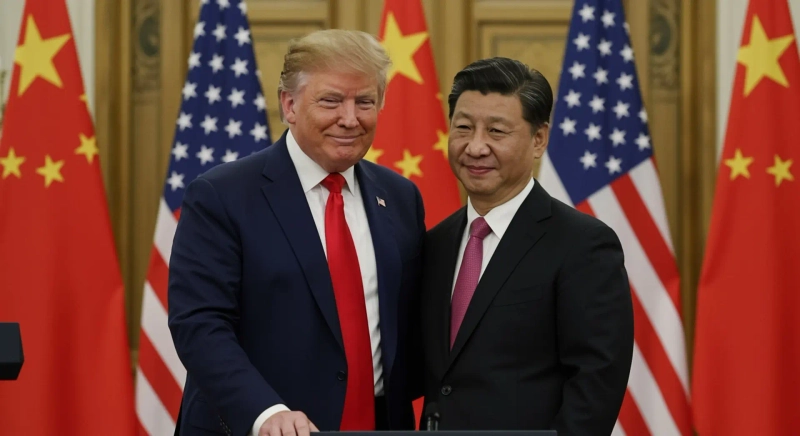
U.S. President Donald Trump abruptly announced that he had approved South Korea's construction of nuclear-powered submarines the day after the Korea–U.S. summit. This followed President Lee Jae-myung's request at the summit that a decision be made to allow the supply of fuel for nuclear-powered submarines. There was backlash among Chinese netizens.
President Trump said on his social networking service Truth Social on the 30th of last month, "The Korea–U.S. military alliance is stronger than ever," and "based on that I have approved allowing Korea to build nuclear-powered submarines instead of the outdated and less maneuverable diesel submarines it currently possesses."
Since the construction of nuclear-powered submarines is also a matter of national sovereignty and would require amendments or supplements to the Korea–U.S. Atomic Energy Agreement as well as U.S. technical support and fuel supply, President Trump's mention of 'approval' is interpreted in that context.
Trump also said, "Korea will build nuclear-powered submarines right here at the excellent American Philadelphia shipyard (Philly Shipyard)," adding, "America's shipbuilding industry will soon experience a massive revival (Big Comeback)."
The Philly Shipyard, which was acquired by Hanwha Group in December last year, can be seen as a symbol of Korea–U.S. shipbuilding cooperation. In August, Hanwha Group also announced that, as part of the bilateral shipbuilding cooperation project 'MASGA' (MASGA: Making American shipbuilding great again), it would additionally invest $5 billion (7 trillion won) in the Philadelphia shipyard.
In this context, on the 14th China's Ministry of Commerce put Philly Shipyard and five U.S. subsidiaries of Hanwha Ocean on a sanctions list that bans domestic companies from trading with them, dealing a strong check against Korea–U.S. shipbuilding cooperation. Trump's mention of South Korea building nuclear-powered submarines at Philly Shipyard appears to reflect a determination to overcome China's containment.
There were positive evaluations from conservative circles as well. Hong Joon-pyo, the former mayor of Daegu, responded on his online communication platform 'Youth's Dream' when a supporter criticized that "the Lee Jae-myung administration is playing to the media by saying it delivered a big gift to the people by resolving the Korea–U.S. tariff negotiations," saying, "He fared relatively well against Trump's tariff bullying. In particular, being approved by Trump to build nuclear-powered submarines is evaluated as a significant contribution to our security."
Yoo Yong-won, a People Power Party lawmaker and former military reporter, welcomed "President Lee's request for the supply of nuclear fuel for nuclear-powered submarines and President Trump's decision to approve South Korea's construction of nuclear-powered submarines," and said, "This measure is a historic turning point marking the Korea–U.S. alliance's entrance into a new stage of military and technological cooperation."
On online communities, reports by the China nationalist-leaning media Guancha.com and Chinese netizens' reactions spread.
Guancha.com translated and relayed reports from Korean media regarding South Korea's construction of nuclear-powered submarines. The article received about 200 comments. Chinese netizens reacted with comments such as "The Lee Jae-myung administration is worse," "South Korea is too irrational. A very small country wanting nuclear submarines," and "We refuse to cooperate with South Korea." There are also concerns that tensions may rise ahead of a China–South Korea summit.
China stated the principled position that the two countries, South Korea and the United States, must fulfill their nuclear non-proliferation obligations. Guo Jakun, Chinese Foreign Ministry spokesperson, said at a regular briefing, "China hopes that the two countries will substantively fulfill their nuclear non-proliferation obligations and do things that promote regional peace and stability, not the opposite."
Shin Hyun-bo, Hankyung.com reporter greaterfool@hankyung.com

Korea Economic Daily
hankyung@bloomingbit.ioThe Korea Economic Daily Global is a digital media where latest news on Korean companies, industries, and financial markets.