

PiCK
[Fed Watch] Emergence of 'Opponents of Rate Cuts' within the Fed…"Inflation Still High"
Summary
- Within the U.S. central bank (Fed), Presidents Logan, Hammack, and Schmidt opposed the recent rate cut citing inflation.
- Chair Powell said an additional rate cut is "not a foregone conclusion," suggesting that hawkish views are strengthening internally.
- Fed officials assessed that the policy rate has reached the estimated neutral rate, and some presidents emphasized the need to maintain a certain degree of tightening.
Fed officials, successive opposition to rate cuts
Growing inflation concern within the Fed
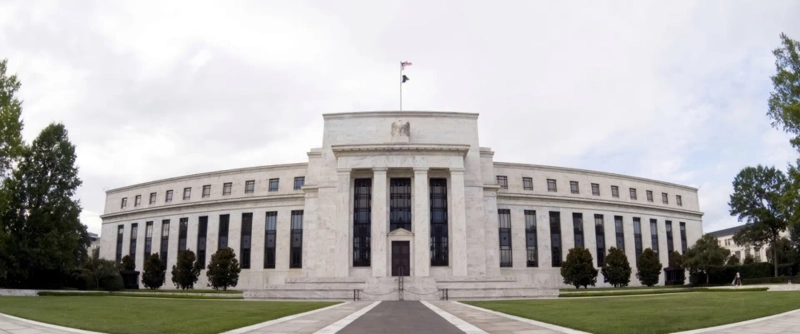
Within the U.S. central bank (Fed), voices publicly opposing the recent rate cut are coming one after another. They include Dallas Fed President Lorie Logan, Cleveland Fed President Beth Hammack, and Kansas City Fed President Jeff Schmidt. They said "inflation is still high" and opposed or took a cautious stance on this cut decision.
Their remarks came immediately after Fed Chair Jerome Powell warned that "an additional cut in December cannot be guaranteed," showing that internal debate within the Fed over the future direction of monetary policy is intensifying.
"Now is the time to stop"… Hawkish sentiment spreads
President Logan and President Hammack said at a conference in Dallas on the 31st (local time) that "the rate should have been kept unchanged instead of this cut." President Schmidt also explained why he voted against the cut in a previous statement, saying "the labor market is in balance and inflation remains above target."
President Logan said, "Unless there is clear evidence that inflation is falling faster than expected or that the labor market is cooling sharply, it will be difficult to cut rates again in December."
At the October Federal Open Market Committee (FOMC) meeting held on the 29th–30th of last month, the Fed cut the policy rate by 0.25% percentage point for the second consecutive month. However, Chair Powell said at the press conference that "an additional cut is not a foregone conclusion" and mentioned that "there is a growing chorus" calling for a pause.
This cut was a response to the slowdown in job growth since the summer, but internally hawkish views concerned about inflation are gradually strengthening.
Within the Fed, doves who say easing should be maintained to prevent a slowdown in the labor market are facing hawks who call for a slowdown in the pace to guard against a resurgence of inflation.
Matthew Luzzetti, Deutsche Bank's chief U.S. economist, analyzed that "at the December meeting, Powell may face greater resistance to supporting a 'cut' than a 'pause'," and said "that is why Powell spoke more hawkishly than expected this time."
Debate over the neutral rate also intensifies
One axis of the debate is differing views on the level of the 'neutral rate.' The neutral rate refers to an interest rate that neither stimulates nor restrains the economy.
The policy rate has fallen to an annual 3.75~4% as a result of this cut. The Fed officials' estimates of the neutral rate published in September ranged from the low 2.5%s to below 4%.
President Hammack said, "This cut has brought the policy rate almost in line with my estimate of the neutral rate," and added, "To bring inflation down to target, it is necessary to maintain a certain degree of tightening."
On the other hand, Raphael Bostic, Atlanta Fed President, said, "Policy remains in restrictive territory, and this cut was appropriate."
Chair Powell also stated, "Policy is still in a 'somewhat restrictive' stance," and noted that "the current rate has entered the estimated neutral rate range (3~4%)."
New York = Park Shin-young, correspondent nyusos@hankyung.com

Korea Economic Daily
hankyung@bloomingbit.ioThe Korea Economic Daily Global is a digital media where latest news on Korean companies, industries, and financial markets.