
Editor's PiCK
Markets Whipsawed by Trump’s Threat to Subpoena Powell…U.S. Stock Futures Slide, Dollar Weakens
공유하기
Summary
- The report said U.S. stock futures and the Dollar Index (DXY) fell amid escalating tensions between the Trump administration and the Federal Reserve.
- It said gold hit a fresh record high at $4,600 an ounce as the dollar weakened.
- It said Brent and West Texas Intermediate (WTI) extended gains as intensifying protests in Iran heightened concerns about supply disruptions.
Gold climbs back to a record high at $4,600 an ounce
Asian stocks extend gains on tech strength
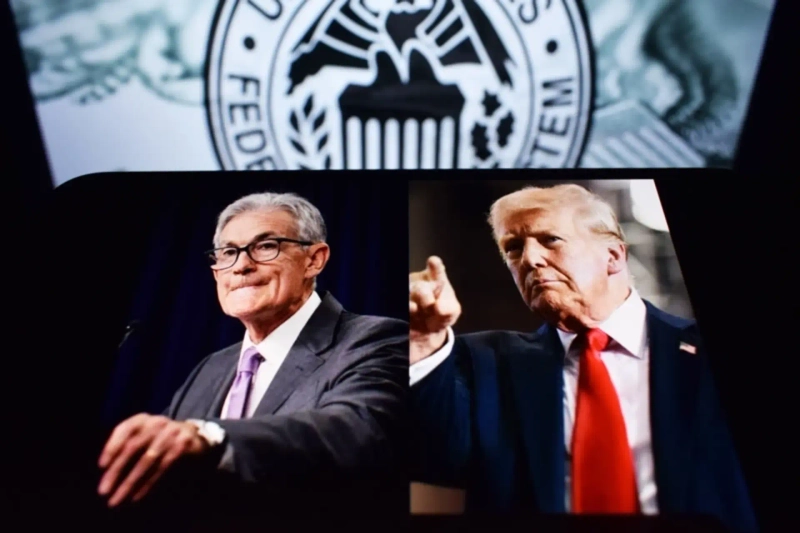
U.S. stock-index futures and the dollar fell as investors pulled money out of U.S. assets amid rising tensions between the Trump administration and the Federal Reserve. Gold notched another record high as the weaker dollar boosted demand.
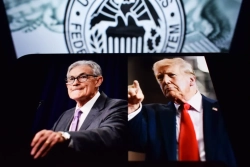
After Fed Chair Jerome Powell said late Sunday the 11th (local time) that he had received a grand jury subpoena from the Justice Department, U.S. equity-index futures fell early Monday morning the 12th. S&P 500 futures declined 0.8%, while Nasdaq futures plunged 1.1%. Dow futures also fell 0.6%.
The Dollar Index (DXY) slid 0.4% to 98.76 from the previous session, marking its biggest drop since mid-December. The Swiss franc, seen as a safe-haven currency, rose 0.6% against the dollar to 0.796, while the euro gained 0.4% to $1.168.
Gold rose nearly 2% to $4,600 an ounce as the dollar weakened.
Short-term Treasury yields fell 1 basis point to 3.52%, while the 10-year Treasury yield rose 2 basis points to 4.19% on concerns that overly accommodative monetary policy could rekindle inflation (1bp=0.01%).
Andrea Tueni, head of sales trading at Saxo Bank, noted: “The U.S. is not Turkey, but when a government takes control of a central bank, the outcome is usually not good.”
A broad index of European stocks fell 0.3%.
Earlier, most Asian markets that had already closed ended higher. South Korea’s KOSPI rose 0.8%, Japan’s Nikkei 225 gained 1.6%, and Taiwan’s stock market advanced 0.9%. China’s Shanghai blue-chip index climbed 1.09%, and Hong Kong’s Hang Seng Index rose 1.44%.
In Asia, gains in regional tech shares and the weaker dollar improved investor sentiment, offsetting broader concerns over escalating geopolitical tensions.
Fed officials signaled they need more economic data before deciding on additional rate cuts after a third 0.25-percentage-point cut last month. Economists at Morgan Stanley, Barclays and Citigroup said after the U.S. monthly jobs data released Friday the 9th that rate cuts this year are likely to be possible from the second half.
Oil prices posted their biggest two-day rise since October as intensifying protests in Iran raised fears of supply disruptions from Iran, OPEC’s fourth-largest producer.
Brent surged 6% over Thursday and Friday last week to above $63 a barrel. U.S. West Texas Intermediate (WTI) traded around $59. President Trump said he is reviewing a range of possible options as nationwide protests in Iran—its largest since 2022—entered a third week.
The U.S. Supreme Court did not issue a ruling on President Trump’s tariffs on the 9th. The court’s next hearing is scheduled for the 14th.
Data due include the December Consumer Price Index (CPI) on the 13th and the December Producer Price Index (PPI) on the 14th, along with November retail sales data delayed by the federal government shutdown.
Meanwhile, New York Fed President John Williams and Atlanta Fed President Raphael Bostic are scheduled to speak.
Kim Jung-a, contributing reporter kja@hankyung.com