
Editor's PiCK
Fairness controversy fallout? FSC puts off decision on preliminary approval for STO OTC exchange
공유하기
Summary
- The FSC reportedly delayed a conclusion after it did not table the agenda item on preliminary approval for an STO-dedicated OTC exchange at its regular meeting.
- The FSC previously said it would grant preliminary approval to up to two consortia among the Korea Exchange–Koscom (KDX), Nextrade (NXT), and Lucentblock consortia.
- With Lucentblock raising concerns over the fairness of the approval process and alleging technology theft by Nextrade, regulators are seen as having moved to a cautious review.
South Korea’s Financial Services Commission (FSC) has failed to reach a decision on granting preliminary approval for an over-the-counter (OTC) exchange dedicated to fractional investment token securities (STOs). The FSC had been expected to announce the preliminary approval recipients at its regular meeting on the 14th, but the matter was not placed on the agenda, pushing back the conclusion, according to reports.
According to industry sources on the 14th, the FSC did not table the agenda item on preliminary approval for a fractional investment OTC exchange at the regular meeting held that day.
Previously, the FSC said it would select up to two consortia for preliminary approval from among: the Korea Exchange–Koscom (KDX) consortium, the Nextrade (NXT) consortium, and the Lucentblock consortium.
However, with Lucentblock recently publicly pushing back by raising concerns over the fairness of the approval process, regulators are seen as having moved to a more cautious review.
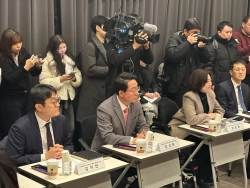
On the 12th, Lucentblock held an emergency press briefing to air grievances about the preliminary approval review process. At the briefing, Lucentblock CEO Huh Se-young said, “It has been reported that companies with no prior experience in the STO business received higher evaluations in the FSC’s licensing process for the STO OTC exchange than Lucentblock, which has operated a platform for four years serving 500,000 customers in the market.”
Lucentblock also alleged that Nextrade stole its technology. Huh said, “Nextrade approached us under the pretext of considering investment and participation in a consortium before applying for approval (for an STO OTC exchange), signed a non-disclosure agreement (NDA), and then received sensitive internal information such as Lucentblock’s financial information, business plan and core technical materials,” adding, “Yet without any subsequent investment or consortium formation, it filed a direct approval application in the same business area in just 2–3 weeks.”
Nextrade, however, said the technology theft allegations are groundless. Nextrade said, “We have disclosed the full list and volume of the materials received, and posted explanatory materials on our official website,” adding, “Whether to grant approval is a matter for the financial authorities to decide, and Nextrade is merely subject to review.” It continued, “The side claiming technology theft has also not provided a specific explanation of which technology constitutes the core technology.”