
Editor's PiCK
Coinbase Claims Clarity Act Is an 'STO Ban'... Industry: 'Nonsense'
공유하기
Summary
- The U.S. Senate Banking Committee said it canceled the scheduled markup of the crypto-asset market structure bill (the Clarity Act) after strong opposition from Coinbase.
- Tokenized securities (ST) firms such as Securitize, Dinari, and Superstate said the bill does not kill tokenized stocks, but is a key step toward mainstream institutional adoption.
- Citron Research suggested Coinbase may be opposing the bill not for investor protection, but out of concern that licensed competitors would gain an advantage if it passes.
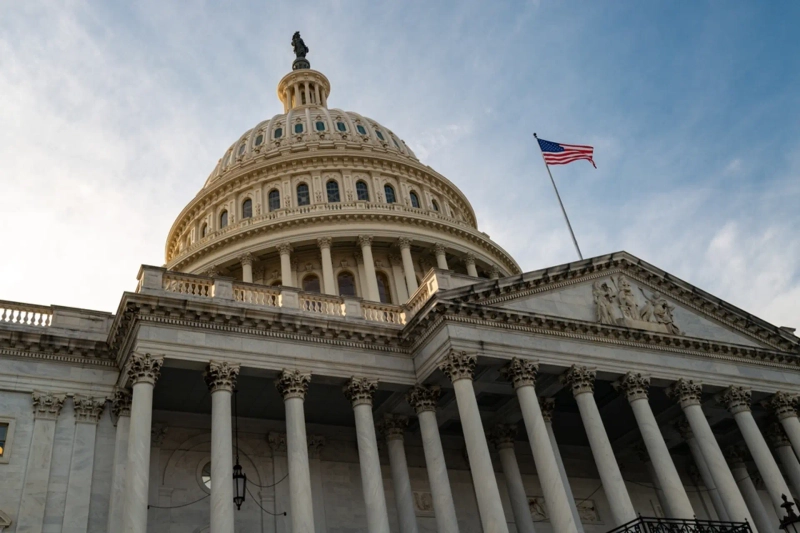
Review of the U.S. crypto-asset (cryptocurrency) market structure bill (the Clarity Act) has been derailed by strong opposition from Coinbase, the largest crypto exchange in the United States. But tokenized securities (ST) specialists that would be directly affected by the legislation pushed back, saying Coinbase’s claims are exaggerated, and voiced support for moving the bill forward.
The Senate Banking Committee said it abruptly canceled the scheduled markup for the crypto-asset market structure bill. The decision came just hours after Coinbase CEO Brian Armstrong sharply criticized the latest draft, saying it was "effectively the same as banning the issuance of tokenized stocks." A new date for reconsideration has not yet been set.
According to CoinDesk on the 15th (local time), unlike Coinbase’s effort to block the legislation, companies operating tokenized securities businesses on the ground offered the opposite interpretation. They argue the bill does not kill the tokenized securities ecosystem, but is instead a necessary step toward mainstream institutional adoption.
Carlos Domingo, CEO of Securitize, said, "The current draft does not kill tokenized stocks," adding that "making it clear that tokenized securities are 'securities' and requiring compliance with existing rules is a key step to integrating blockchain into traditional markets."
Dinari CEO Gabe Otte likewise said he does not interpret the Clarity Act draft as a ban on issuing tokenized securities, adding that it "simply reaffirms that tokenized stocks must operate within securities laws and investor-protection standards."
Alexander Jozjos, general counsel (GC) at Superstate, explained that "the real value of this bill lies in defining the nature of crypto assets whose status as securities is ambiguous," adding that "tokenized stocks or bonds that are clearly securities are already under the jurisdiction of the U.S. Securities and Exchange Commission (SEC)."
Some in the industry also argue that Coinbase’s opposition may be driven by a desire to keep competitors in check. Short-selling-focused research firm Citron Research said, "Coinbase is not opposing the bill because of investor protection," adding, "It may be because it fears that, if the bill passes, licensed competitors will be better positioned."



![TSMC posts record results…Philadelphia Semiconductor Index rises 1.76% [New York Stock Market Briefing]](https://media.bloomingbit.io/PROD/news/6224375d-6b6e-42f0-9138-cc0805a80a83.webp?w=250)