

Is Trump Already in a Lame Duck Phase?…Republican 'Grip' Weakening and Tariffs 'Shaking' [Sang-eun Lee's Washington Now]
Summary
- Recent analysis says President Trump’s political grip has weakened, prompting increasing pushback within the Republican Party.
- The Trump administration’s tariff policy is being threatened by the judiciary, and an IEEPA loss could lead to tariff refund liabilities.
- Although President Trump is changing policy direction in response to public sentiment, the fundamental structure in which the Republican Party depends on him remains in place.
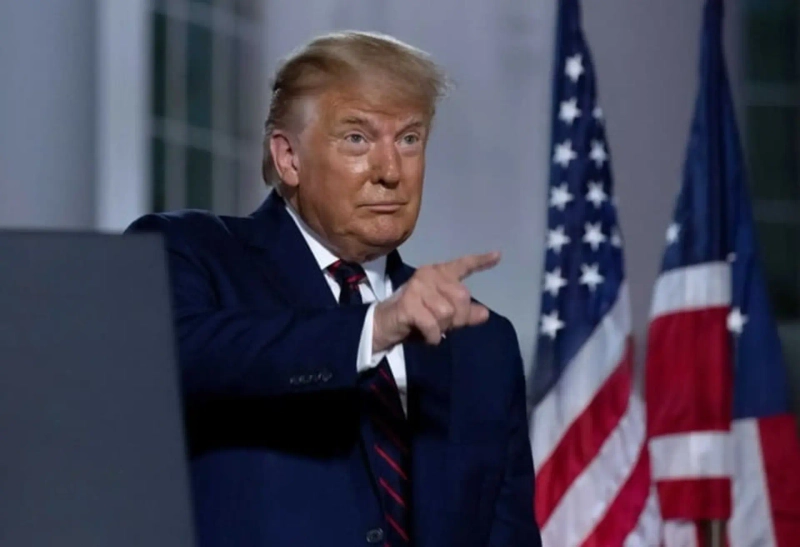
Donald Trump’s momentum has visibly slackened. In the roughly nine months since his inauguration on January 20, President Trump wielded virtually unchecked power, influencing not only the legislature but also the judiciary. With the Republican Party holding advantages in both the Senate and the House, Republicans—despite criticism that they were Trump’s rubber stamp—acceded even to the president’s extreme demands.
But the wind has shifted this month. Voices within the Republican Party distancing themselves from the president have increased. The judiciary is also increasingly likely to hand down rulings that roll back tariff policies. Approval ratings plunged to around 38–39% and President Trump is showing signs of anxiety.
○Shaky Bulldozer
On the 22nd (local time), the term “lame duck” began rapidly circulating in U.S. political circles. It started when political outlet Politico, analyzing the recent gubernatorial and other elections held on the 4th, said "President Trump’s lame duck has begun."
The floodgates opened after the Jeffrey Epstein file disclosure issue erupted. Party sentiment boiled over to the point that Trump reportedly had to tell lawmakers to vote in favor of a disclosure bill reluctantly. Since then, lawmakers and major media have openly argued that the president’s grip has decidedly loosened, invoking the term lame duck. Even Vice President J.D. Vance had to appeal to Republican members to "remember that we have more in common than differences" while referring to internal party strife.
The Atlantic assessed that although President Trump used unprecedented executive power to force Congress into submission and to defy courts—pushing policies like a "bulldozer"—"now, entering the 10th month, Trump 2.0 is beginning to resemble the chaotic early days for the first time."
Republicans’ top concern is the midterm elections. With the possibility that the GOP could lose ground in next year’s elections for 35 Senate seats and all 435 House seats, calls within the party to distance themselves from the president’s policies are growing. CNN noted, "Republicans complain about Trump’s focus on foreign policy, lack of understanding of household burdens, and appearances that his family is accumulating wealth," adding that "we will hear the term lame duck more often going forward."
The resignation announcement by Republican Rep. Marjorie Taylor Greene, who clashed with President Trump over demands to disclose the Epstein files, has further heightened the party’s sense of crisis. If she resigns, the Republicans would hold 218 seats in the House, narrowing the gap with the Democrats (213 seats) to five. If just three Republican members cast dissenting votes, the Democrats could win votes on the floor. Given that Rep. Thomas Massie (R-Kentucky) and others have publicly raised objections to the president, the GOP’s majority position is precarious.
○Tariff Policy Under Threat
The judiciary’s previous tendency to give the Trump administration a pass on many policies has also shifted. Most importantly, the tariff policy at the core of Trump’s economic agenda may be shaken at the Supreme Court. Although the court is composed of six conservatives and three liberals, at least two conservative justices are skeptical of the broad use of presidential authority to impose reciprocal tariffs and the like. Bloomberg reported that the White House is reviewing other statutes to replace the International Emergency Economic Powers Act (IEEPA), the existing statutory basis for reciprocal tariffs.
The Trump administration is reportedly considering using Section 232 of the Trade Expansion Act (basis for product tariffs), Section 301 or 122 of the Trade Act (allowing up to 15% tariffs for 150 days), or Section 338 of the Tariff Act to impose up to 50% tariffs on countries that discriminate against U.S. products. However, each of these statutes includes caveats and limits on scope, making it difficult to achieve the exact same effect as IEEPA. If the administration loses an IEEPA case, having to refund existing tariffs would also be a major burden.
Inflation is also a drag. An NPR/PBS/Marist poll of 1,443 U.S. adults conducted from the 10th to the 13th (margin of error ±3.0%P) found that 57% identified lowering prices as the Trump administration’s top priority. Public attention has also increased to the administration’s plan to eliminate tax credits under Obamacare (the nationwide health insurance mandate) during the federal government shutdown (temporary work stoppage), adding to the pressure.
○Changing Policies to Follow Public Sentiment
President Trump has been adjusting policies to court public sentiment—announcing the removal of tariffs on coffee and bananas, and promising $2,000 per person in tariff dividend payments. While he has long drawn jeers like "TACO (Trump Always Concedes)," in the past he often retreated after negotiations; now he is making decisions that sometimes plainly contradict his stated policy vision.
The cordial meeting at the White House on the 21st with New York Mayor Joran Mamdani (Joran Mamdani) was merely a zigzag move to gain more public support. The promise of $2,000 dividend payments also contradicts the claim that tariff revenue will solve U.S. fiscal problems.
As more things fail to go his way, he has grown more irritable. Calling a reporter who asked about the Epstein files a "pig" was exceptional even for a president known for blunt speech. Threatening to fire Treasury Secretary Scott Vazent if the U.S. central bank (the Fed) failed to lower its benchmark interest rate—an authority unique to the Fed—is another similar example.
However, because the Republican Party cannot easily replace Trump as its option, many analysts say it is too early to conclude that the party’s ranks will completely fracture. Politico explained, "President Trump remains irreplaceable," adding that "many lawmakers have no choice but to rely on him to win elections."
Washington = Correspondent Sang-eun Lee selee@hankyung.com

Korea Economic Daily
hankyung@bloomingbit.ioThe Korea Economic Daily Global is a digital media where latest news on Korean companies, industries, and financial markets.