

S&P assigns 'lowest rating' to stablecoin Tether
Summary
- International credit rater S&P said it downgraded stablecoin Tether to the lowest rating (vulnerable) because the share of high-risk assets such as Bitcoin in Tether's reserves has increased.
- S&P stated that a drop in Bitcoin's price could increase Tether's risk of collateral shortfall and also pointed out a lack of transparency in the reserves.
- Tether strongly protested S&P's assessment and emphasized its resilience, transparency, and utility.
S&P "Numerous risky assets in reserves
Bitcoin's share has increased
A sharp drop could lead to a collateral shortfall"
Tether protests "lack of understanding of cryptocurrencies"
Stability downgraded to 'vulnerable'
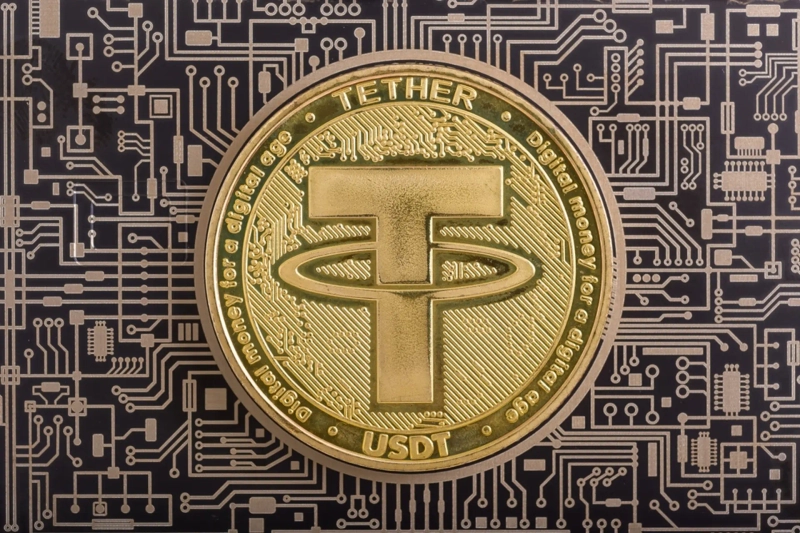
The world's largest stablecoin Tether (USDT) and international credit rater Standard & Poor's (S&P) have clashed head-on over Tether's stability. After S&P assigned the lowest rating to Tether's stability, Tether protested, saying that S&P "does not understand the nature of digital native money." S&P pointed to a high proportion of high-risk assets, including Bitcoin, in Tether's reserves as a problem. The controversy has grown over the stability of Tether, which is pegged 1-to-1 to the dollar and is considered a 'safe asset.'
On the 26th (local time), S&P downgraded Tether's stablecoin stability assessment from the previous 'constrained' to the lowest grade 5, 'vulnerable,' in a report. S&P evaluates how reliably each stablecoin can be pegged to physical assets, rating them from 1 to 5. Tether is currently the largest circulating stablecoin in the world, with an issuance of US$184 billion (about KRW 270 trillion).
S&P cited an increased share of high-risk assets in the reserves supporting Tether's value as the reason for the downgrade. According to S&P, the share of Bitcoin, corporate bonds, precious metals, collateralized loans, and other high-risk assets in total reserves was 24% as of the end of last September, up 7 percentage points from 17% a year earlier. The share of low-risk assets such as short-term U.S. Treasury bills (maturity under 90 days) and short-term U.S. Treasury-secured repurchase agreements (RP) was 75%, down from the previously reported 81%.
S&P also pointed out a lack of transparency in the composition of the reserves. The detailed contents of the risky assets are only partially disclosed, leading to the assessment that those assets are exposed to various market risks such as interest rate and exchange rate changes.
In particular, S&P said that a drop in Bitcoin's price could increase the risk and volatility of Tether's collateral shortfall. While Bitcoin exceeded US$120,000 earlier last month, as of 3 p.m. Korea time on the 27th it was trading below US$91,000, down 27% from the year's high (October 7, US$124,752.13). According to the report, Bitcoin currently accounts for about 5.6% of circulating Tether, which is higher than Tether's excess collateral margin of 3.9%. S&P explained, "This means the reserves can no longer fully absorb a decline in Bitcoin's value." It warned, "If a decline in Bitcoin's value coincides with declines in other risky assets, Tether's reserves relative to its circulating supply could decrease, and eventually Tether could fall into a collateral shortfall."
Tether, the issuer and distributor of Tether, strongly opposed S&P's assessment. In an emailed statement, a Tether spokesperson said, "S&P applied an existing framework that fails to reflect the nature, scale, and macroeconomic significance of digital native money and overlooked data that clearly demonstrates USDT's resilience, transparency, and global utility." Tether also emphasized that it has consistently maintained robust resilience amid banking crises, liquidity shocks, and extreme market volatility.
Paolo Ardoino, Tether's chief executive officer, also posted on social media that the S&P report reflected discomfort that traditional finance feels toward Tether. He added, "Now the independence and objectivity of these rating agencies themselves are being questioned."
Reporter Han Kyung-je hankyung@hankyung.com

Korea Economic Daily
hankyung@bloomingbit.ioThe Korea Economic Daily Global is a digital media where latest news on Korean companies, industries, and financial markets.