

Trump "Permanently halt immigration from Third World countries"…Is it actually possible? [Sang-eun Lee's Washington Now]
Summary
- Former President Trump said he would "permanently ban immigration to the United States from Third World countries," and emphasized deporting those who entered illegally and foreigners who are not a net asset.
- Under the current U.S. Immigration and Nationality Act (INA), permanently banning immigration from the entire Third World is legally difficult and unlikely to be realized without Congressional approval.
- The president has temporary and conditional authority for entry restrictions, but immigration can be practically limited through measures like raising visa fees or adjusting rejection rates.
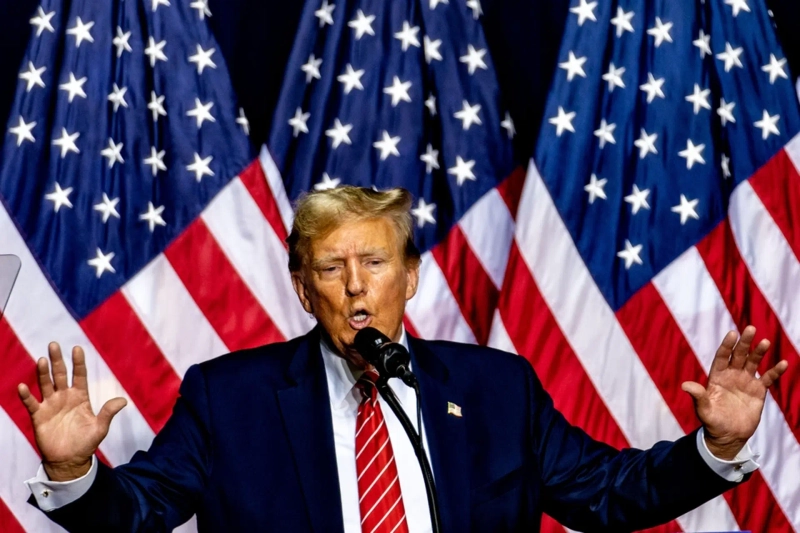
Donald Trump, the U.S. president, posted a message on social media on the 27th (local time) wishing a happy Thanksgiving and saying, "I will permanently ban immigration to the United States from the Third World."
Through several social media posts made in succession around midnight, he said, "I will permanently stop immigration from Third World countries," announced a full review of illegal entries that were allowed under the previous Joe Biden administration, and said he would "deport foreigners who are not a net asset (net asset) to the United States."
"'If not beneficial to America' removal"
President Trump said, "I will end all 'Biden illegal entries,' including those who received 'Sleepy Joe Biden's autopen (Autopen),'" and said, "I will remove anyone who is not beneficial to America or who does not sufficiently love our country." He also emphasized that he would stop federal benefits and subsidies for those without citizenship, strip the citizenship of immigrants who have undermined domestic order ('disturbed the peace'), and deport foreigners who cannot coexist with Western civilization and who have become a security threat.
The former president defined these measures as a "reverse migration" policy, explaining that the goal is to greatly reduce the illegal and incompatible population. At the end of the message, he added, "I wish a happy Thanksgiving to everyone except those who damage American values."
In particular, he posted a photo of about 600 Afghans packed tightly into a U.S. Air Force transport plane in Kabul as they fled when the war in Afghanistan effectively ended in August 2021 with a Taliban victory, calling it "part of the horrific airlift operation in Afghanistan." He wrote, "Hundreds of thousands of people poured into our country with no vetting or checks. We will correct this, but we will never forget what Joe Biden and his cronies have done to our country."
Permanent ban difficult but restrictions possible
As President Trump claims, "permanently banning immigration from the Third World" is not legally easy. Banning immigration from specific countries is a matter for Congress under the U.S. Immigration and Nationality Act (INA), and an executive order alone cannot decide a permanent ban. Congress may agree to ban immigration from some hostile countries, but the likelihood that Congress would agree to make the broad region of the "Third World" a banned category, as Trump mentioned, is quite low.
Also, the existing INA already allows immigration applications when family members living in the United States sponsor them or when a person is employed and sponsored by a company. Various refugee protection systems also contradict the broad claim of banning immigration from the Third World.
The current INA has no precedent of permanently banning immigration from specific countries. Rules allowing refusal of immigration are judged based on an individual's circumstances, such as visa requirements, illegal stay history, criminal record, reliance on subsidies, or security concerns.
However, the president does have authority to temporarily and conditionally restrict entry of nationals of certain countries for reasons of national security, foreign relations, or public safety, and in June Trump announced travel restrictions ordering a complete entry ban for 12 countries (Afghanistan, Myanmar, Chad, Republic of the Congo, Equatorial Guinea, Eritrea, Haiti, Iran, Libya, Somalia, Sudan, Yemen) and partial restrictions for 7 countries (Burundi, Cuba, Laos, Sierra Leone, Togo, Turkmenistan, Venezuela).
However, making immigration as difficult as possible is entirely possible. As with the H-1B visa, one could achieve a similar effect by sharply raising application fees or increasing rejection rates on national security grounds.
Washington = Sang-eun Lee, correspondent selee@hankyung.com

Korea Economic Daily
hankyung@bloomingbit.ioThe Korea Economic Daily Global is a digital media where latest news on Korean companies, industries, and financial markets.