

PiCK
Government and ruling party discuss direction for enacting the Basic Act on Digital Assets…"Provisional agreement on stablecoin issuers"
Summary
- The government and the Democratic Party of Korea announced they have provisionally agreed that stablecoin issuers will be a consortium in which banks hold more than 51% of the shares.
- The agreement is regarded as having established a 'hybrid issuance model' reflecting banks' financial soundness and the participation of private technology companies.
- The government was requested to submit a government draft by December 10, and it aims to file the bill during the regular session and have it processed at the January extraordinary session next year.
The issue of who would issue stablecoins, a key point in the second-phase legislation on digital assets, was confirmed to have been effectively coordinated between the government and the Democratic Party of Korea. With the months-long stalled agreement making progress, a possibility of preparing a government draft within the year has emerged.
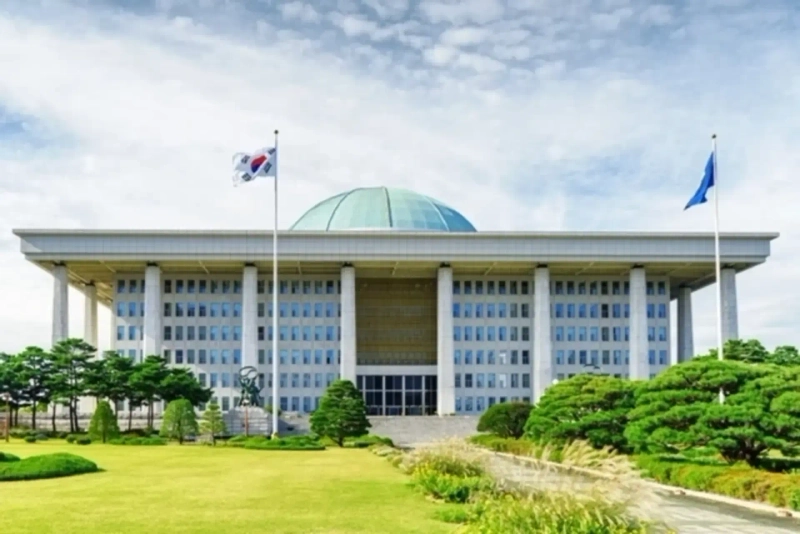
According to industry sources, at the closed-door government-party consultation held at the National Assembly Members' Office Building that day, discussions on the Basic Act on Digital Assets, including a stablecoin regulatory framework, were the focus.
After the meeting, Kang Jun-hyun, a Democratic Party lawmaker (secretary of the National Assembly's Political Affairs Committee), said, "There were large differences in positions regarding the issuer, but the direction was settled as a consortium method in which banks hold more than 51% of the shares." This is viewed as a compromise between the monetary policy stability emphasized by the Bank of Korea and the demand for private-sector innovation raised by the Financial Services Commission and within the ruling party.
The Bank of Korea had, considering the potential impact of stablecoins on the existing monetary system, maintained a bank-centered issuance structure, while the Financial Services Commission and parts of the ruling party had argued for expanding fintech companies' participation. This agreement is seen as meaningful in that it established a 'hybrid issuance model' in which banks take responsibility for financial soundness while private technology companies also participate to a certain extent.
Pressure on the legislative schedule also increased. Kang said, "We strongly requested that the government submit a government draft by December 10," and added, "If the deadline is exceeded, we will accelerate through member-initiated legislation." The government and the ruling party plan to submit the bill during the regular session of the National Assembly and have it handled at the January extraordinary session next year.

Suehyeon Lee
shlee@bloomingbit.ioI'm reporter Suehyeon Lee, your Web3 Moderator.