

Will U.S. rates be cut…KOSPI explores direction ahead of FOMC [Weekly Outlook]
Summary
- This week the KOSPI is expected to search for direction between 3850 and 4200 as attention focuses on the U.S. FOMC interest rate decision and earnings reports from major U.S. companies.
- If a U.S. policy rate cut materializes, KOSPI investor sentiment could be stimulated; conversely, a rate hold could lead to a short-term correction.
- Earnings and guidance from major U.S. AI infrastructure companies could significantly sway AI sector investor sentiment, and a buy-the-dip strategy may be effective if a correction follows the FOMC.
NH Investment & Securities "This week KOSPI expected to trade between 3850 and 4200"
The brokerage community expects that this week (8–12) the KOSPI index will search for direction as it watches the U.S. central bank (Fed) interest rate decision.
NH Investment & Securities on the 7th said it expects the KOSPI to trade between 3850 and 4200 this week. Analyst Na Jeong-hwan at the firm said, "Attention should be paid to the U.S. Fed's policy rate announcement and earnings reports from major U.S. companies."
If the U.S. Fed, as markets expect, proceeds with another rate cut, investor sentiment on the KOSPI, which has settled around the 4100 level, could be stimulated once again. Earnings from major U.S. AI infrastructure companies such as Oracle could also support the index's downside.
The Federal Open Market Committee (FOMC), which sets U.S. interest rates, will meet on the 9th–10th (announcement in the early hours of the 11th Korea time). After resuming rate cuts in September, the Fed lowered rates again in October. The market expects rates to be cut at this FOMC as well.
According to the Chicago Mercantile Exchange (CME) interest rate futures market, the view that rates will be cut by 0.25% percentage points at this FOMC is reflected at nearly 90%. Locally, a 0.25% percentage point cut is being treated as essentially a done deal.
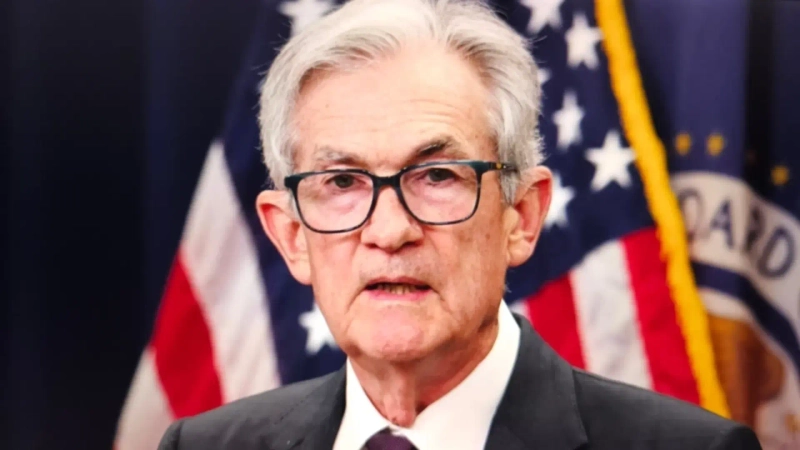
Federal Reserve Chair Jerome Powell said at a press conference after the October FOMC that "an additional rate cut in December is not a foregone conclusion," and until mid-last month expectations for a rate cut this month had fallen sharply.
However, New York Fed President John Williams recently said, "Although somewhat reduced by recent Fed actions, I view the current stance of monetary policy as modestly restrictive," and added that "there remains room to make further adjustments to the policy rate in the near term," rekindling hopes for rate cuts.
Na said, "The market atmosphere is one in which expectations of rate cuts are spreading," and added, "If the Fed holds the policy rate steady citing a lack of data (due to the shutdown), a short-term market correction could be unavoidable, but it is appropriate to interpret this as a postponement of the timing of the rate cut."
Oracle and Adobe report earnings on the 10th, and Broadcom on the 11th, with major U.S. AI data infrastructure companies' results also being released. In particular, Oracle and Broadcom have been at the center of concerns about excessive investment by AI companies and Google's tensor processing unit (TPU) issues.
Among hyperscalers (companies operating large-scale AI data centers), Oracle is a representative company that has mobilized bond issuance to pour massive funds into AI infrastructure construction this year. If negative guidance is mentioned, investor sentiment in the AI sector could freeze up rapidly.
Researcher Lee Kyung-min of Daishin Securities advised, "In the earnings announcements of the two companies, attention should be paid not only to results but also to each company's business outlook and guidance, and comments on recent issues."
Brokerages urged maintaining a buy-the-dip strategy in case the domestic market undergoes a correction after the FOMC.
Lee said, "During last month's adjustment, KOSPI forward EPS rose to 400 points, bringing the forward price-to-earnings ratio (PER) down to around 10 times," and explained, "Currently the KOSPI is at a level where neither valuation nor price is burdensome."
Na also said, "There is an interpretation that the upward trend in next year's KOSPI net profit forecasts is distorted by large-cap semiconductor stocks, but even excluding Samsung Electronics and SK Hynix, earnings forecasts are being revised upward," and added, "While forecasts tend to be revised down in the fourth quarter due to big bath (recognition of large accounting losses), the fact that upward revisions continue even in that period is positive."
No Jeong-dong, Hankyung.com reporter dong2@hankyung.com

Uk Jin
wook9629@bloomingbit.ioH3LLO, World! I am Uk Jin.