

PiCK
"Tokenized securities need easing of investor limits…Urgent solution required for liquidity depletion"
Summary
- With the tokenized securities (STO) bill passing the Standing Committee on Political Affairs, the industry emphasized the importance of system reforms and easing investor limit restrictions.
- Attorney Hwang Hyun-il stated that addressing liquidity issues requires easing retail investor limits and resolving caps on the number of licensed distribution platforms as urgent measures.
- Professor Lee Jong-seop said alignment with global markets and integration with on-chain finance and stablecoins are key tasks for the growth of Korea's tokenized securities market.
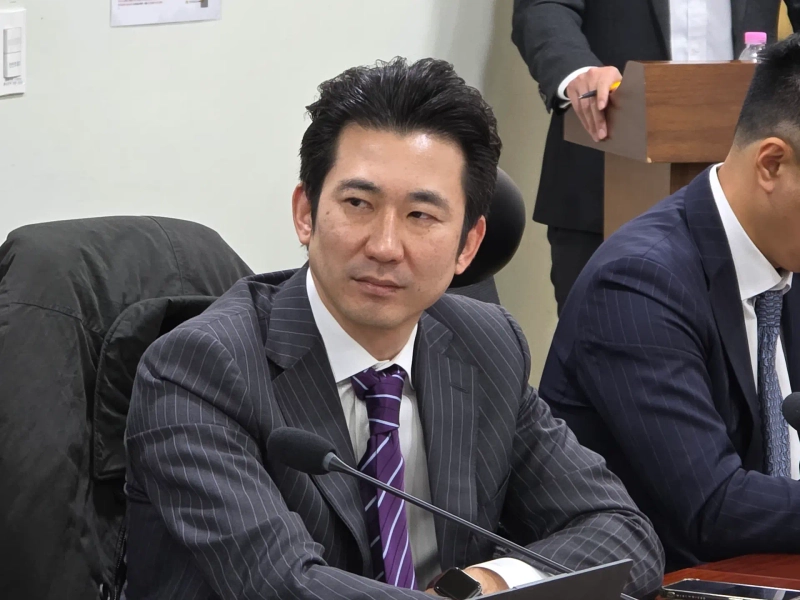
As the tokenized securities (STO) bill passed the Standing Committee on Political Affairs, industry expectations have intensified, and opinions were expressed that properly organizing the system will determine the success or failure of tokenized securities.
On the 10th (Korean time), Min Byung-deok and Lee Kang-il, members of the National Assembly's Standing Committee on Political Affairs from the Democratic Party of Korea, hosted the 'The Future of Financial Innovation Brought by the Introduction of Tokenized Securities' forum at Seminar Room No. 7 of the Members' Office Building at the National Assembly in Yeouido-dong, Seoul.
In his keynote speech, Rep. Min said, "The institutionalization of tokenized securities is an important turning point for Korean finance," adding, "Since major global countries have already incorporated tokenized securities into their institutional frameworks, Korea must also rapidly and systematically establish an institutional basis amid the changing trends."
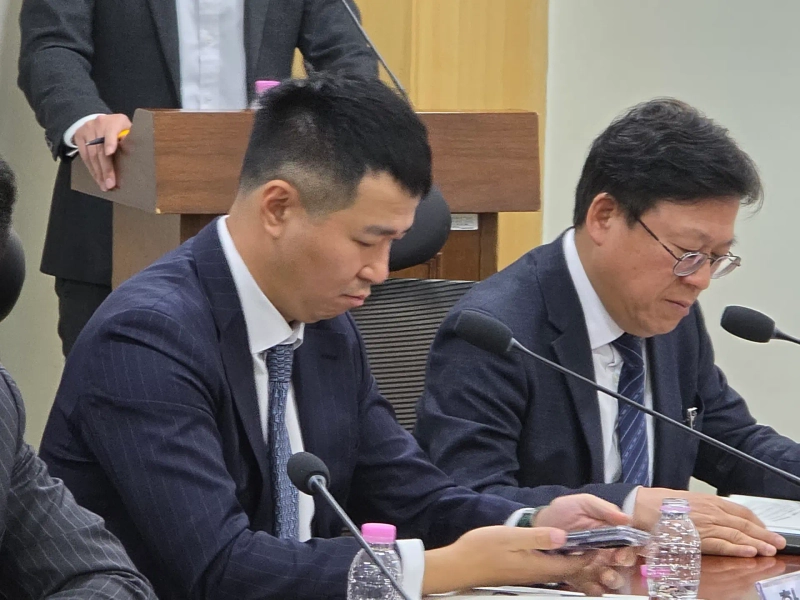
The biggest challenge for institutionalizing tokenized securities was cited as easing investor limit restrictions. Attorney Hwang Hyun-il of Law Firm Sejong pointed out, "Liquidity is paramount in the licensing system for fractional investment distribution platforms," and added, "To resolve liquidity issues, the investment limits on retail investors should not be excessively restricted."
The cap on the number of licensed distribution platforms was also identified as an impediment to industry growth. Attorney Hwang said, "A plan to limit the number of licenses to a maximum of two could weaken competition," and "securities firms and fintech companies should participate in consortium forms so that various models can coexist."
Legislative delays on the tokenized securities bill were also raised as an issue. Attorney Hwang said, "The legal foundation to recognize non-standard rights as securities has already been established," explaining, "The longer the delay in passing the Tokenized Securities Act and the Fractional Investment Act, the lower the completeness of the fractional investment market." He added, "Clear legal grounds regarding issuance, distribution, and disclosure are necessary for securities firms and platform operators to decide on long-term investment and system development."
There was also an opinion that Korea needs to align with global markets where tokenized securities businesses are more active. Professor Lee Jong-seop of Seoul National University College of Business Administration explained, "The global market is moving toward on-chain finance that connects traditional financial networks and blockchain networks," saying, "An ecosystem that bundles stablecoins (virtual assets whose value is linked to fiat currency), tokenized securities, and others will be established."
Professor Lee continued, "The asset tokenization market is growing 21~26% annually and expanding to the scale of US$30–40 billion," noting, "Tokenization is spreading even to highly liquid assets such as government bonds and money market funds." He emphasized, "To secure global competitiveness, Korea should also extend tokenized securities to conventional financial assets and design an on-chain financial structure linked with stablecoins and CBDC."
Professor Lee also identified success tasks for tokenized securities such as securing Ethereum Virtual Machine (EVM) compatibility, diversifying collateral assets, price oracles, and securing various Korea-specific underlying assets (K-content IP, carbon emission permits, etc.).

Uk Jin
wook9629@bloomingbit.ioH3LLO, World! I am Uk Jin.