

PiCK
Richard Teng "Digital assets being integrated into the global economy... growth continues despite corrections" [ADFW 2025]
Summary
- "Digital assets" markets have recently shown volatility, but Richard Teng, Binance co-CEO, said growth centered on real-use foundations such as stablecoins, tokenization, and payments will continue in 2025.
- Richard Teng said regulatory clarity and institutional capital inflows play important roles in strengthening the structural momentum of the digital asset market and reducing volatility.
- He emphasized that Binance, being regulated across multiple jurisdictions, is strengthening standards for security, compliance, and investor protection, which will increase global regulatory confidence.
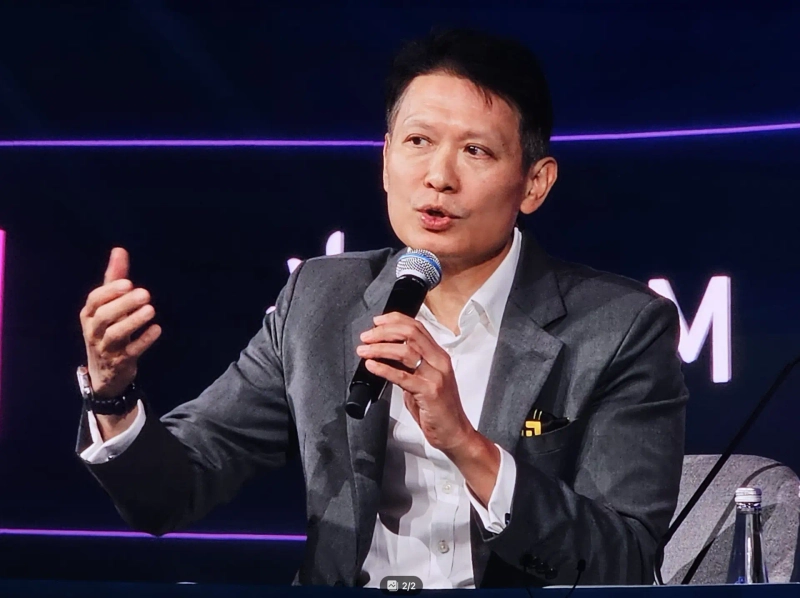
The global digital asset market has entered a phase of volatility, but forecasts suggest growth momentum will continue next year as real-use foundations such as stablecoins, tokenization, and payments are further strengthened.
On the 10th (local time) at the ADQ Arena in Abu Dhabi during 'Abu Dhabi Finance Week (ADFW)', Richard Teng, co-chief executive officer (CEO) of Binance, said, "The recent correction is not an isolated phenomenon unique to digital assets but a trend intertwined with the overall volatility of global asset markets," and emphasized, "The industry's structural growth will continue in 2025."
He said, "When price fluctuations occur due to specific events, they are often interpreted as problems unique to digital assets, but in reality the same factors operating in traditional financial markets such as stocks and bonds are acting simultaneously," and added, "Digital assets are no longer an isolated market and are being incorporated into the global capital market." He went on to predict, "The spread of stablecoin payments, expanded institutional adoption, and growth in the tokenization market, among other real-use cases, will continue to provide strong momentum next year."
Teng explained that steady market growth underlies this structural momentum. He said, "Since 2017, the crypto ecosystem has gone through multiple stages of innovation such as ICOs and decentralized finance (DeFi), but that process does not happen overnight," and added, "The pattern of the virtual asset market is to build foundations over a long period and then at some point see explosive mass adoption." He also noted, "Stablecoins have existed for a long time as well, but mass adoption has only recently accelerated."
He also emphasized that regulatory clarity is a key factor in expanding adoption. He said, "As regulatory frameworks are put in place worldwide, more than 12,000 merchants have begun to accept crypto payments," and explained, "Areas of institutional finance back-office work such as accounting, reconciliation, and payments are rapidly expanding as areas that can be redesigned on a blockchain basis."
He offered a view on the relationship between decentralization and centralization. Teng said, "Technology and infrastructure can be decentralized, but access can be centralized," and added, "Binance having secured over 300 million global users is also due to this accessibility-centered structure." He continued, "We are accelerating the convergence of Web2 and Web3, and collaborations with Franklin Templeton·BlackRock are part of the same trend."
The policy environment of the United Arab Emirates (UAE) and Abu Dhabi and the expansion of institutional participation were also cited as key factors in the stability of the digital asset market.
He said, "The UAE is one of the most proactive countries in adopting future technologies, not only blockchain but also AI," and added, "When institutional funds flow in, investment patterns and holding periods change, which has the effect of gradually reducing volatility." He emphasized, "Binance is currently one of the most regulated exchanges, being regulated in 31 jurisdictions, and we continuously strengthen investor protection and risk management standards."
Regarding the recent approval process of Binance's license by the Abu Dhabi Financial Services Regulatory Authority (FSRA), he said, "We were verified across all areas from security, compliance, anti-money laundering (AML), transaction monitoring to market surveillance," and evaluated, "Given that the FSRA has signed MOUs with several global regulators, this approval experience could give confidence to other national regulators."
Finally, he said, "No one can predict whether next year will become a 'super cycle' beyond the traditional four-year cycle," but added, "However, as regulatory clarity and global partnerships expand, the industry's structural momentum remains strong."

Suehyeon Lee
shlee@bloomingbit.ioI'm reporter Suehyeon Lee, your Web3 Moderator.