PiCK
Crypto market jolted by macro variables… Bitcoin-driven volatility widens [Lee Su-hyun’s Coin Radar]
Summary
- Bitcoin said volatility widened in the $81,000–$120,000 range on macro variables such as the BOJ rate decision, US CPI, and potential removal from MSCI indexes.
- Ethereum reported weakened supply-demand dynamics and investor sentiment due to the break of the $3,000 support, spot ETF outflows, and a sharp drop in buying by treasury companies.
- XRP and Solana each were described as facing strong near-term downside pressure due to factors such as profit-taking by long-term holders and a support break, and declining network transaction volume and the possibility of a $100 re-test, respectively.
Forecast Trend Report by Period


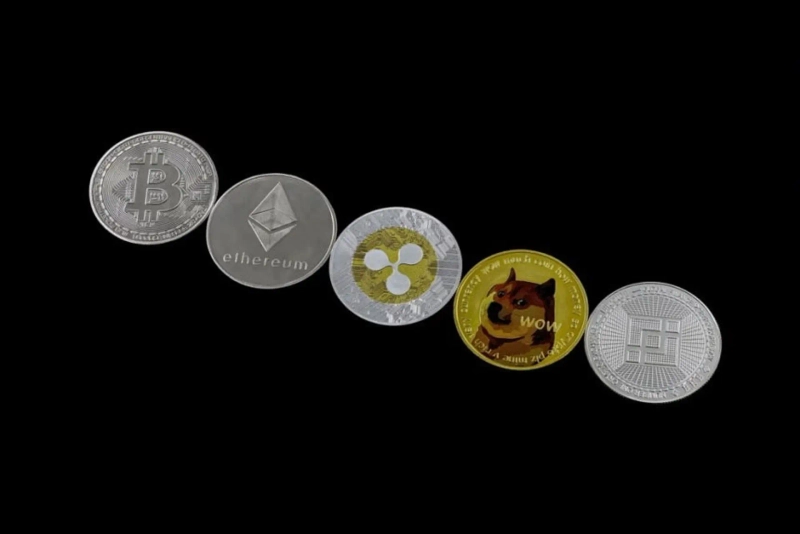
<Lee Su-hyun’s Coin Radar> is a weekly column that tracks trends in the virtual asset (cryptocurrency) market and explains the backdrop. Going beyond a simple list of price moves, it provides a multidimensional analysis of global economic issues and investor behavior, offering insights to gauge the market’s direction.
Major coins
1. Bitcoin (BTC)
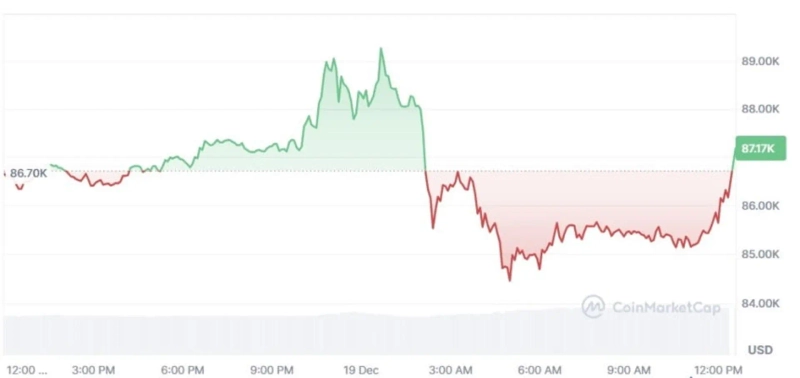
This week, the Bitcoin market was marked less by direction-finding than by a notable expansion in volatility. Prices whipsawed, with the $90,000 level breaking at one point before a sharp rebound. Amid persistent turbulence, Bitcoin is trading around $87,000 as of the 19th, according to CoinMarketCap.
The market assessed that uncertainty increased as multiple macro variables overlapped at once. The first major factor was the Bank of Japan’s (BOJ) rate decision. Even before the decision, markets largely took a 0.25%-point hike as a given, heightening caution that yen-funded flows that had supplied liquidity to global markets could shift. In that atmosphere, risk assets broadly came under pressure, and Bitcoin was no exception. However, following today’s BOJ decision, Bitcoin instead rebounded from the $85,000 range to the $87,000 range. The market appears to have interpreted this as “uncertainty being cleared.”
The US Federal Reserve’s (Fed) cautious stance was also a headwind. The Fed cut its benchmark rate by 0.25% point last week, but maintained a cautious view on additional cuts. As forecasts emerged that next year’s rate cuts could be limited to just one, inflows into the liquidity-sensitive virtual asset (cryptocurrency) market also moved into a pause.
Still, there were positive signals. Immediately after the release of the US November Consumer Price Index (CPI), Bitcoin rebounded to as high as the $89,000 level. Both CPI (2.7%) and core CPI (2.6%) came in below market expectations, confirming a cooling inflation trend, and together with signs of labor-market cooling, revived expectations for rate cuts. On prediction platform Kalshi, the implied probability of a January rate cut also surged.
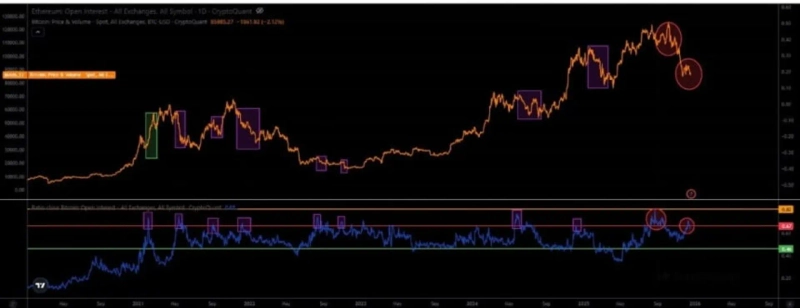
While this shift in expectations led to a short-term rebound in Bitcoin, the subsequent pullback also underscored that risks remain. Concerns on the supply side persist. On the 18th (local time), CryptoQuant contributor Mignole pointed out that buy-side liquidity is gradually shrinking and that, absent fresh inflows, capital is merely circulating within the market. This was cited as a burden, as in such conditions imbalances often have been resolved only through price corrections.
In addition, an MSCI-related issue is being cited as a potential risk. MSCI is reviewing a plan to exclude companies with high exposure to virtual assets from its indexes, and analysts warned that if removals occur, large-scale selling pressure could follow. While a final decision is scheduled for January next year, the market is already showing a preemptively cautious stance.
On the price front, there is a view that overhead supply remains heavy. Glassnode identified the $93,000 to $120,000 zone as a strong resistance area. It noted that this band is crowded with prior cycle-top buyers, meaning rebounds could be capped easily. On the downside, however, buying demand is defending the low-$81,000 area, and some analyses suggest the risk of an immediate sharp breakdown is limited. CryptoQuant contributor Mignole also said, “A short-term rebound or prolonged sideways move is possible, but there is a high chance it ends up as a meaningless bounce, with room for further declines afterward.” Ultimately, it is fair to say Bitcoin is currently in a zone where risks and expectations continue to collide rather than a phase of choosing a clear direction.
2. Ethereum (ETH)
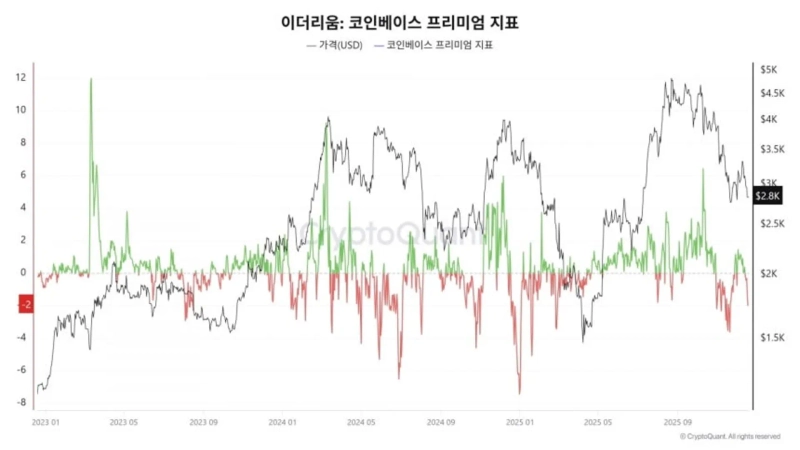
Ethereum also posted a sluggish performance this week. After the $3,000 level gave way, it slid at one point into the $2,700 range, logging a double-digit decline from the prior week. This is being interpreted less as a simple price correction and more as a simultaneous cooling in supply-demand dynamics and investor sentiment.
First, US demand has weakened noticeably. Ethereum’s Coinbase premium has remained in negative territory since mid-December, which is read as a signal that net selling pressure from US investors is continuing. Concerns over whale behavior have also grown. As the unrealized profit ratio of whale addresses holding from 1,000 to as many as over 100,000 ETH has recently neared zero, analyses suggest they have entered a zone where even a small additional dip could prompt selling. In that case, there are worries that additional selling pressure could hit all at once.
Spot ETF flows were also unfavorable. Throughout the week, Ethereum spot ETFs saw continued outflows, with withdrawals particularly notable from BlackRock and Fidelity products. The view is that institutional demand is taking a brief breather.
Of course, not all institutions have stepped away. BitMine continued to accumulate Ethereum this week with additional purchases. According to Arkham data, BitMine is estimated to have bought at least $229.31 million worth of Ethereum this week.
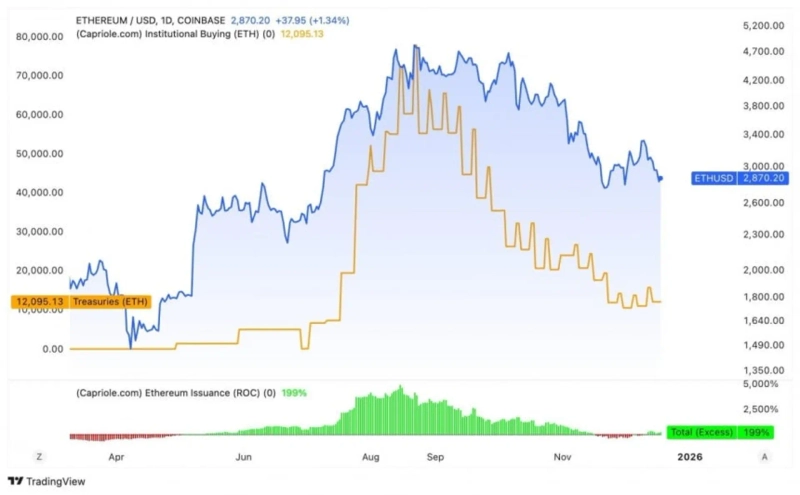
However, looking at the overall trend, the pace of buying by Ethereum treasury companies has clearly slowed. According to Capriole Investments, daily purchases by Ethereum treasury companies plunged from 78,010 ETH in late August to 12,095 ETH as of the 18th. In other words, the situation is closer to a picture of “BitMine buying alone.”
Caution dominates the outlook. BeInCrypto raised the possibility that Ethereum could re-test the $2,762 support level, and said weakness could persist if investor sentiment does not recover. For now, reclaiming $3,000 is the key condition for a short-term rebound; if it clears that level, there is room for a technical bounce up to $3,131. There are also more conservative views. Crypto analyst Dan Crypto Trades warned, “If the $2,800 support breaks, the next major support is around $2,100.”
3. XRP (XRP)
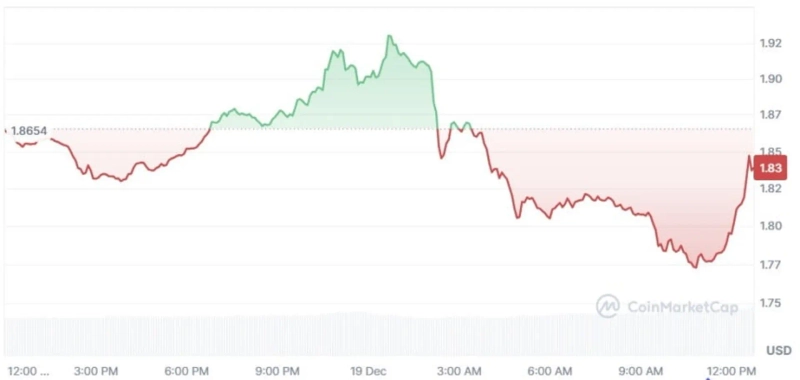
XRP also faced a difficult week. As of the 18th on CoinMarketCap, it fell more than 12% from the previous week, losing the $2 level, and is still hovering around $1.8.
The primary driver of the decline was identified as profit-taking by long-term holders. Early XRP investors have recently begun actively unloading positions. In a representative case, a wallet created about seven years ago accumulated holdings when XRP traded around $0.40, then realized profits totaling about $721.50 million near $2 on the 11th.
The problem is that this is not a one-off. Glassnode data show that since early this fall, the pace of profit-taking by long-term holders has accelerated rapidly, with realized profits jumping about 240% since September. Whereas in the past they tended to sell after a bull market became clearly established, now—amid heightened market volatility—they are prioritizing financial stability and taking profits at a relatively early stage. This effectively acts as a structural factor that continues to cap XRP rebounds.
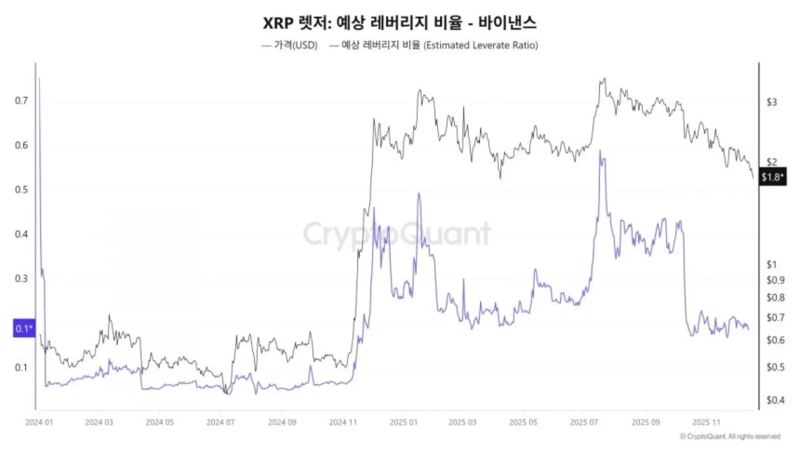
In the derivatives market, leverage has also dropped sharply, weakening the fuel for short-term rebounds. According to CryptoQuant data, since mid-December, the estimated leverage ratio for XRP on Binance has fallen to about 0.18, one of the lowest levels in the recent range. It is a steep contraction compared with the leverage seen when XRP was trading above $3. While deleveraging is positive in that it reduces the risk of cascading liquidations, it is also being assessed as a sign that speculative buying power capable of pushing prices higher has weakened.
Still, there was a notable medium- to long-term development. News broke that “wrapped XRP,” which enables XRP to be used on other blockchains, is set to be issued for the first time within the Solana ecosystem. It is meaningful as the first case of XRP expanding beyond the Ripple ecosystem into an external DeFi environment, but the view is that it will take time before it is reflected in the price.
In the short term, expectations remain tilted toward continued downside pressure. Cointelegraph presented a notably conservative scenario, arguing that the current chart resembles a fractal from just before the 2018 bear market, and that having failed to hold $2 support, it cannot rule out an additional plunge to as low as $0.60, with stabilization only around the $1 level. Crypto analyst Mikybull Crypto stressed that “on the monthly chart, the $1.70–$1.80 zone must be held.” If this demand zone breaks, the analysis is that it would slide into capitulation and be unable to avoid further declines. If this demand zone breaks, the analysis is that it would slide into capitulation and be unable to avoid further declines.
Issue coins
1. Solana (SOL)
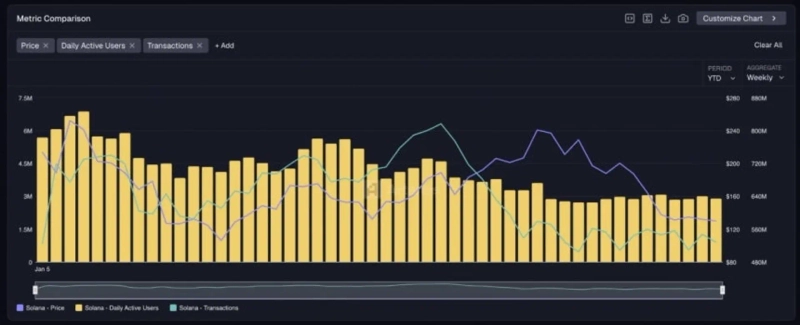
Solana also followed the broader market’s weak trend this week, posting a double-digit percentage decline over the week on CoinMarketCap’s metrics. As of the 19th, it is trading around $120.
A key factor behind the deeper drop was the breakdown of the $130 level, regarded as a psychological support. Once support broke, short-term profit-taking supply quickly hit the market, and that flow was analyzed as leading to further declines. On top of that, pressures on fundamentals increased as both network transaction volume and active users fell. Weekly transaction volume on the Solana network has continued to decline since peaking in mid-July, falling from the peak of 816 million transactions to about 527 million last week. In particular, cooling trading demand in the memecoin segment—which had accounted for a large share of the Solana ecosystem—was cited as a key driver.
However, ecosystem news alone was not entirely negative. At Solana’s annual conference “Breakpoint 2025,” held in Abu Dhabi last week, a series of positive updates followed. Coinbase said it would introduce a feature enabling immediate trading of new Solana-based tokens without separate listing procedures, and there was also a string of news about traditional financial institutions joining Solana, including Singapore Gulf Bank and Bhutan’s state-owned DK Bank.

In particular, Solana Mobile’s plan to expand into the Android ecosystem drew market attention. It announced a plan—through collaboration with MediaTek—to embed Solana network functionality by default into Android devices. The idea is to lay the groundwork for hundreds of millions of devices to connect directly with the Solana ecosystem in the future.
In the short term, analyses suggest additional corrections could continue. Crypto-focused outlet CoinGape said, “If it falls below the $120 level, $110—and even $100—could open up.” Investment outlet FXEmpire also analyzed that “Solana broke down through the $128 support level where it had rebounded multiple times,” adding that “selling pressure remains dominant.” The outlet described the area around $121.50 as effectively the “last line of defense,” and said if that breaks, a re-test of $100 is possible.
Ultimately, while the recent ecosystem expansion news could act as a positive factor over the medium to long term, volatility-driven trading conditions are likely to persist for the time being.
Lee Su-hyun, Bloombergbit reporter shlee@bloomingbit.io

Suehyeon Lee
shlee@bloomingbit.ioI'm reporter Suehyeon Lee, your Web3 Moderator.