

"Large-scale liquidity is coming" Bitcoin 2026 rebound thesis… midterm election variable is a burden
Summary
- U.S. monetary policy easing and large-scale liquidity supply could act as factors for a Bitcoin price increase in 2026.
- However, political and regulatory variables such as the 2026 midterm elections are cited as major risks.
- The market notes the balance between liquidity expansion and political variables, and analyzes that volatility could be large.
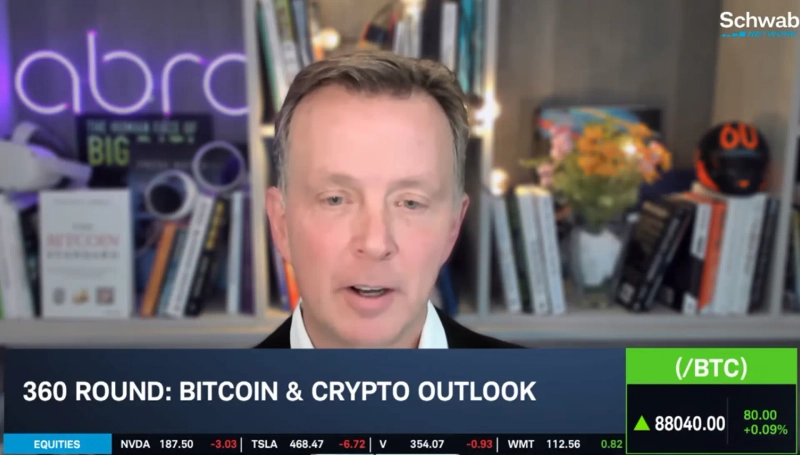
If U.S. monetary policy eases and large-scale liquidity is supplied to the market, Bitcoin prices could rise in 2026, according to a forecast. However, some market participants remain cautious, pointing to the 2026 U.S. midterm elections and changes in the macro environment as major risks.
According to a Cointelegraph report on the 31st (local time), Abra, a cryptocurrency exchange and wallet company, CEO (CEO) Bill Barhydt (Bill Barhydt) said in a Schwab Network interview that "the U.S. Federal Reserve (Fed) may supply a significant amount of liquidity to the market in 2026."
He said, "An early phase of accommodative quantitative easing (QE) is already emerging, and the Fed has begun repurchasing government bonds," and added, "If demand for government debt falls along with rate cuts, a positive environment for risk assets overall could be created." He added, "This would be favorable conditions for all assets, including Bitcoin."
Barhydt also assessed that clearer virtual asset regulation in the U.S. and increased inflows from institutional investors are medium- to long-term factors for price increases. He said, "If rate cuts and improvements in the institutional environment coincide, the virtual asset market could continue a positive trend for several years."
However, in the short term, market expectations about the speed of the monetary policy shift are declining. According to the Chicago Mercantile Exchange (CME) Group, the probability that a rate cut will be implemented at the January Federal Open Market Committee (FOMC) meeting was calculated at 14.9%. This is down from 23% in the November survey.
On the other hand, there are quite a few who view 2026 as a bearish phase. Early Bitcoin investor Michael Terpin (Michael Terpin) said, "It cannot be ruled out that Bitcoin could form a bottom around $60,000 in the fourth quarter of 2026."
Terpin pointed to political variables as a major risk factor despite expectations of monetary easing. He said, "If the Republican Party does not achieve a landslide victory in the 2026 midterm elections, a regulatory-friendly stance could weaken," adding, "This could weigh on the virtual asset market."
According to prediction market Polymarket, the probability that the Republican Party will control both the House and Senate is about 19%. Conversely, scenarios in which the two parties split control of the two chambers have probabilities of 47% each.
The market views the 2026 Bitcoin trend as a process of finding balance between expectations of monetary policy easing and political/regulatory variables. If liquidity expansion materializes, there is room for a rebound, but volatility could widen depending on the midterm election results.

YM Lee
20min@bloomingbit.ioCrypto Chatterbox_ tlg@Bloomingbit_YMLEE