

Rubio, U.S. Secretary of State, "Will discuss Greenland issue with Denmark next week"
Summary
- U.S. Secretary of State Marco Rubio said the U.S. plans to discuss the Greenland issue with Denmark.
- Denmark's decision to spend on defense and U.S. moves led European defense stocks to rise while European markets fell amid unease.
- Greenland's strategic value for U.S. economic and national security is rising due to Arctic shipping routes opening, undeveloped resources, and military factors.
Europe uneasy over Trump's desire to control Greenland
Denmark: "Will spend 20 trillion won on Greenland defense"
Building justification by framing from 'economic security' to 'national security'
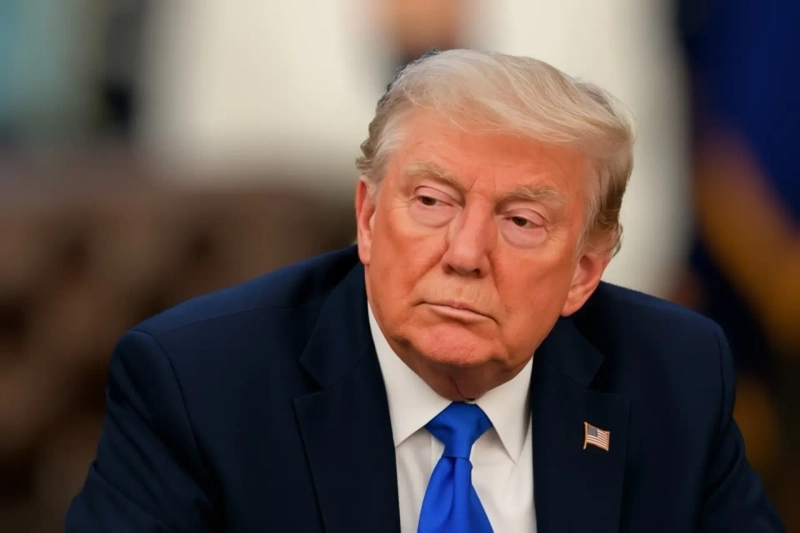
Following Venezuela, Europe's concern is growing that Trump's next target could be Greenland. With mentions that military options are being considered, Marco Rubio, U.S. Secretary of State, said on the 7th (local time), "I will discuss the Greenland issue with Denmark next week."
European stock markets fell on the 7th amid rising unease, with the broad STOXX 600 index down 0.2%. European defense stocks rose on news that Denmark would spend on Greenland's defense.
Marco Rubio, U.S. Secretary of State, said that day, "Next week I will discuss the Greenland issue with Danish officials." Rubio's remarks came as the Trump administration raised the level of rhetoric suggesting it might seize control of Greenland, an autonomous territory of Denmark.
A day earlier, White House spokesperson Caroline Levitt said that the president and his advisers were "considering various options, including the mobilization of U.S. forces," to acquire Greenland, heightening the sense of crisis over Greenland.
On the evening of the 6th, Troels Lund Poulsen, Denmark's Minister of Defence and Deputy Prime Minister, said, "Considering the serious security situation we face, we will spend 88 billion Danish kroner (about 20 trillion won) to rearm Greenland."
President Trump said to reporters on the 4th, shortly after military intervention in Venezuela, "From a national security perspective, Greenland is essential to us." His remarks stunned leaders across Europe.
The United States already maintains a presence in Greenland. Near Baffin Bay in northwest Greenland it has the Pituffik space base, formerly the Thule Air Force Base. The base has a runway and currently hosts about 150 U.S. military personnel. During the Cold War, U.S. troop levels were around 6,000, but the U.S. has significantly reduced its stationed forces since then.
If necessary for national security, agreements could be made directly with Greenland, similar to military agreements with Denmark. Through consultations with Denmark and Greenland, the U.S. could also increase stationed forces and military equipment.
For this reason, European experts say they do not understand why the U.S. would cite national security as the reason it wants to control Greenland.
Marion Messmer, head of the International Security Programme at the Chatham House think tank in London, said, "It is not clear why the U.S. would want control of Greenland under the guise of national security." The U.S. already stations forces at Pituffik, and there has long been a defense agreement with Denmark, she said. "The U.S. can, if necessary, increase its forces without infringing on Danish sovereignty," she added.
Otto Svendsen, a Europe, Russia, and Eurasia researcher at the Center for Strategic and International Studies (CSIS) in Washington, said, "The early-warning airbase the U.S. has placed in northwest Greenland plays a central role in monitoring Russian submarines passing through nearby straits." He said that movements by Russia or China can already be detected in this area.
According to CNBC, U.S. international strategy researchers say Greenland's strategic value is increasing.
Clayton Allen, head of practice at political risk consultancy Eurasia Group, said, "Trump is a real estate businessman," and added, "Greenland holds some of the most valuable regions in economic and strategic terms for the next 30 to 50 years."
CSIS's Otto Svendsen said, "A newly emerging factor is that Greenland spans two potential maritime transport routes through the Arctic — the Northwest Passage and the Trans-Arctic route." He added, "Climate change is making these routes more viable, increasing commercial benefits and thereby raising the island's national security value."
Previous polls show Greenland residents overwhelmingly oppose U.S. control and that a majority support independence from Denmark.
Analysts say Greenland could be useful as an advance base to strengthen U.S. defense and as a location to deploy missile interceptors.
Eurasia Group's Allen said, "The U.S. needs to build an air defense network closer to Russia, and Greenland, with its vast area, provides precisely that condition."
Located between the U.S. and Russia, Greenland is adjacent to emerging Arctic routes that could greatly shorten travel times between Asia and Europe as ice rapidly melts due to climate change.
Greenland also spans the so-called GIUK gap, the maritime bottleneck between Greenland, Iceland, and the United Kingdom that connects the Arctic and the Atlantic.
Greenland is also known to be rich in undeveloped resources such as oil and gas deposits, critical minerals, and rare earth elements.
Critical minerals and rare earth elements are essential components of emerging technologies such as wind turbines, electric vehicles, energy storage technologies, and national security-related technologies. China has used its dominant position in the rare earths market to gain an advantage in trade disputes with the U.S.
President Trump has mainly cited America's "economic security" as the rationale for wanting control of Greenland. With Trump's approval ratings falling to the low 30% range, he may need another big deal to divert public attention from domestic issues, following Venezuela. Therefore, analysts say that 'national security' could be used in addition to 'economic security' to rationalize control of Greenland as its geopolitical and economic value rises.
Contributing reporter Jeong-a Kim kja@hankyung.com

Korea Economic Daily
hankyung@bloomingbit.ioThe Korea Economic Daily Global is a digital media where latest news on Korean companies, industries, and financial markets.