Supreme Court: "Crypto assets held at exchanges are also subject to seizure"
Summary
- The Supreme Court ruled that personally owned Bitcoin held at virtual asset exchanges such as Upbit and Bithumb is subject to seizure under the Criminal Procedure Act.
- The Supreme Court said Bitcoin is an electronic token with independent manageability, transferability, and the ability to exercise effective control over economic value, and is therefore subject to seizure under the Criminal Procedure Act.
- The ruling was described as clarifying the legal nature of virtual assets managed and disposed of in exchange wallets and the possibility of lawful seizure and forfeiture in criminal proceedings.
Forecast Trend Report by Period


First ruling on 'seizable property under criminal law'
Blocking misuse for laundering criminal proceeds
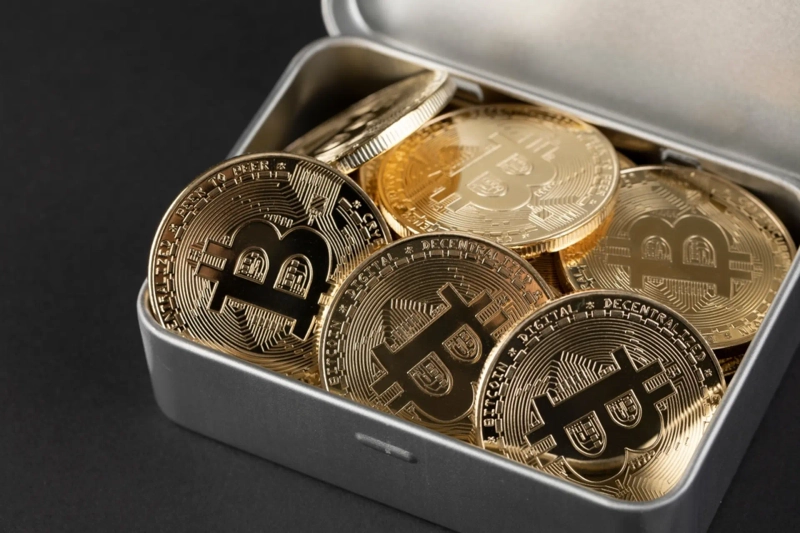
The Supreme Court has for the first time determined that personally owned Bitcoin held at virtual asset exchanges such as Upbit and Bithumb is subject to seizure under the Criminal Procedure Act. The ruling clarifies the legal basis for investigations into virtual assets used in various crimes.
According to the legal community on the 8th, the Supreme Court’s Second Division (Presiding Justice Kwon Young-joon) ruled on Dec. 11 last year in the case of "re-appeal against a decision dismissing a request to revoke or modify an investigative agency’s seizure" filed by Mr. A, that "Bitcoin is included among items subject to seizure by courts or investigative authorities." This is an additional determination following a 2018 ruling that "Bitcoin is subject to forfeiture."
The case began in January 2020 when a judicial police officer seized 55.6 bitcoins (worth about 600 million won at the time) from Mr. A’s virtual asset exchange account while investigating him on suspicion of money laundering. Through a quasi-appeal, Mr. A argued that "Bitcoin is not a traditional tangible object and therefore does not qualify as an 'item' subject to seizure," seeking to overturn what he said was an unlawful seizure.
The Seoul Central District Court dismissed the quasi-appeal on Dec. 20, 2024, stating that "while virtual assets do not constitute traditional tangible objects, they are electronic tokens premised on electronic transactions or transfers and therefore fall under 'items deemed to be subject to forfeiture' under Article 106 of the Criminal Procedure Act." Mr. A then filed a re-appeal with the Supreme Court.
The Supreme Court held that "items subject to seizure under Articles 106 and 219 of the Criminal Procedure Act include both tangible objects and electronic information," and that "Bitcoin, an electronic token with independent manageability, transferability, and the ability to exercise effective control over its economic value, is also subject to seizure." It added that "a Bitcoin holder can, through a private key, exercise de facto exclusive and sole control over the management or transfer of Bitcoin," and that "this is akin to effectively controlling economic value."
This ruling is the first to determine whether virtual assets themselves, managed and disposed of through exchange wallets (custodial wallets), can be subject to seizure under the Criminal Procedure Act. The Supreme Court reaffirmed related precedents from 2018 and 2021, stating that "if legal requirements are met, Bitcoin may be subject to forfeiture." A legal professional said, "The decision clarifies the legal nature of coins held and traded on exchanges and specifies that they can be lawfully seized at the investigative stage."
Reporter Jang Seo-woo suwu@hankyung.com

Korea Economic Daily
hankyung@bloomingbit.ioThe Korea Economic Daily Global is a digital media where latest news on Korean companies, industries, and financial markets.