Won-dollar exchange rate rises for a 10th straight day, nearing 1,480 won… extending daily gains since the New Year
Summary
- The won-dollar exchange rate climbed to 1,477.5 won, nearing 1,480 won, prompting talk that 1,500 won is possible.
- Authorities said a supply-demand imbalance driven by expanded resident overseas securities investment and yen weakness is a key factor behind the won’s weakness.
- With the dollar index at 99.152, Bank of Korea Governor Rhee Chang-yong is set to present his stance on the FX market after the MPC meeting on the 15th.
Forecast Trend Report by Period


Supply-demand imbalance, yen weakness in focus
Some cite excessive liquidity
Market watches BoK governor’s message after tomorrow’s MPC meeting
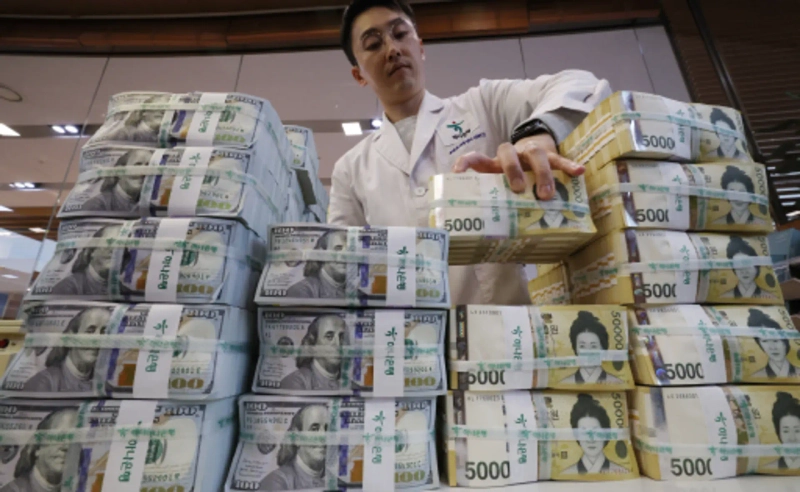
The won-dollar exchange rate has extended its daily gains since the New Year, moving to within striking distance of 1,480 won. At this pace, the market mood suggests 1,500 won may not be far off.
On the 14th in Seoul’s FX market, the won’s weekly trading close against the U.S. dollar (as of 3:30 p.m.) was tallied at 1,477.5 won, up 3.8 won from the previous day.
After hitting an intraday high of 1,484.9 won on Dec. 24 last year, the exchange rate fell 53.8 won over three days on a closing basis amid verbal intervention by FX authorities and strategic FX hedging by the National Pension Service. However, it has climbed again since the 30th of last month, rising a total of 47.7 won—effectively retracing most of the government’s intervention effect.
This year’s upswing is steep, on par with the moves seen in October–November last year. The exchange rate rose from around 1,400 won in October to the 1,440 won range, and in November it surged to the high 1,470s.
Authorities appear to be continuing fine-tuning operations (smoothing operations) to curb FX volatility. However, there has been no visible large-scale intervention on the level seen when they went all out to push down the year-end closing rate.
FX authorities are pointing to a supply-demand imbalance driven by expanded overseas securities investment by residents—so-called “Seohak ants”—as a key factor behind the won’s weakness.
According to the Korea Securities Depository, domestic retail investors net bought about $2.2 billion worth of overseas stocks through the 13th this year. That already far exceeds the net buying for all of December last year ($1.55 billion).
Authorities assess that distrust of domestic investment assets and expectations of further exchange-rate gains remain entrenched, even as the KOSPI has topped the 4,700 level to set a fresh record high.
Adding to that, the yen has been weakening, trending toward nearly 160 yen, also contributing to won weakness.
A foreign media report said the previous day that Japanese Prime Minister Sanae Takaichi conveyed to senior members of the ruling Liberal Democratic Party her intention to hold an early general election next month.
With the likelihood of an early Japanese election rising, yen weakness has become pronounced as concerns over fiscal soundness overlap with expectations that the Bank of Japan (BOJ) will delay a policy-rate hike.
The yen-dollar exchange rate rose to as high as 159.448 yen at around 10:35 a.m. That is the highest level since July 11, 2024 (161.757 yen).
The won-yen nominal exchange rate stood at 927.47 won per 100 yen, up 0.29 yen from the previous day’s reference rate of 927.18 won (as of 3:30 p.m.).
The dollar also remains relatively firm. The dollar index, which measures the dollar’s value against six major currencies, rose 0.01% from the previous day to 99.152.
Bank of Korea Governor Rhee Chang-yong is expected to lay out his view on recent FX market moves at a press briefing following the Monetary Policy Committee meeting on the 15th.
Choi Su-jin, Hankyung.com reporter naive@hankyung.com

Korea Economic Daily
hankyung@bloomingbit.ioThe Korea Economic Daily Global is a digital media where latest news on Korean companies, industries, and financial markets.