Yen slide pauses for now… “Tail risk is joint Korea-Japan FX intervention”
Summary
- It reported that a stronger yen emerged as yen-buying flows came in on the back of a series of remarks from Japan’s FX authorities.
- It said that as the risk of market intervention by Korean and Japanese authorities rises, markets should prepare for the possibility of simultaneous dollar weakness, yen strength and won strength.
- Nikkei reported that, backed by massive FX reserves in Korea and Japan, dollar-selling intervention could take place even in the ¥159–¥162 range.
Forecast Trend Report by Period


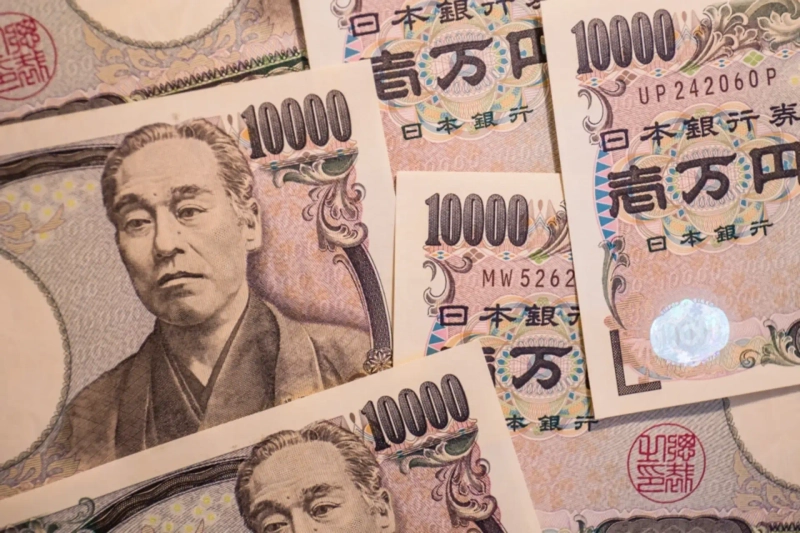
On the 15th in Tokyo’s FX market, the yen-dollar rate traded in the mid-¥158 per dollar range. The yen strengthened by about ¥1 from the previous day. A fresh wave of yen buying—reflecting the possibility of government intervention—came in after Japan’s FX authorities delivered a series of remarks seeking to curb yen weakness.
Finance Minister Katsuyama Satsuki said on the 14th, “We will respond appropriately without ruling out any measures against excessive moves, including speculative ones.” On the day, Atsushi Mimura, vice finance minister for international affairs at the Ministry of Finance, also stressed that he was “extremely concerned” about recent FX moves.
The won’s rebound, after U.S. Treasury Secretary Scott Bessent voiced concern about won weakness, also fed into yen buying. Bessent wrote on X on the 12th that he met with Deputy Prime Minister and Economy and Finance Minister Koo Yun-cheol, adding that the recent decline in the won “is inconsistent with the solid fundamentals of the Korean economy.”
A European hedge fund manager told the Nihon Keizai Shimbun that “a series of official remarks suggests conditions are now in place, with U.S. acquiescence, for Korea and Japan to step in to buy their own currencies.” He added, “As a tail risk (a low-probability but high-impact event), markets should factor in coordinated—or simultaneous—dollar-selling intervention by Korea and Japan.”
Nomura International’s Singapore branch also said in a report on the 14th that “the risk of market intervention by Korea and Japan—both of which have expressed dissatisfaction with their currencies’ weakness—has been rising.” It recommended preparing for the possibility that dollar weakness and yen strength could occur at the same time as dollar weakness and won strength.
Nikkei reported that while Korea is not on Japan’s level—Japan holds more than $1 trillion in FX reserves as of the end of last year—Korea is also among the world’s major reserve holders. “Moreover, if its relationship with the U.S. is good, it can flexibly secure dollars through currency swaps and other channels,” it said. The analysis is that, even though the scale of the FX market has expanded dramatically, the “artillery” held by both Korea and Japan cannot be taken lightly.
In Japan’s FX market, many believe there will be no intervention until the yen weakens beyond around ¥161.9 per dollar, the level seen before intervention in July 2024. Bank of America said in a report on the 12th that “intervention is likely to take place in the ¥162–¥165 per dollar range.”
However, Nikkei observed that if the yen breaks through ¥161.9 per dollar in one move, Japanese authorities may judge that the yen’s slide would become difficult to stop. The newspaper commented: “While keeping an eye on developments in Korea, markets should proceed on the assumption that intervention could also occur in the ¥159–¥162 range,” adding that “the war of nerves between the market and the authorities has entered a new phase.”
Tokyo=Correspondent Kim Il-gyu black0419@hankyung.com

Korea Economic Daily
hankyung@bloomingbit.ioThe Korea Economic Daily Global is a digital media where latest news on Korean companies, industries, and financial markets.