"100% tariff on semiconductors if they aren’t made in the US"—pressure laid bare again…negotiations face another test
Summary
- The US government said it had warned that it could impose tariffs of up to 100% on semiconductors if companies do not invest in production facilities in the United States.
- South Korea’s memory semiconductors are currently excluded from the tariff targets, but concerns are growing that the scope could be expanded going forward.
- The US said it would pursue separate agreements by country, meaning that Taiwan-style tariff-exemption conditions may not automatically apply to South Korea.
Forecast Trend Report by Period


In response to a question, "Will South Korea be held to the Taiwan standard?" the reply was: "Separate agreements by country"
The US government warned that it could impose tariffs of up to 100% on semiconductors on major chip-producing countries including South Korea if they do not invest in production facilities in the United States. For now, the impact is expected to be limited because memory chips—South Korean companies’ main export—are excluded, but concerns are growing that the scope could be expanded as Washington makes its investment pressure increasingly explicit.
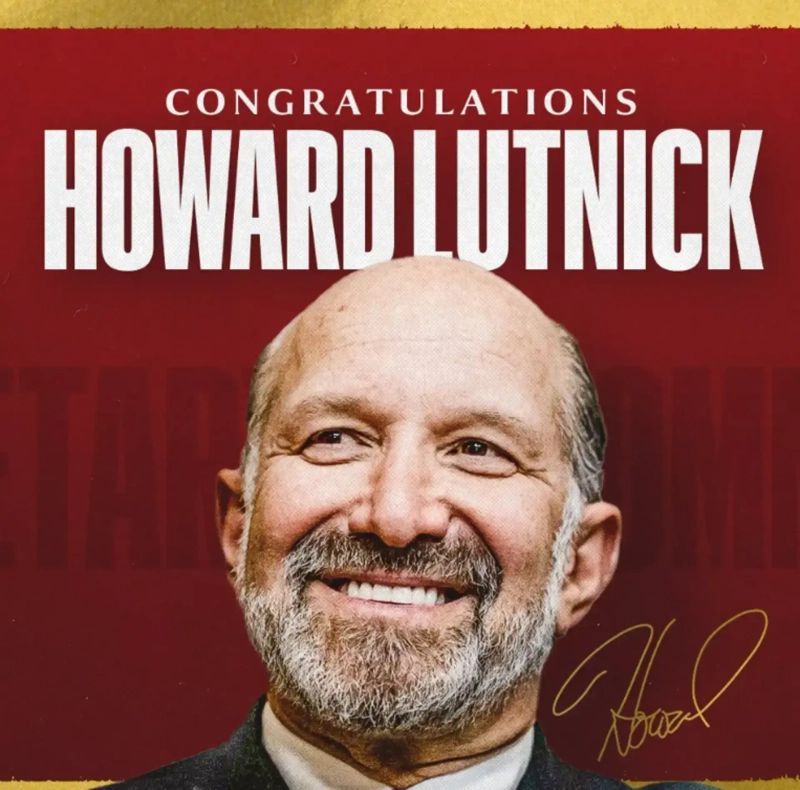
US Commerce Secretary Howard Lutnick said on the 16th (local time) at the groundbreaking ceremony for Micron’s new plant near Syracuse, New York, “Companies that want to make memory chips have two choices: pay a 100% tariff, or produce in the United States.” The remarks are interpreted as signaling that Washington could again pull out the high-tariff card if talks fail to make progress, after the Trump administration announced in August last year a plan to levy a 100% tariff on imported semiconductors but has since deferred full implementation while negotiating with countries.
The US recently presented Taiwan with tariff-exemption conditions premised on investment in the United States and expanded production capacity. South Korea also secured a most-favored-nation treatment mechanism in trade talks last year stating that it would be granted terms “no less favorable than those provided under any future agreement targeting semiconductor trade volumes exceeding South Korea’s semiconductor trade.” However, the US Commerce Department said on the day, in response to a question on whether “the same exemption standards as Taiwan would apply to South Korea,” that it would “reach separate agreements by country,” making clear that identical terms would not be applied automatically.
In the semiconductor tariff proclamation announced by the US on the 14th, Nvidia and AMD’s high-performance AI system semiconductors were cited as major targets of the 25% tariff measure, and the prevailing view had been that the impact would be limited because memory chips—South Korean firms’ main exports—were not the focus. But the White House has suggested it could broaden the targets, saying it may impose more wide-ranging tariffs on imports of semiconductors and derivative products.
If measures spread beyond Nvidia’s H200 to other products, concerns are emerging that South Korean companies could again face the risk of tariffs as high as 100%. Yeo Han-koo, head of trade negotiations at the Ministry of Trade, Industry and Energy, who returned home after a trip to the US, said, “The immediate impact is limited, but we cannot rule out the possibility of second-stage measures.”
The presidential office said, “Based on the principle stated in the joint explanatory material of ‘terms no less favorable than those for major countries,’ we plan to closely analyze the agreement, communicate with industry, and proceed with consultations with the US side.” Kim Yong-bum, the presidential office’s policy chief, is expected to receive a report on semiconductor tariff-related measures from the Ministry of Trade, Industry and Energy and discuss responses.
Reporter Ha Ji-eun hazzys@hankyung.com

Korea Economic Daily
hankyung@bloomingbit.ioThe Korea Economic Daily Global is a digital media where latest news on Korean companies, industries, and financial markets.