Tariffs that were supposed to be paid by foreigners are borne mostly by Americans… “Trump own goal”
Summary
- The IfW said U.S. consumers and importers bore 96% of the costs of the tariffs imposed by the United States.
- The IfW explained that tariffs function not as a tax on foreign producers but like a consumption tax imposed on Americans and could stoke inflation.
- The WSJ said it commented that, as a trade war with Europe resumes, it suggests President Trump’s negotiating leverage could be weaker than expected.
Forecast Trend Report by Period


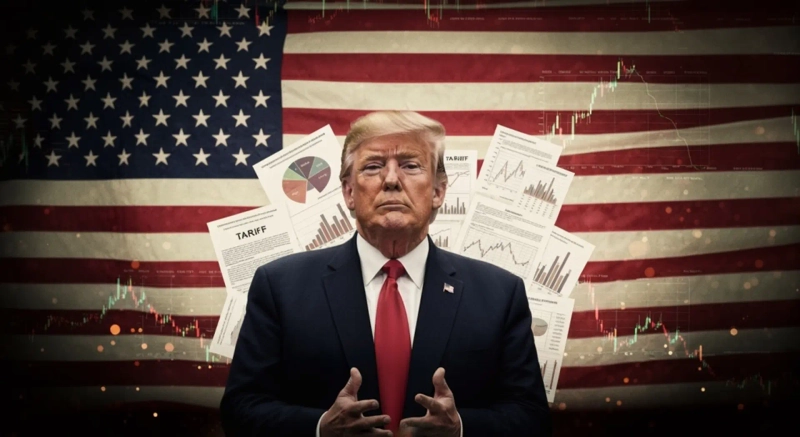
A study has found that Americans have shouldered most of the costs stemming from the reciprocal tariffs the United States imposed on countries around the world, leaving the U.S. facing a “backlash.” The findings run counter to U.S. President Donald Trump’s longstanding claim that “foreigners pay the tariffs.”
The Kiel Institute for the World Economy (IfW), a German think tank, said in a report titled “America’s Own Goal: Who Pays the Tariffs?” released on the 19th (local time) that an analysis of $4 trillion in trade data showed U.S. consumers and importers absorbed 96% of tariff costs. Exporters bore only 4% through price cuts. The IfW research team drew the conclusion based on 25 million trade records from January 2024 through last November.
The tariffs failed to push down export unit prices and instead only reduced trade volumes. For example, Indian exporters hit with a steep 50% tariff kept prices unchanged but cut shipments to the U.S. by as much as 24% compared with the European Union (EU), Canada and Australia. Export unit prices did not change. The IfW said exporters’ reluctance to cut prices likely reflected either their ability to find new buyers outside the U.S. or expectations that the final tariff rate could change, making them hesitant to adjust prices prematurely. It also suggested some may have halted sales altogether because tariff rates were simply too high. Alternatively, U.S. importers may have chosen not to switch suppliers, given long-standing relationships with foreign exporters.
The IfW concluded that tariffs functioned not as a tax on foreign producers but more like a consumption tax imposed on Americans. Julian Hinz, an economics professor at Bielefeld University in Germany, said, “There is no such thing as foreigners transferring wealth to the United States in the form of tariffs,” adding that “the costs borne by Americans are highly likely to stoke U.S. inflation over time.”
This runs counter to the tariff effects the Trump administration had expected and touted. Since April last year, President Trump has imposed a range of tariffs on countries worldwide, arguing that foreign companies would absorb the costs and therefore would not drive up prices in the United States. He also sought to bolster the legitimacy of the tariff policy by claiming tariff revenue would fund a $2,000 dividend per American, among other measures.
The Wall Street Journal (WSJ) commented that “as a trade war with Europe resumes (including Greenland tariffs), it suggests President Trump’s negotiating leverage could be weaker than expected.” On the 17th, President Trump decided to add an extra 10% tariff from the 1st of next month on eight European countries opposing the annexation of Greenland, and Europe is considering retaliatory tariffs in response.
Reporter Han Kyung-jae

Korea Economic Daily
hankyung@bloomingbit.ioThe Korea Economic Daily Global is a digital media where latest news on Korean companies, industries, and financial markets.