Bessent: U.S. rate rise has “spillover effects from Japan”
Summary
- Regarding the sharp surge in long-term U.S. interest rates, Treasury Secretary Scott Bessent cited a causal link with the rise in Japan’s 10-year government bond yield, saying it is difficult to view spillover effects from Japan separately.
- On the 20th in the U.S. bond market, the 10-year Treasury yield rose to as high as 4.31% per year, and a “sell America” pattern emerged as investors sold everything from equities to the dollar.
- With Japan’s 10-year government bond yield climbing to 2.380% per year, the highest in 27 years, commentator Keiichi Kaya emphasized that the Trump administration’s imposition of high tariffs would lead to inflation and higher interest rates.
Forecast Trend Report by Period


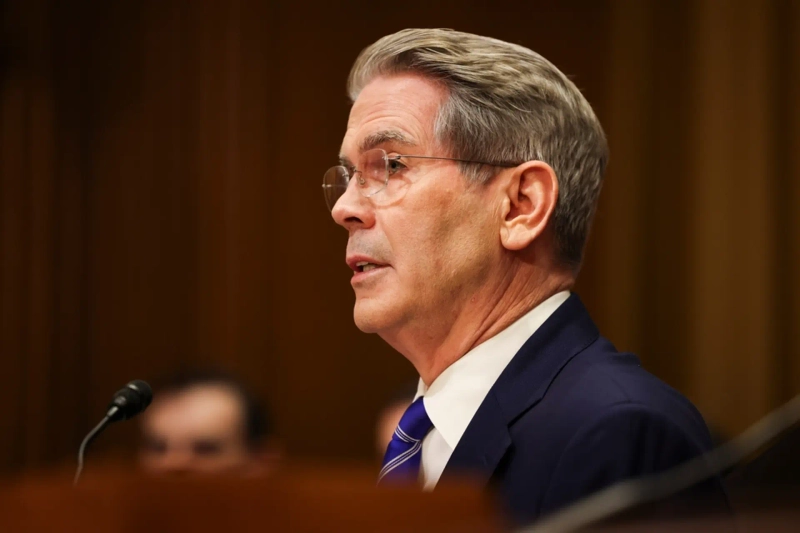
U.S. Treasury Secretary Scott Bessent said on the 20th (local time) that it is “very difficult to separate the spillover effects from Japan” when assessing the sharp jump in long-term U.S. interest rates. He pushed back against the view that President Donald Trump’s stated plans to impose additional tariffs on European countries were the driver.
In the U.S. bond market on the 20th, the 10-year Treasury yield—a key long-term rate benchmark—rose at one point to 4.31% per year. Markets showed a “sell America” pattern that day, with investors selling everything from equities to the dollar. Some analysts say uncertainty resurfaced after Trump said he would impose additional tariffs on eight European countries until Denmark’s autonomous territory of Greenland is purchased.
At the World Economic Forum (WEF) Annual Meeting (Davos Forum), Secretary Bessent, asked how he viewed the market reaction, highlighted that Japan’s 10-year government bond yield has recently risen sharply. Referring to a causal link with higher long-term U.S. rates, he said it was “equivalent to 0.5% when converted into U.S. long-term rates.” After noting he is in contact with authorities responsible for Japan’s economic policy, Bessent added, “It is clear they will start making statements to stabilize the market,” expressing hope the situation would calm.
In Japan’s bond market, the 10-year government bond yield rose at one point to 2.380% per year on the 20th, the highest level in 27 years. Observers point to expectations of worsening fiscal conditions—driven by proposals such as a consumption tax cut put forward by politicians ahead of an early general election.
Keiichi Kaya, a Japanese economic commentator, said, “Rising U.S. interest rates are neither Greenland’s fault nor Japan’s fault,” adding that “the Trump administration has rejected the global free-trade system and imposed high tariffs on countries.” He stressed that “this is a fundamental change to the basic rules of modern capitalist society, and naturally what awaits is inflation and higher interest rates.”
Tokyo=Correspondent Il-gyu Kim black0419@hankyung.com

Korea Economic Daily
hankyung@bloomingbit.ioThe Korea Economic Daily Global is a digital media where latest news on Korean companies, industries, and financial markets.