PiCK
US central bank pauses rate cuts… Bank of Korea may also keep rates on hold for an extended period
Summary
- The US central bank held its benchmark rate at 3.50–3.75%, citing solid economic conditions, and said the hold stance is expected to continue for the time being.
- Accordingly, the Bank of Korea is also likely to keep its policy rate at 2.50%, maintaining the 1.25%p rate gap, while weighing pressure from the won/dollar exchange rate and potential outflows of foreign investment funds.
- Experts said the BOK could keep its hold stance throughout this year amid concerns over housing prices, inflation instability, and a “K-shaped recovery.”
Forecast Trend Report by Period


BOK seen holding for a sixth straight meeting, keeping a 1.25%p rate gap
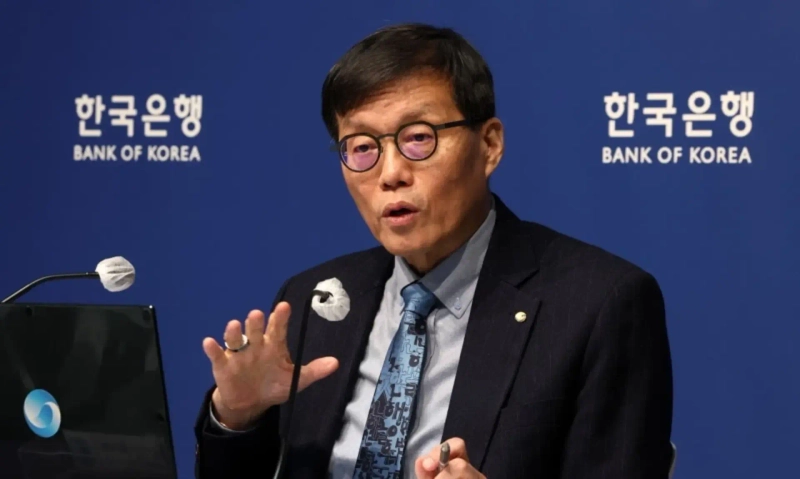
As the US central bank (Fed) has paused cuts to its policy rate, the Bank of Korea is also increasingly likely to keep rates on hold for the time being.
On the 28th (local time), the Fed kept its benchmark rate unchanged at 3.50–3.75% per year. Chair Jerome Powell cited solid economic momentum as the rationale, saying that “everything, including the economic data, suggests this year began on a foundation of robust growth.”
In the statement from the Federal Open Market Committee (FOMC) following its regular meeting, the Fed not only assessed US growth as “solid” but also removed the line that “downside risks to employment have increased in recent months.” This indicates there is no need to rush to cut rates to support the economy and growth.
In addition, as Powell said of the current rate level that it is “in a good position to respond to the risks” facing the dual mandate of price stability and maximum employment, the hold is expected to continue for the time being.
With the US pausing the rate cuts it delivered consecutively in September, October and December last year, the Bank of Korea—ahead of its monetary policy meeting on the 26th next month—is now more likely to keep rates unchanged. That is because there is little reason to cut further, widen the current 1.25 percentage-point (p) gap, and invite pressure from a rising won/dollar exchange rate and outflows of foreign investment funds.
At its meeting on the 15th, the Monetary Policy Board held the rate at 2.50% in consideration of the elevated won/dollar exchange rate, which was then flirting with 1,500 won. Since then, the dollar has turned weaker, and on the 28th the exchange rate fell to 1,422.5 won at the close of daytime trading (3:30 p.m.) in the Seoul FX market. That is the lowest level since Oct. 20 last year (1,419.2 won).
Some experts also see the BOK maintaining its hold stance for as long as the whole of this year. That is because economic conditions are not so dire as to require rate cuts to support consumption and investment, while concerns over housing prices and inflation persist.
Still, analysts say the BOK is also not in a position to move easily toward a rate hike. Governor Rhee said at the “New Year’s gathering of the financial sector” on the 5th that while growth is expected to be higher than last year, “the gap between sectors will be large due to a ‘K-shaped recovery,’ meaning there will be a big divergence from the sentiment on the ground.”
As the recovery could proceed in a “K-shaped (polarized)” manner, skewed toward certain industries and income groups, the BOK is expected to maintain its hold stance rather than raise rates even at the cost of a slowdown.
Oh Se-seong, Hankyung.com reporter sesung@hankyung.com

Korea Economic Daily
hankyung@bloomingbit.ioThe Korea Economic Daily Global is a digital media where latest news on Korean companies, industries, and financial markets.