Crypto exchange chiefs head to the National Assembly: “Equity cap would undermine global competitiveness”
Summary
- As the government pushes to cap major shareholders’ stakes in virtual-asset exchanges, the industry said it is concerned the move will undermine innovation and global competitiveness.
- The industry said a 15–20% cap on major shareholders’ ownership would effectively induce forced share disposals, amounting to excessive infringement of property rights.
- The Democratic Party’s Digital Assets TF and its advisory panel said it is difficult to justify property-rights restrictions solely on concerns over market monopoly/oligopoly, profit concentration, and conflicts of interest.
Forecast Trend Report by Period


Closed-door meeting with the Digital Assets TF
“If introduced, apply differentiated regulation by market share”
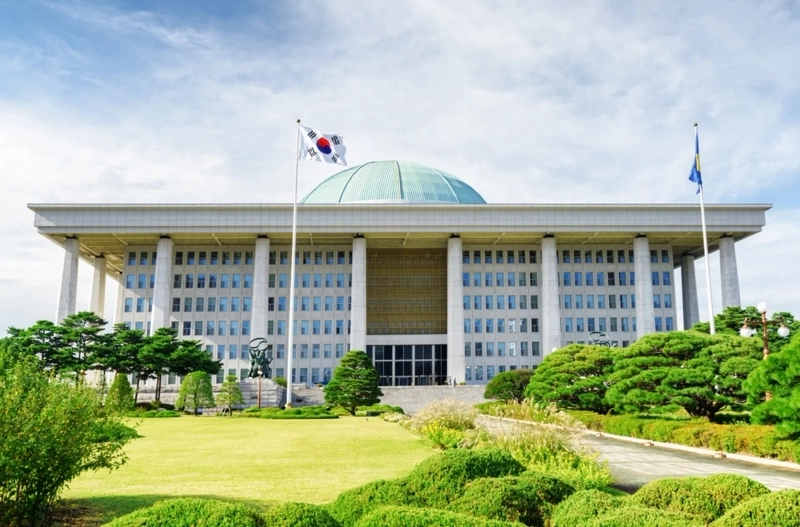
As the government moves to cap the equity stakes of major shareholders in virtual-asset exchanges, exchange chiefs conveyed their concerns to the National Assembly, arguing the regulation could hinder industry innovation and global competitiveness.
According to the National Assembly and industry sources on the 4th, the heads of the operators of South Korea’s five major KRW-based virtual-asset exchanges—Upbit, Bithumb, Coinone, Korbit and GOPAX—met with Rep. Lee Jung-moon, chair of the Democratic Party of Korea’s Digital Assets Task Force (TF). In the roughly 30-minute closed-door meeting, they discussed a plan to limit controlling shareholders’ stakes at exchanges, an issue that emerged as a key point of contention during the legislative process for the Basic Digital Assets Act. After the meeting, Cha Myung-hoon, CEO of Coinone, said, “We fully conveyed the industry’s views, and the lawmaker’s office listened well.”
Previously, the Financial Services Commission decided to include in the Basic Digital Assets Act a plan to cap major shareholders’ ownership in exchanges at 15–20%, introducing a controlling-shareholder fitness review comparable to that applied to alternative trading systems (ATS) in capital markets.
The industry is pushing back, saying the measure would effectively induce forced share disposals and constitutes excessive infringement of property rights. Speaking to reporters, an aide in Rep. Lee’s office said, “There were concerns that just as Netflix has come to dominate the OTT industry, domestic exchanges could be encroached upon by foreign companies.” Given that the virtual-asset market is borderless, they argue, the market could be ceded to overseas exchanges. The view was also raised that even if a major-shareholder stake cap is introduced, it should not be applied uniformly but through differentiated regulation. The aide said, “There was an argument that exchanges with low market share should also be taken into account.”
On the day, the Democratic Party’s Digital Assets TF advisory panel submitted a written opinion stating that “it is difficult to justify constitutional issues such as restricting property rights solely on the grounds of concerns over market monopoly/oligopoly, concentration of profits, and conflicts of interest.” The TF advisory committee is composed of nine advisers from academia, the legal community and the industry.
By Lee Si-eun / Cho Mi-hyun, see@hankyung.com

Korea Economic Daily
hankyung@bloomingbit.ioThe Korea Economic Daily Global is a digital media where latest news on Korean companies, industries, and financial markets.