PiCK
So much for 'digital gold'… “Broke below 100 million won” retail investors in shock
Summary
- Bitcoin broke below the 100 million won level and showed extreme volatility, fueling growing skepticism about its asset value as “digital gold.”
- As a liquidity drought and forced liquidation of leveraged positions deepen the selloff, Tether is defending the collateral value backing its digital dollar with gold holdings larger than the Bank of Korea’s.
- With Wall Street asset managers such as BlackRock holding large amounts of bitcoin and spot ETFs, some argue a market collapse is impossible, while others say the outlook is bearish but the worst may be over.
Forecast Trend Report by Period


Even Tether is hoarding gold… Bitcoin put to the test
Breaks below 100 million won in Korea… Bitcoin’s faded “digital gold” sheen
Growing doubts over “store-of-value” status
‘Wash shock’ compounded by a ‘liquidity drought’
Forced liquidation of leveraged positions deepens the drop
Tether holds more gold than the Bank of Korea
Bulls insist “a market collapse is impossible”
BlackRock and others hold large amounts of bitcoin
ETFs take hold… a revenue model emerges
“Outlook still bearish, but the worst may be over”
Bitcoin plunged. In the domestic market, the 100 million won threshold gave way, rapidly chilling investor sentiment. It managed to rebound as bargain hunting stepped in, but extreme volatility is also reviving skepticism about bitcoin’s value as an asset. The view is growing that its standing as “digital gold” is being put to the test again.
◇ Price volatility grows even larger
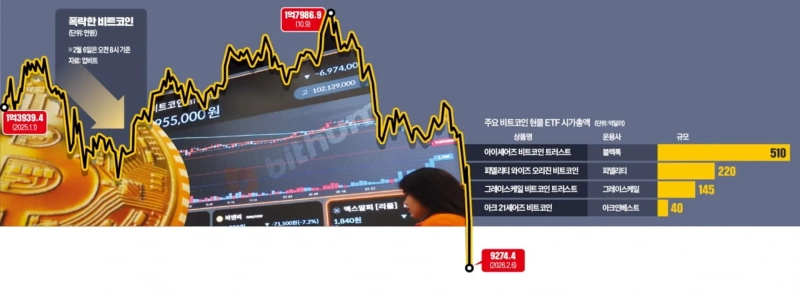
According to Upbit, a domestic crypto exchange, bitcoin was trading at 92.92 million won as of 9 a.m. on the 6th, down 13.9% from 24 hours earlier. It was the first time in about 15 months since October 2024 that bitcoin traded in the 92 million won range. This marks the biggest drop since the crypto market was severely shaken by the 2022 FTX bankruptcy. Overseas, it at one point slid to $60,074, threatening the $60,000 level. Bitcoin later climbed temporarily to the 99 million won range in the afternoon, but volatility widened.
Analysts say bitcoin’s outsized slump reflects a market liquidity squeeze that has not been resolved even after the impact of Kevin Warsh—seen as a hawk (favoring tighter monetary policy)—being nominated as the next chair of the US Federal Reserve (Fed). The US Treasury is rapidly draining dollars from the market by increasing the balance of the Treasury General Account (TGA) through Treasury issuance and other measures. This directly absorbs cash liquidity in the market. Bitcoin is classified as one of the assets most sensitive to liquidity. “As the liquidity drought began, leveraged positions funded with borrowing were forcibly liquidated like dominoes, amplifying the decline,” said Kim Min-seung, head of research at Korbit.
◇ A downturn unlike past crashes
Some analyses also suggest this year’s bitcoin plunge differs in nature from past crashes, when internal market problems and insolvencies erupted all at once. In 2018, when regulatory fears spread during the so-called “Park Sang-gi crackdown,” strong regulatory threats across countries weighed on the market to the point that governments even floated shutting down exchanges. In 2022, the bankruptcy of FTX—then one of the world’s top three crypto exchanges—deepened distrust in the crypto market itself. By contrast, many see this decline as closer to an automatic adjustment driven by shifts in macroeconomic variables such as growth and interest rates.
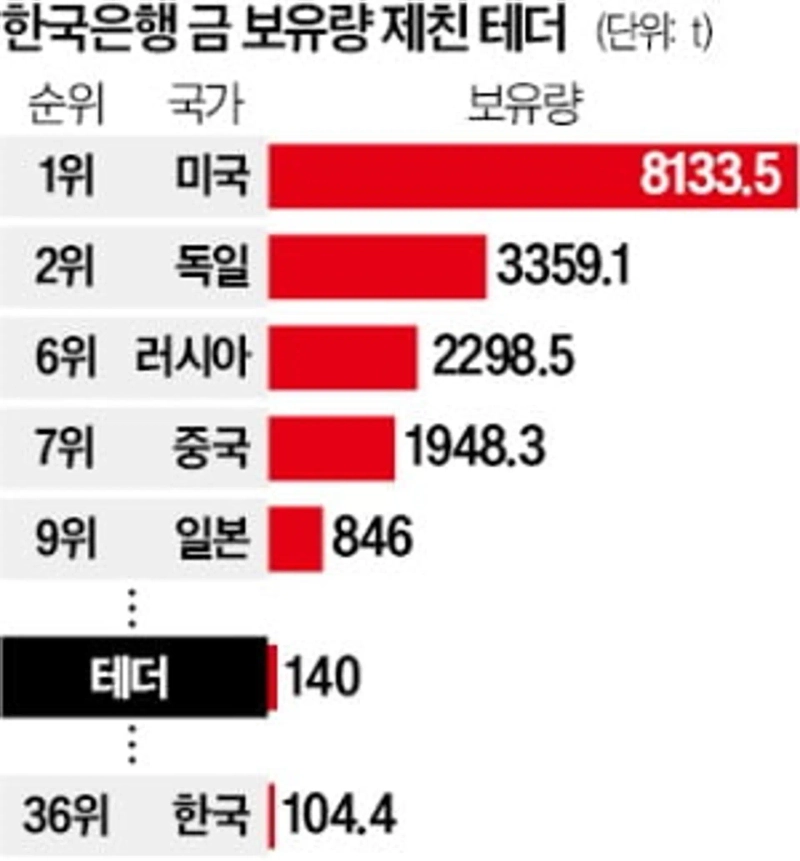
The sharp selloff is prompting claims that bitcoin is again at an inflection point where it must prove its value as an asset. A subtle shift is also being detected in the market around bitcoin’s position as a digital safe haven. A prominent example is Tether Limited, the world’s largest issuer of dollar stablecoins, recently increasing its holdings of physical gold. Tether bought 27 tonnes of gold in the fourth quarter of last year alone. Its total holdings now amount to 140 tonnes. That far exceeds the Bank of Korea’s gold reserves (104.4 tonnes). An industry official said, “It is not insignificant that the stablecoin issuer chose gold as the top means to defend the collateral value backing a digital dollar.”
◇ Diverging price outlooks
There is also a strong view that bitcoin has entered a “too big to fail” zone, making a market collapse impossible. The decisive difference from past crash cycles is the participation of Wall Street giants such as BlackRock and Fidelity in the bitcoin market. Spot bitcoin exchange-traded funds (ETFs) have become established as formal financial products, turning into a core business model that brings asset managers massive fee revenue. For that reason, some argue that, considering the financial infrastructure Wall Street has built and the associated sunk costs, the entire system is now intertwined with bitcoin’s survival.
Opinions are divided on the price outlook. Augustine Fan, partner at Hong Kong-based SignalPlus, noted, “As integration with traditional finance creates a new environment, questions are growing about where the crypto-native ecosystem itself should be positioned.” Ilan Solot, global market strategist at UK-based financial services firm Marex, argued, “The outlook remains bearish, but the worst may be over.”
Reporter Cho Mi-hyun mwise@hankyung.com

Korea Economic Daily
hankyung@bloomingbit.ioThe Korea Economic Daily Global is a digital media where latest news on Korean companies, industries, and financial markets.