Bessent: It could take a new chair up to a year to decide on the Fed’s quantitative tightening
Summary
- Scott Bessent said that even if Kevin Warsh takes office, it could take up to a year to decide on a Fed balance-sheet reduction (quantitative tightening: QT).
- Bessent said that at least about a year is needed to set the direction of the Fed’s balance sheet in connection with a shift in the reserves regime.
- Experts said quantitative tightening (QT) could lead to higher long-term interest rates, conflicting with President Trump’s push for policy-rate cuts, making it difficult for a new Fed chair to shrink the balance sheet.
Forecast Trend Report by Period


“It takes time to set the balance-sheet path that determines the reserves regime”
Analysts: “QT could push up long-term yields, making tightening hard to sustain”
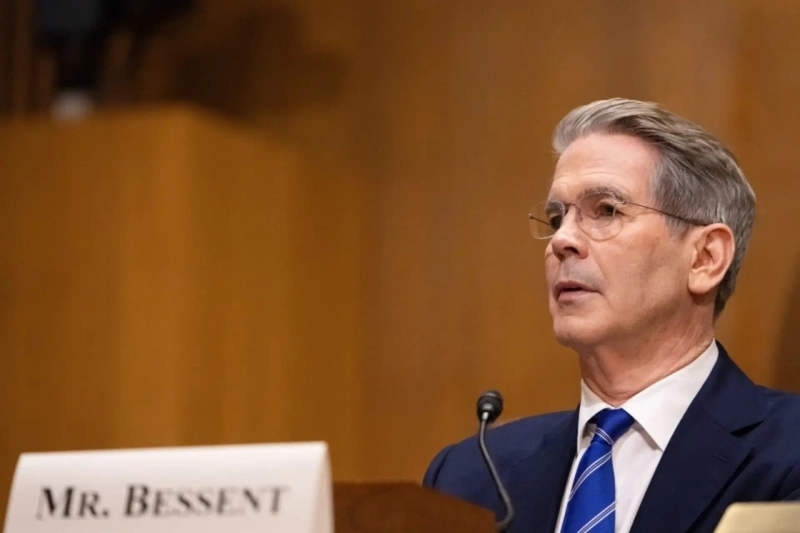
U.S. Treasury Secretary Scott Bessent said he expects that even if Kevin Warsh, the candidate for Fed chair, takes office, he is unlikely to move quickly to shrink the Fed’s balance sheet (quantitative tightening: QT) as he has advocated.
According to Reuters on the 9th (local time), Bessent said in an interview with Fox News the previous day that “it could take the Fed up to a year to make a decision on the balance sheet.”
He added that “how the Fed manages its balance sheet is up to the Fed,” and that “to shift away from the current reserves regime, the Fed will likely take at least about a year to decide the direction going forward.”
During the global financial crisis and the COVID-19 pandemic, the Fed dramatically expanded its balance sheet—quantitative easing (QE)—to lower long-term interest rates, boosting assets to $9 trillion by the summer of 2022. Since then, it has pared that down through QT to $6.6 trillion (about 9,600 trillion won) by the end of last year. Even so, it is still seen as historically high asset holdings.
In December, the Fed began increasing its bond holdings again by technically purchasing Treasuries to firmly control the target range for interest rates—effectively adding liquidity to the market.
Warsh, who served as a Fed governor from 2006 to 2011, has argued that the Fed’s massive asset holdings distort finance and that it should sharply reduce its current holdings.
However, President Trump has pressed the Fed to cut its policy rate to lower the government’s debt-servicing costs and mortgage rates. Analysts note that shrinking the Fed’s balance sheet—quantitative tightening—tends to push long-term yields higher, running counter to that objective, and they expect it will not be easy for a new Fed chair to proceed with balance-sheet reduction.
Kim Jung-a, contributing reporter kja@hankyung.com

Korea Economic Daily
hankyung@bloomingbit.ioThe Korea Economic Daily Global is a digital media where latest news on Korean companies, industries, and financial markets.