PiCK
"Your tone is arrogant, so I raised tariffs by 9%"… A trade environment where 'Trump uncertainty' has become a constant
Summary
- It reported an analysis that President Trump is raising tariffs on Switzerland and using them as leverage against South Korea—citing emotion and legislative delays as grounds.
- It said that if processing of South Korea’s special act on investment in the United States is delayed, the possibility of a renewed tariff hike to 25% remains, and Trump’s social media could again become a tool of pressure.
- It reported that while trust between Minister Kim Jung-kwan and Howard Lutnick helped South Korea avoid an immediate 25% tariff threat, whether Lutnick resigns could affect South Korea’s and Japan’s investment in the United States.
Forecast Trend Report by Period


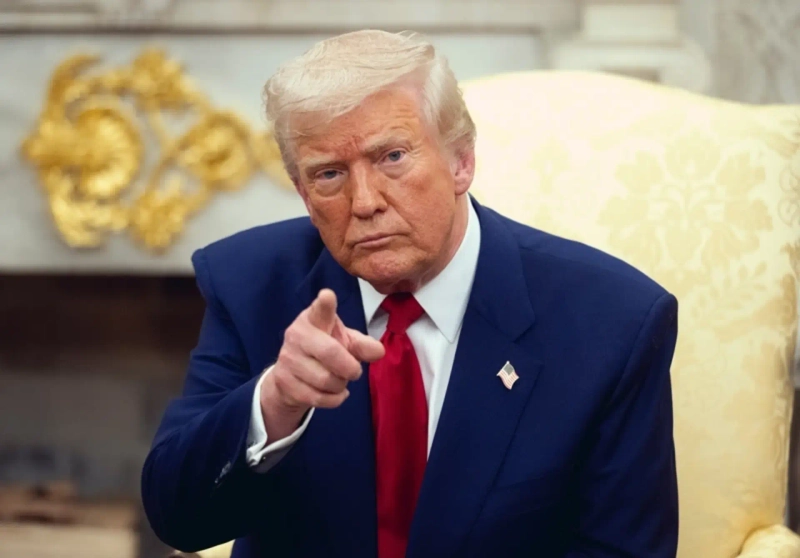
An analysis suggests that the U.S.-driven tariff standoff is moving beyond President Donald Trump’s capriciousness and into a phase of calibrated pressure. While Trump has displayed impulsiveness—raising tariffs after taking issue with an opponent’s “tone”—he has taken a more targeted approach toward South Korea, citing legislative delays as his rationale. Trade officials managed to avert an immediate breakdown through a series of visits to Washington by senior figures, but uncertainty appears to be mounting, including the prospect that Commerce Secretary Howard Lutnick—Seoul’s counterpart—could be forced out amid a scandal.
Reason for tariff hike: "The voice was aggressive"
The tariff policy of Trump’s second administration has shown a pattern in which the president’s personal emotions are reflected in real time, rather than outcomes being driven by carefully negotiated agreements between countries or by data. A representative example is the tariff increase on Switzerland.
In a recent Fox Business interview, Trump disclosed why he raised tariffs on Switzerland by 9 percentage points, from 30% to 39%. He said the “Swiss prime minister” (apparently referring to former President Karin Keller-Sutter) was “very aggressive” on the call, adding that she kept repeating, “We’re a small country,” and wouldn’t hang up—so he instructed, on the spot, that tariffs be raised further (from 30% to 39%). In effect, a tariff policy that can sway interstate relations was decided according to Trump’s mood.
South Korea’s case is somewhat different from Switzerland’s. On the 26th of last month, Trump wrote on Truth Social that he would “raise tariffs on South Korea to 25%,” saying it was “because South Korea’s legislature did not legislate our historic trade agreement.” He went on to say, “Our trade agreements are very important to the United States. We have acted to quickly lower our tariffs in line with the agreed deal terms. We naturally expect our trading partners to take the same actions.”
Trade experts noted that the message, unlike Trump’s usual abrasive rhetoric, was highly polished and specific. They said it suggests a script from behind-the-scenes advisers or a policy group that is monitoring and reporting in real time on delays inside South Korea over the handling of a “special act on investment in the United States.” Observers say it is increasingly likely Washington will systematically use “Trump messages” as a tool to pressure counterpart countries.
Japan and Canada also under pressure
The situation in neighboring countries is also pressing. The U.S. and Japanese governments held high-level talks to flesh out a $550 billion (about 796 trillion won) plan for Japanese investment in the United States that the two sides agreed to during tariff negotiations, but failed to narrow differences over the first investment area. Japan’s view is that it will deploy U.S.-bound investment rationally in line with national interests. Japanese media have reported that “Japan’s public funds must not become charity that props up U.S. infrastructure,” while U.S. media have reported that “the agreement with Japan will serve as a benchmark for other countries such as South Korea.”
Canada’s situation is even more extreme. Trump instructed officials to review withdrawing from the USMCA (United States–Mexico–Canada Agreement) that he concluded in his first term. It is an uncertain case showing that a country can be cast as an “adversary” at any time if it does not serve U.S. interests—or Trump’s approval ratings.
From this perspective, assessments suggest that the waning of tariff threats toward South Korea is closer to a temporary reprieve. An official at the trade authorities said, “If the passage of the special act on investment in the United States is delayed due to domestic political circumstances or the contents are watered down, Trump’s social media can always turn its fire on South Korea again.”
Industry and Trade Minister Kim Jung-kwan and U.S. Commerce Secretary Howard Lutnick had built trust as they concluded tariff negotiations earlier. That relationship is also cited as a factor behind South Korea’s current escape from the threat of a renewed hike to 25% tariffs. The problem is that this personal link is now wobbling. Lutnick is currently embroiled in controversy over allegedly false explanations related to the Epstein files and is facing intense calls to resign from U.S. political circles. Allegations have surfaced that he understated the number of times he had contact with Epstein during a hearing, prompting voices even within the Republican Party calling for his departure.
A government official said, “Trump still trusts him, so it appears unlikely he will step down immediately, but if the controversy spreads his position will inevitably narrow,” adding, “If Secretary Lutnick resigns, it will inevitably affect South Korean and Japanese investment in the United States.”
Reporter Kim Dae-hoon daepun@hankyung.com

Korea Economic Daily
hankyung@bloomingbit.ioThe Korea Economic Daily Global is a digital media where latest news on Korean companies, industries, and financial markets.